Showing posts with label Bodegas Hidalgo. Show all posts

Monday, April 23, 2012

Sherry Dinner at Fu Leen with The Palmas of González Byass

Not too long ago I had the pleasure of eating dinner at Fu Leen, the seafood restaurant in Manhattan's Chinatown. Peter Liem organized a group of people to drink several special Sherries and to eat things like lightly steamed fresh shrimp, fried dungeness crab, steamed whole fish, and fried rice with salted fish.

The wine main course, if you will, was the Palmas of González Byass - all four of them. Peter graced this blog with a guest post discussing these wines a few months back - a beautiful piece of wine writing and you should take a look if you haven't already. The Palmas represent an exploration of Fino Sherry as it ages. They are selected by Antonio Flores, the González Byass cellar master, as barrels of special quality and bottled at different points in their evolution toward Amontillado. Una Palma is an average of 6 years old, Dos Palmas 8 years old, Tres Palmas 10 years old when the flor is patchy and the wine begins to have some contact with oxygen. Cuatro Palmas is much older - an average of 45 years I believe. Honestly - read Peter's post on these wines, as he explains exactly what it is they are about in crystal clear terms.

The idea behind wines like the Palmas is not new. It is common for the cellar master to select what he (and it is almost always a he) feels are his finest barrels, and to allow them live outside of their commercial bottlings. It is a newer thing for these special wines to be bottled and sold. That wines like this are now available, even if they are rare, is part of what makes this such an exciting time to be a Sherry lover.

We drank several appetizers before our Palmas main course, and each of the wines related in some way to this theme of special wines, things that are new and interesting in the world of Sherry. The first was a sparkling wine, a collaboration between Sergi Colet in Penedés and the Equipo Navazos team. The 2006 Colet-Navazos Reserva Extra Brut is a sparkling Chardonnay and at disgorgement the wine is topped up with Manzanilla - specifically La Bota Nº 22, if I am not mistaken. This wine is mellow with a few years in bottle, bone dry and very mineral, and the Manzanilla is an unmistakable presence. You can sense it the way Vader sensed Obi Wan was sneaking around somewhere on the Death Star.

Most of the Sherry that we can buy here in the States has been heavily filtered, and although some of these wines are delicious, they are very different from what they were before the filtration, stripped of important aroma and flavor components. As more and more wine lovers become interested in Sherry, some Bodegas are offering unfiltered versions of their wines. Bodegas Hidalgo recently bottled an unfiltered version of La Gitana, called La Gitana en Rama, or from the barrel.

We drank both versions of La Gitana and there is no mistaking the difference in quality. The en Rama wine showed a deeper and more complex set of aromas and flavors, and also much more finesse. You can see the difference in the photo above, the wine on the left is La Gitana en Rama. Honestly, I found it harder to enjoy La Gitana after drinking the unfiltered version. Maybe on a hot day at the beach with a plate of fish...

We drank La Bota de Manzanilla Nº 32, a continuation of the Nº 4, 8, 16, and 22 bottlings from the Sánchez Ayala solera. I love all of these wines (never had Nº 4), but Nº 32 seems very special to me, a particularly great selection from this solera. I loved it from the moment it was opened and it got better and better in the glass. And with fried dungeness crab in this dried shrimpy, scalliony paste...oh my stars.

Then came the Palmas. This is an experience that will be essentially impossible to replicate, as these wines were bottled in small quantities - only 150 bottles of the Cuatro Palmas for example. They were sold only in Spain and in the UK, and Peter had to agree to tattoo onto his back the name of the merchant who held the bottles for him.

Drinking them one after the other was, as advertised, a great lesson in the progression of biologically aged Fino Sherry. Una Palma was bold and powerful (and we were struck by this demonstration of the vast gulf in character between delicate Manzanilla and bold Fino). Drinking this wine and then also drinking Dos and Tres Palmas, I felt the flor tones change from fresh and buttery to dark and savory, the aromas take on a nuttier note. These wines emphasize for me that the movement of Fino (and Manzanilla) toward Amontillado is not marked with a particular boundary, that there is no clear moment at which Fino becomes Amontillado. Peter has described it as a continuum, and drinking these four Palmas together underlines this notion. These three are essentially the same wine, but at different points along the continuum, captured as the layer of flor becomes thinner and then patchy. Each of the three is compelling and delicious, but if I had to take one and only one with me while waiting on line for 6 hours at the DMV, it would be Tres Palmas.

 Cuatro Palmas is an Amontillado that comes from one barrel selected from the tiny 6-barrel Solera called Museo. The idea was to show a point much further along the continuum, and this particular barrel was selected for its great finesse. The wine is glorious - deeply complex, with an incredible fineness of texture, and with a never-ending finish whose echo includes trace reminders of the fresh buttery flor character of 40 years ago.

Wednesday, October 12, 2011

Peter Liem's Sherry Dinner at the Spotted Pig

Although I am no longer the least bit surprised, I continue to take great pleasure in expanding my experiences with the versatility of Sherry at the table. Fino style wines obviously pair beautifully with seafood, but this is only the tip of the iceberg. There are many styles of Sherry wine, and some can handle spicy food (Amontillado with Szechuan food is unknown as the best wine and food pairing in the world, I think), they all tend to work beautifully with savory food, they can pair well with "difficult" vegetables such as asparagus and artichokes, and some sherries work beautifully with richer meats such as beef or lamb.

Recently I attended a very special dinner that offered new opportunities to experience Sherry at the dinner table. Celebrated wine critic Peter Liem selected a group of Sherries and April Bloomfield, celebrated chef at The Spotted Pig (among other places), created a menu to pair with the wines. The event was organized by those two folks and also by Rosemary Gray and Clara Rzeszewski, the Wine Director at Bloomfield's restaurants, and there should be more of these. Put top wine people and top chefs at top restaurants together and magical things can happen.

Wine Director Clara Rzeszewski and Chef April Bloomfield. Bloomfield herself actually cooked our food.

I was pretty busy drinking and eating and enjoying the company of my neighbors, so I don't have notes to share with you, but I can share some things that were meaningful to me. Peter selected two interesting Fino wines to begin the dinner, Valdespino Inocente and La Bota de Manzanilla Nº 22. Inocente is unusual in that the wines in the blend are much older than is typically found in Fino, averaging something like 8 years. The wine is intense and rich and has a substantial feeling in the mouth, while retaining the brisk salty freshness that I think of as the hallmark of a good Fino. La Bota de Manzanilla Nº 22 comes from a great solera at Bodega Sánchez Ayala in Sanlúcar de Barrameda, and is unusual in that it is barely filtered. The wine is deeply golden and bursts with aromas and flavors that reflect the fact that the wine is essentially whole - most Sherry is rather viciously filtered.

Bloomfield chose to pair these wines with two seafood dishes, a smoked oyster topped with some sort of cream sauce and a perfect piece of Tasmanian Trout, adorned only with it's own crisp skin. Seafood and Fino Sherry is not a new idea, but these are richer styles of Fino wine and they played very well with the dishes. I thought the savory depth of the Valdespino melded with the Trout in a particularly delightful way.

Peter Liem discussing the wines he selected. Bloomfield cooks, behind him.

Peter selected two Oloroso Sherries for our second flight. In case you, like me, haven't memorized the rules of Sherry classification, Oloroso wines are distinguished from other Sherries in that they are never aged under flor, the layer of yeast under which Finos spend their lives, and Amontillados and Palo Cortados begin their lives. We drank Gutiérrez Colosía Oloroso "Sangre y Trabajadero" and Lustau Almacenista Oloroso "Pata de Gallina." These wines contrast interestingly in that Sangre y Trabajadero is an Oloroso made from rather young wines, averaging perhaps 10 years old. That's young for an Oloroso, and its youth was accented when drinking it next to the very old wines in the Lustau Sherry (which comes, I think, from a solera at Bodegas Juan Garcia Jarana). We drank these wines with perhaps the single most savory dish I have eaten all year, Scottish Hare with Wild Mushrooms on Bone Marrow Toast. Both wines were great with the dish, the youthful freshness and lovely finesse of the Colosía wine was a nice compliment to the dish. And the intensity and complexity of the Jarana Oloroso amplified the savory experience.

Peter chose two contrasting Palo Cortados for our third flight, Emilio Hidalgo Palo Cortado "Marqués de Rodil" and Barbadillo Palo Cortado "Obispo Gascon." Emilio Hidalgo's wines are quite difficult to find in retail shoppes, and this is a shame because everything I've had is absolutely excellent. Bloomfield paired these wines with Pigeon Agnolotti with Chard & Walnuts, a bowl of pigeon ravioli (not really ravioli, but think ravioli) in broth with shredded Swiss chard and bits of walnuts. The dish and the pairings were very good, but this was a bit overshadowed for me by the fact that I fell in love with Hidalgo's Marqués de Rodil, and found it hard to focus on anything else. The wine is barely a Palo Cortado, you can still smell, taste, and feel the flor. It is fresh and vibrant and gentle, its aromas and flavors intense and complex the way you would expect from a Palo Cortado, but still shot through with a brisk energy. As a public service to you, I will tell you that this awesome wine is currently sitting on the shelf at Chambers Street Wines, and if you like Sherry, or even think you might like Sherry, you should buy some.

Peter selected two absurd Amontillados for our final flight, both made of very old wines, Hidalgo-La Gitana Amontillado "Napoleon" VORS and Bodegas Tradición Amontillado VORS. Bloomfield paired these in a classic style, with a crumbly Cheddar and another cheese called Podda Classico. The wines were both wonderful, richly complex and pungent, and each would be worthy of an entire dinner's worth of enjoyment and contemplation. It goes without saying that they were great with the cheeses.

Every one of those glasses was mine. I treated them as such, anyway.

Thinking about this dinner afterwards, I realize that we are very lucky to be discovering the beauty and versatility of Sherry at this time. The wines are inexpensive! We can drink the DRC of Sherry for as little as $20 for a 375 ml bottle. $80 buys several different wines that are among the finest versions of Sherry wine. $40 will buy a bottle of that beautiful Hidalgo Marqués de Rodil. There was a time when Burgundy was moderately priced in the US. Now is that time for Sherry. And with all the respect in the world for the beloved and great wines of Burgundy, Sherry is far more versatile at the dinner table. Not just tapas either, as this dinner emphasized. Well selected Sherry can make fine dining even finer.

Wednesday, July 27, 2011

July Wines - a Laundry List

Here are some notes on great wines that I was lucky to drink in July, mostly because of the generosity of friends:

Equipo Navazos La Bota de Fino Nº 24, $60, Eric Solomon Selections/Imported by European Cellars. This is what we drank with the pasta and artichokes in the previous post, and it was a shockingly good pairing with the pungent dish. Deep golden in color and showing both flor character and the rich and slightly oxidative notes of a young Amontillado, the wine is beautifully harmonious and made me think of the best salted caramel. It is actually a Fino/Amontillado, a wine that is old en0ugh so that the flor has started to die and the wine is beginning to become an Amontillado. Fino/Amontillado is not allowed to be labeled as such, and so the wine is called Fino. It comes from an old solera at Bodega Perez Barquero in Montilla-Moriles, further inland than Jerez and a place where Pedro Ximenez is used to make Sherry, not Palomino. Fantastic wine and worth searching out.

Valdespino Palo Cortado Cardenal, price unknown, not imported. Valdespino makes several special Sherries from extremely old wines, and this very fine Palo Cortado is one of them. The wines are at least 80 years old, and began life in the Inocente solera. As they aged and moved toward Amontillado they were selected out of the solera, ironically because of something that indicated to the cellar master that they would not be typical and great Valdespino Amontillado. But they are still great wines and become one of the absolutely iconic Palo Cortados in all of Sherry. Peter Liem tells me that this wine is rare and highly regarded enough that if you were to open a bottle for a Sherry lover in Spain, their eyes would bulge in anticipation. Cardenal is a 375 ml bottle and it takes time to truly open up, perhaps several days. I can tell you that on the fourth day it was majestic, and it would be silly for me to try to describe the aromas and flavors. All I can say is that it was among the most complex and fascinating Sherries that I have ever had.

Bodegas Hidalgo Manzanilla Pasada Pastrana, $24, Imported by Classical Wines. Single vineyard Manzanilla Pasada from the house that produces La Gitana. This can be very lovely wine, and this bottle was excellent, with brisk fresh flavors and prominent minerality. It is complex and pairs very well with a variety of foods, and the saline finish is very refreshing. I have experienced some bottle variation, however, and it's probably a good idea to buy when your retailer has a fresh batch.

2006 Rudi Pichler Riesling Federspiel, price unknown ($59 on a restaurant wine list). Absolutely delicious and memorable to me because of the incredible clarity with which it tasted of fresh juicy yellow plums. Clean and very pure, a bit waxy, very mineral, very graceful and balanced, a true pleasure to drink. And perfect with weisswurst. Why don't I have wine like this in my cellar?

2003 Willi Schaefer Graacher Himmelreich Riesling Spätlese, price unknown, Terry Theise Selections/Imported by Michael Skurnik Wines. This was simply delicious wine, and as my experienced Riesling friends who shared it with me explained, in the context of the very hot 2003 vintage, this wine is remarkable. I loved the tactile sensation I got on the palate, and the very pretty floral aromas, like violets or geraniums. Intense wine, and still gentle. I'd like to taste a version of this from a more "normal" vintage.

2009 Guy Bossard Muscadet Sèvre-et-Maine Expression de Granite, $18, Chartrand Imports. At this point, my favorite Muscadet of the 2009 vintage. This wine is just so good! A bit rich, but that's the vintage, and the wine handles it perfectly, with well defined aromas of anise seed, citrus, and stone. Great balance and already showing some complexity on the palate, the wine is very delicious and shows good acidity and a lovely lingering finish that comes back to anise seed. One of the under-appreciated wines of the world, I would say.

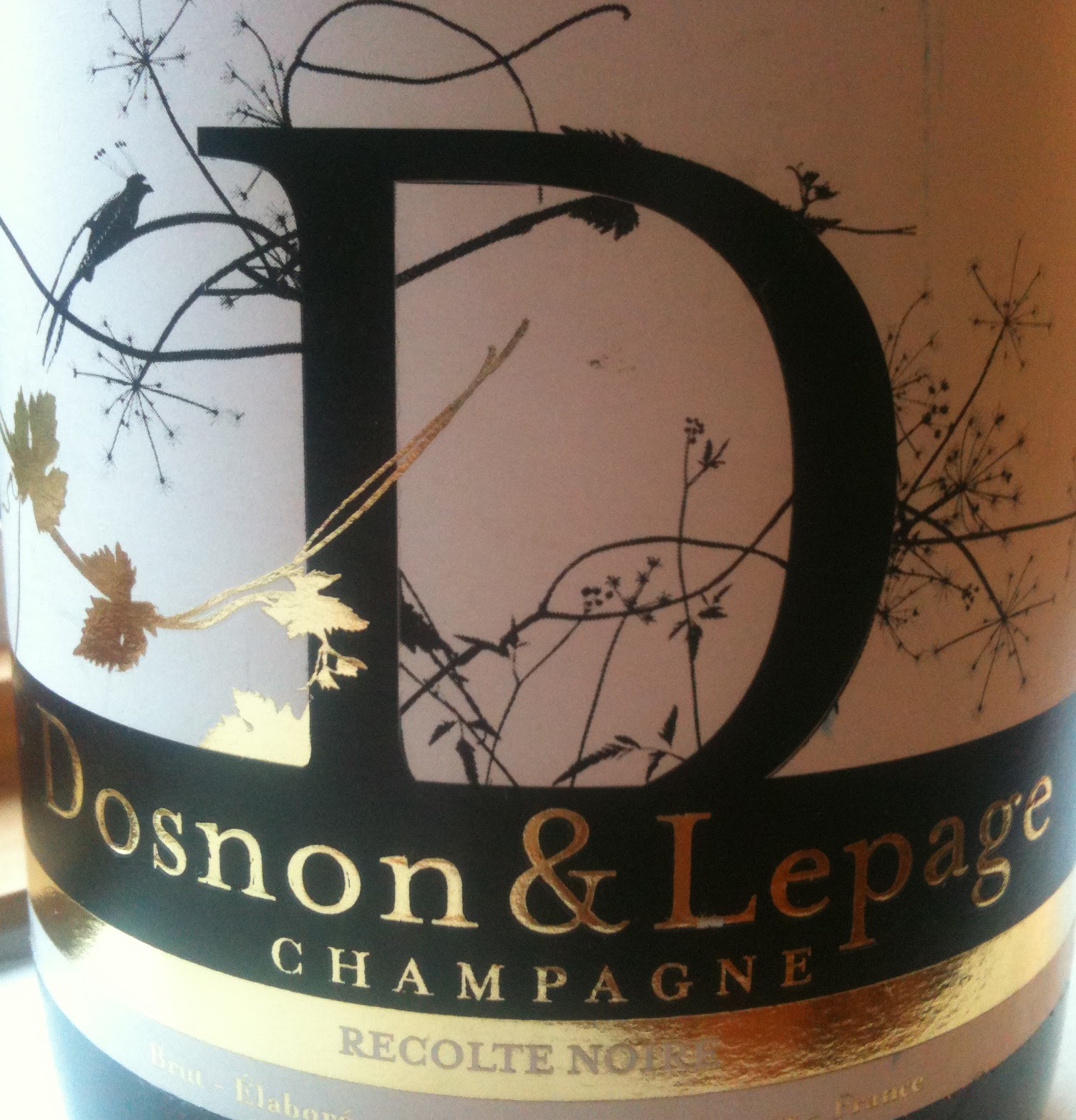
NV Dosnon & Lepage Champagne Brut Recolte Noire, about $55, JD Headrick Selections. I was shocked at how good this wine was. Not because I had low expectations, but because I thought it was pretty fantastic wine. This producer and this particular wine was recently lauded by Eric Asimov in an article about the wines of the Aube. Vibrantly aromatic red fruit with earthy bass notes, great balance, very long and vivid on the finish. Absolutely delicious and I would say a terrific value in the world of Blanc de Noirs Champagne. Honestly, if you like Champagne, try this wine.

NV Jacques Selosse Aÿ La Côte Faron, price unknown, not imported (I think). Very lucky to have the opportunity to drink this wine, a single vineyard wine based on 2003 but containing 60% of wines from vintages back to 1994 from something of a mini-solera. There are producers who make wine in the Selosse style, but the more experience I have with these wines, the more clearly I see that Selosse's wines cannot be imitated. A complete wine - rich and ample, brilliantly detailed, fresh and lively, oxidative and mature, deeply complex and very mineral. It feels both dry and sweetly fruited at the same time, if that makes any sense. Compelling and delicious wine.

Tuesday, May 24, 2011

Recent Wines - A Laundry List

During the past two months I had the chance to drink some very special wines, mostly thanks to the generosity of friends, but since I took a bit of a break from writing, I haven't shared a lot. Time marches on and I finally admit that I will never get around to writing what I wanted to write about some of these wines. But I do want to share a little bit:

1994 Stony Hill Napa Valley Chardonnay, price unknown. This is the oldest vintage of Stony Hill that I've had, and this was a brilliant bottle. Delicious from the very beginning, but it was only after an hour open that this wine hit its apex. Elegant, well defined, and crystal clean aromas that showed a lovely harmony between rich roasted nuts, delicate flowers, and pungent mineral earth. Perfectly harmonious on the palate too, still showing hints of fruit, but more about grace and texture, and I loved the slightly oily, smokiness that lingered on the finish. Stony Hill has for decades been making Napa Chardonnay that pleases the old world palate, and the wines are affordable. You won't spend more than $40 on recent vintages, and that's a pretty good deal for what I would say is among the very finest California Chardonnay. If you haven't tried Stony Hill, you should.

1996 Didier Dagueneau Pouilly Fumé Pur Sang, price unknown. I thought this was pretty astounding, although I liked it more than the other guys did. The wine was completely secondary and had very little to do with fruit. It was liquid rock, perfectly harmonious, and with a wonderful depth of aroma and flavor. I've never had a wine like it, never mind a Sauvignon Blanc like it. I wish that I'd been buying Dagueneau's wines back when I could have afforded them.

2000 Domaine de Montbourgeau Vin Jaune, $75, Imported by Neal Rosenthal Wine Merchant. A friend brought over a bottle that had been open for three days, and it was ridiculous. A chorus of strikingly pungent aromas and flavors, as if a friendly elf waved a magic wand and we were drinking the liquid essence of salted, curried cashews. Is this even made from grapes? Such harmony, so satisfying.

NV Bodegas Hidalgo Amontillado La Gitana Napoleon, $18 (500 ml), Imported by Classical Wines. This is the first time I've seen this wine in NYC, and I'm very glad for it. Further away from flor than other amontillados I've had recently, but not so much so. Almost delicate flavors of roasted salted almonds and toffee with a buttery hint to the finish. The texture is interesting in that it is here that I sense the flor character, the creamy feel. Only the slightly grainy and harsh textural element to the finish prevents this from being truly elevated wine, and it is a great value in amontillado.

1995 Il Poggione Brunello di Montalcino, price unknown. Although this wine never finished opening up, the depth of material was evident. Tangled and intense flavors of cherry and licorice and herbs, with an earthy floor. We enjoyed this immensely and it piqued my curiosity about the real Brunello.

1996 Cims de Porrera Priorat Classic, price unknown. We decanted this for over an hour and it was still unwinding when we moved on. I have yet to love a Priorat, but this one was definitely interesting and very tasty. Rich, full in texture, deeply flavored, but not entirely well articulated. Still, with a bloody steak rubbed in garlic and thyme...not sure that I'd spend my own c-note on it but I'd happily drink it again.

1998 Château de Beaucastel Châteauneuf-du-Pape, price unknown. I had this wine about a year ago and it was entirely different this time. Red, red, bright red fruit - high toned raspberries, maybe even currants, some herbs. Strong acidity, nicely structured, altogether a delicious drink. I continue to be intrigued and impressed by Châteauneuf-du-Pape from Beaucastel, Vieux Telegraph, and Donjon, but not as much past 2001. Again, too bad I wasn't buying back when...

1997 Noël Verset Cornas, $75 (purchased a few years ago). A fantastic showing, hit every possible aspect of its potential. There is a bit of rusticity, but not much, and the wine is perfectly harmonious. Vivid bloody brothy notes to the nose, along with stone and fur and hints of flowers. The nose evolves over a few hours in the decanter and continues to enchant, turning a bit olivey in the end. Beautifully structured - firm but completely smooth and gentle, and although there is not quite as much midpalate concentration as you might like, the wine is seductive and complex and vivid from start to finish. A great experience, and Mssr. Verset is sorely missed.

Thursday, June 10, 2010

Montgomery's Cheddar from Neal's Yard

About a month ago I ate Wensleydale cheese from Neal's Yard and loved it, and most callously called it a Cheddar, which in fact it is not. Bronwen Percival, the cheese buyer at Neal's Yard, discussed this at the end of the post in her comments. Bronwen knows about a lot about cheese, which is kind of like saying that Stephen Hawking knows a lot about physics.

Well, it's been a long time coming, but I finally tasted the mack-daddy of cloth bound Cheddars, the king, if you will. I speak of Montgomery's Cheddar from Neal's Yard.This is a raw milk cheese that is aged for at least one year. I think Neal's Yard's description of the cheese is right on:

Rich, sweet, fruity, nutty, beefy flavours. Sometimes reminiscent of the caramelised edge of a Sunday roast. The texture is drier than most other cheddars with a grainy and crystalline crunch as it ages.
A friend and I enjoyed this cheese alongside a piece of Wensleydale the other night. Eating them together provided, for me anyway, a clear definition of Cheddar. Wensleydale shows some moistness at room temperature, and tastes of butter, cream, and grass. Montgomery's is more golden in color, harder and crumblier, and much different in flavor. As the above tasting note indicates, the flavors here are more savory. Both cheeses are wonderful, and I have no favorite. This might sound odd, but there is something about Wensleydale that makes me think of it as a morning cheese, and Montgomery's is for afternoon or night time. That said, breakfast this morning was Montgomery's on a slice of 7-grain and it was absurdly delicious.

Sadly, at breakfast I did not indulge in the beverage pairing that my friend and I did when eating this cheese the other night. We drank N.V. Bodegas Hidalgo Jerez-Xérès-Sherry Manzanilla Pasada Pastrana, $24, Imported by Classical Wines. Pastrana is a very special wine, a single vineyard barrel-aged Manzanilla that offers all of the briskness and sea salt one would expect from a good Manzanilla, but also shows an amazing depth, intensity, and complexity that for me elevates it above most Manzanillas.

Now, we had some wine with dinner before we arrived at cloth bound and Sherry, and I wasn't taking notes. I love this Sherry, but I think I might prefer to drink a dark beer with Montgomery's. Somehow the flavors of the Sherry and the cheese competed with instead of elevating one another. I love Pastrana with cheese, but I've had it only with aged goat cheeses. Perhaps it's not the best pairing with the king of Cheddars. Perhaps I should have tried them together again at breakfast. One day when I'm retired I'll do things like that.

Thursday, January 14, 2010

Brooklyn Blind Tasting Panel #3 - Manzanilla Sherry

I've been drinking a lot of dry sherry lately, and I think I've really caught the bug. It's such a delicious style of wine, so tangy and fresh, so long and complex, so great with many different types of food. And dry sherry is so inexpensive. The most you can spend on a great bottle of Fino or Manzanilla is about $50, and that's really just the Equipo Navazos wines. Excellent bottles typically cost between $15 and $25. I've seen 375 ml bottles of good quality Manzanilla for $9. It's not only about good prices though - these are very fine wines, and their low prices simply sweeten the deal.

I'm just beginning to learn about sherry, and one thing that I find challenging is the oxidative character of the wines. I love the pungent aromas and flavors, but sometimes the oxidized character dominates my palate's memory more than the other aspects of the wine, and I still have a hard time differentiating one producer's wine from another's. I thought it would be interesting and fun to drink many sherries at once, to compare them in the hopes of better understanding what lies below the flor. So the Brooklyn Blind Tasting Panel convened over a load of Manzanilla, the dry sherry made on the humid coast of the Atlantic at Sanlúcar de Barrameda.

BrooklynLady and I were joined for this tasting by Eric Asimov, wine critic at the New York Times, Peter Liem of ChampagneGuide.net, and Rafael Mateo, owner of Pata Negra, the East Village tapas bar. An illustrious panel, to say the least. And if you don't think this paragraph was fun to write, you're crazy.

We tasted two flights of four wines and selected our three favorites. A few general impressions before sharing individual notes: overall quality was very high. Everyone agreed that the wines showed tremendously well. I thought the wines changed a lot in the glass, and I can say from sampling the leftovers the next day that they continue to change and improve with air. It is commonly said (sometimes even on the back label of sherry bottles) that sherry is meant to be consumed immediately after opening. Seems to me that immediately upon opening is when the wines are at their most awkwardly pungent, their most volatile. I tend to prefer them with a few hours of air, sometimes even the next day, when they are more mellow and harmonious.

Some notes on the wines, in the approximate order that the panel preferred them:

Herederos de Argüeso Manzanilla San León Clásica, $12 (375 ml), a Jose Pastor Selection, Imported by Vinos & Gourmet Inc. Three people picked this as their overall favorite - BrooklynLady, Eric, and myself. BrooklynLady thought it was classic dry sherry. Eric liked its salty sea air, tangy quality. He felt that it would have been a perfect Manzanilla except that it wasn't precise, it was a bit unrefined. I didn't care for this wine at first, as I found something like chlorine on the nose, but I came back to it several times over the course of the flight and I was captivated by the combination of ripe appley fruit and brisk saline character. Peter liked it too but felt that the alcohol stuck out a bit.

Equipo Navazos La Bota de Manzanilla Nº 16, $39 (750 ml), Eric Solomon Selections, Polaner Imports. This was Peter's favorite wine of the tasting, Eric and Mateo had it 2nd. Equipo Navazos chooses their favorite barrels from their favorite estates and then bottles them with only the lightest filtration, something that is very unusual in the world of sherry. Peter loved its amazing texture, its complexity, and its umami/meaty notes. He said that the wine made him hungry. Eric thought it was analogous to the San León Clásica, with a tangy petrol complexity. This wine really stuck out for me in the tasting, so much so that I had a hard time with it. It was much bigger and richer than the other wines. The nose was spicy and showed some caramel notes, something like rubber too. It was bold and savory, and I liked it, but I couldn't reconcile it with the other wines we tasted. The funny thing is that I drank this wine last summer at Keith Levenberg's BBQ and it seemed sheer and light next to the La Bota de Fino Nº 15. Peter suggested that it's richness and depth are due to the very old wines used in the blend (old wines can be labeled Manzanilla, but young wines cannot be labeled Manzanilla Pasada). I would like to taste this wine again, perhaps once it's been open for a day or two.

Pedro Romero Manzanilla Aurora, $12 (500 ml), Frontier Wine Imports. Peter had this wine 2nd, Eric and I listed it 3rd. Peter found the wine to be exotic, reminding him of soy and roast pork, like Chinese food. As with the La Bota wine, Peter noted and appreciated the character imparted by the old wines in this blend. Eric found this to be the most vinous of the sherries, and liked its nuanced and low key brininess. I sampled this wine the next day, by the way, and it was seamless and perfectly harmonious. At $12 for a 500 ml bottle, I would call this the best value of the tasting.

Bodegas Hidalgo Manzanilla La Gitana, $16 (500 ml), Classical Wines Imports. I liked this wine more than anyone else, placing it 2nd. Mateo and BrooklynLady both had it 3rd on their lists. I thought it was delicately floral and a bit musky, and I enjoyed the whiff of tangerine I was getting. Mateo found it to be juicy and salty, and thought of it as a sassy black sheep among the other wines. BrooklynLady thought the finish was delicate and delicious. Eric thought that the wine was too young, that it was not yet evolved. And it's true - it turns out that La Gitana is made of young wines.

Emilio Lustau Solera Reserva Manzanilla Papirusa, $15 (750 ml), Selected by Christopher Cannon, Michael Skurnik Imports. This was Mateo's favorite wine and Peter listed it 3rd. Mateo thought it was classy and sophisticated, "like a woman who wears pearls but doesn't feel old." Peter called it "super-classical," and liked its salty, tangy finesse. Eric liked it least of all the wines, finding it's Manzanilla elements to be buried underneath oak aromas and flavors.

Gaspar Florido Manzanilla Pleamar, $12 (375 ml), VOS Imports. This wine was quite rich without having the underlying character necessary to hold one's interest. Mateo called it "fool's gold." Eric found it to be sedate and not complex. I liked the way the rubbery notes played with the rich brown sugar notes on the nose, but the wine simply didn't follow through on the palate.

Hijos de Rainera Perez Marin La Guita Manzanilla, $9 (375 ml), Imported by Ibañez-Pleven Offerings. I found this wine to be too sweet, with a spicy caramel aspect that dominated the palate. It was Mateo's least favorite - he said it was going in too many directions. Eric liked the subtle spicy flavors, but thought the alcohol stuck out. Peter thought the wine was delicious, but said that he would not have guessed it to be Manzanilla - it was too round and rich, more like a Fino, he said. By the way, a few days before the tasting I drank this wine over two days and loved it. Context is everything, I guess. Or perhaps the other wines are even better than this.

Sadly, our bottle of La Cigarrera Manzanilla was flawed, $14 (375 ml), Imported by De Maison Selections, with a weirdly chemical nose and a cidery palate.

I really like these wines. Somehow I suspect that there will be more sherry in my future...