Showing posts with label Domaine de la Louvetrie. Show all posts

Wednesday, November 13, 2013

Drinking a Few Things from the Cellar

In 2005 I got into wine again, after a long time away. I bought some bottles and drank all of them. In 2006 I continued to buy wine to drink but I also bought some wines with the intention of cellaring them. According to my records I still have 18 of those bottles. I still have over 50 bottles of wine that I purchased in 2007.

There are bottles in that group that I hope to hold onto for a good while longer, and there are others that seem like great candidates for drinking over the next year or two. I think it was the VLM who once wrote that the beautiful thing about collecting wine is not necessarily the trophies you can open on a grand night with fellow wine lovers. It's that you get to a point when you can go into your own cellar and open a mature bottle, and you can do so on a Monday night, just because you feel like it.

For this to really work, though, I have to still like, or at least be interested in the wines I bought 6, 7, and 8 years ago. Have your tastes changed in the past 7 years? Mine have. But as I look through my cellar I see that there really aren't too many things that I am no longer interested in. That would be a great theme actually - a "bring-a-bottle-you-purchased-years-ago-but-no-longer-care-about" wine dinner.

As I look through my remaining purchases from 2006 and 2007, I see that the wines are mostly Loire Valley and Burgundy wines, and that I did better with the Loire selections. Huet, Chidaine, Clos Rougeard, Baudry, Foreau...hard to argue with that. The Burgundy wines are mostly villages and "lesser" 1er cru wines, and I bet they will be delicious. But they are not things I would buy today, for the most part. It's just a matter of price - there are many wines today I would prefer to buy with my  $45 than Voillot villages Volnay or Pommard, for example. That said, I am the proud owner of both wines and look forward to trying them.

So, I've started to dig in lately. In each of the past two weeks I've opened a bottle that I purchased a few years ago. Last Monday I made a simple dinner of skirt steak and vegetables and opened the 2005 Terrebrune Bandol. Yes, yes, I know, this sort of Bandol wine can take 20 years before it hits a true window of maturity. Here was my thinking - 2005 was a ripe year and the wine might be more generous than is typical. And before investing another 10 years in this wine (I have more than 1 bottle), why not check in to see how it's progressing?

I am a fan of Terrebrune - the wines can be great. I've had excellent examples from the '80s and early '90s. I love the rosé too. When they're good they are intensely powerful and sturdy wines but they're also graceful wines, not heavy. And they faithfully express the animale wildness of Mourvedre grown in this hot southern clime. This bottle was not so great, though. On the first night it was exuberant and pleasing in its ripe, deep, dark, and spicy fruit. But there was not a great deal of complexity and the finish tailed off in a rather drastic way, leaving not much more than an impression of tannins. On the second night the wine is more harmonious, the fruit and the tannins better integrated. But still, the wine did not speak so clearly of Bandol to me. Where is the musk, the leather, the soil? Maybe the wine is closed down, or maybe I'm just not going to be a fan of this sort of wine in the warm vintages.

I had much better luck this week. On Monday night the daughters helped me make a bunch of gray sole fillets for dinner. They seasoned some flour, dredged the fillets, kind of wiped their hands before touching everything else on the counter top, and we sauteed the fillets in butter. Ate them with a heap of rice and vegetables.

I opened a bottle of Muscadet, one of the great wines from that place - the 2004 Domaine de la Louvetrie Muscadet le Fief du Breil. I loved this particular wine when it was young and saved a bottle to see what would happen when it turned 10 years old. I made it past 9 years old, so that's close. The aromas were pure and clean, and pungent in that way that happens as wine ages. It smelled of preserved lemons and saltwater, and tasted predominantly of rocks, finished briny and long. If it sounds a bit austere, it was, but that can be a good thing, and this wine was compelling and delicious. And it seems as though it will continue to develop, and perhaps improve, for another decade. This is solid stuff. I spent $13.50 on it 6 years ago.

This is going to be fun, digging into some of the things I bought.

Tuesday, June 28, 2011

A Match Made in Heaven

I spent the weekend at a friend's house in Martha's Vineyard, perhaps the DRC of New England's summer vacation spots. We did a lot of playing outdoors, and also a good amount of cooking, eating, and drinking. We drank some very delicious things, but the wine I was thinking about when I woke up this morning was the Muscadet. We drank it with oysters and clams, and it was just ridiculous.

Everyone says that Muscadet and oysters is a match made in heaven, and they're right. There are plenty of wines that are great with oysters, but Muscadet is a truly special pairing. When it's right, the wine amplifies the oyster, and vice-versa, and they almost begin to taste like one another. Or it could be that I'm not a fastidious eater, and liquor from the oyster gets on the rim of my glass, but I think you should ignore that possibility right now and just work with me on this.

Most Muscadet is aged for something like 9 months on the lees and then bottled, and these wines can be great. My favorites include Marc Ollivier's Clos des Briords, Guy Bossard's Expression de Granite, and Jo Landron's Fief de Breil. Some of the top Muscadet producers also hold certain wines from old vines and from specific terroirs and age them for two or three years on the lees. These wines can also be great and they offer a slightly different kind of pleasure - they tend to be richer and a bit fuller in body. Marc Ollivier's Granite de Clisson and Luneau Papin's Excelsior Clos des Noelles are two examples that have become easier to find on retail shelves. One that is harder to find but well worth the search is André-Michel Brégeon's Gorgeois. This wine comes from Gabbro soils, the black granite (I think it is granite - please add your .02 if I'm wrong) that sits underneath the clay on the hills around the town of Gorges. The vines are very old and the wine is aged for at least two years on the lees.

A few years ago in NYC there was a cache of bottles from the 2000 vintage. I bought a little bit and drank it all, and it was fantastic wine. I was overjoyed to find that my friend had saved a bottle and we drank it this weekend in Martha's Vineyard, with oysters. It's hard to separate the beauty of the wine from the beauty of the experience of drinking it, standing at the sink, oyster and clam shells everywhere, sun streaming in through the windows, the sweet summer smell of the air.

The wine smelled like oyster liquor and preserved lemons and anise seed, and it was fresh and lively, still growing. It was perfectly balanced, still vibrant with acidity and minerality, and showed complex flavors that were part saline and part herbs and rocks. At 10 years plus, the wine was not fierce the way young Brégeon Muscadet can be, it had no "attack." The texture is part of what made it so memorable, a gentle pillow that spread evenly through the mouth and nose. We drank this wine with locally farmed oysters and it was one of those moments when you understand why certain things become cliché.

Sunday, June 27, 2010

Martha's Vineyard

We took our summer vacation kind of early this year, and spent most of the past week in Martha's Vineyard. We had a fantastic time - just a great vacation. This is a part of the country where places have names like Woonsocket and Squibnocket. The view from our deck was kind of nice.

We had a weathered little table to sit at (reminded me of the table on our deck in Brooklyn) and a lawn that rolled down to some marshes and a salt water pond. From that same spot looking north we could see Menemsha, a 300 year old small fishing village.

To the delight of our small daughters, rabbits would come and play on the lawn as the sun went down and the weather cooled.

Most of the Vineyard is dry - no alcohol for sale. It seemed like a good idea to bring some wine, even though it would have to sit in the trunk of the car for about 6 hours driving on a hot day. What wine to bring to Martha's Vineyard? I figured we'd be eating a lot of seafood, so along with a few bottles of rosé, I brought along a load of Muscadet, all from the 2007 vintage.

We opened them all at the same time and drank them over the next 5 days, getting to know each one as it developed. These are all very good wines - I really like 2007 in Muscadet. I cannot say that one was the absolute favorite, but Marc Ollivier's wines were both great. Domaine de la Pépière Clos des Briords, $16, Louis/Dressner Selections was richly perfumed and intense upon opening, very beautiful, and then it closed up for a few days. But it was very lovely again after about four days. Same with the excellent Granite de Clisson, $22, Louis/Dressner Selections. This was creamy and aromatic and completely delicious. But either this bottle wasn't as great as others I've had, or perhaps Briords is just as great of a wine in '07. The most delicate wine of the bunch was Jo Landron's Domaine de la Louvetrie Le Fief du Breil, $18, Martin Scott Imports. Still quite aromatic and very lovely, but with more of a lacy texture than either of the Pépière wines.

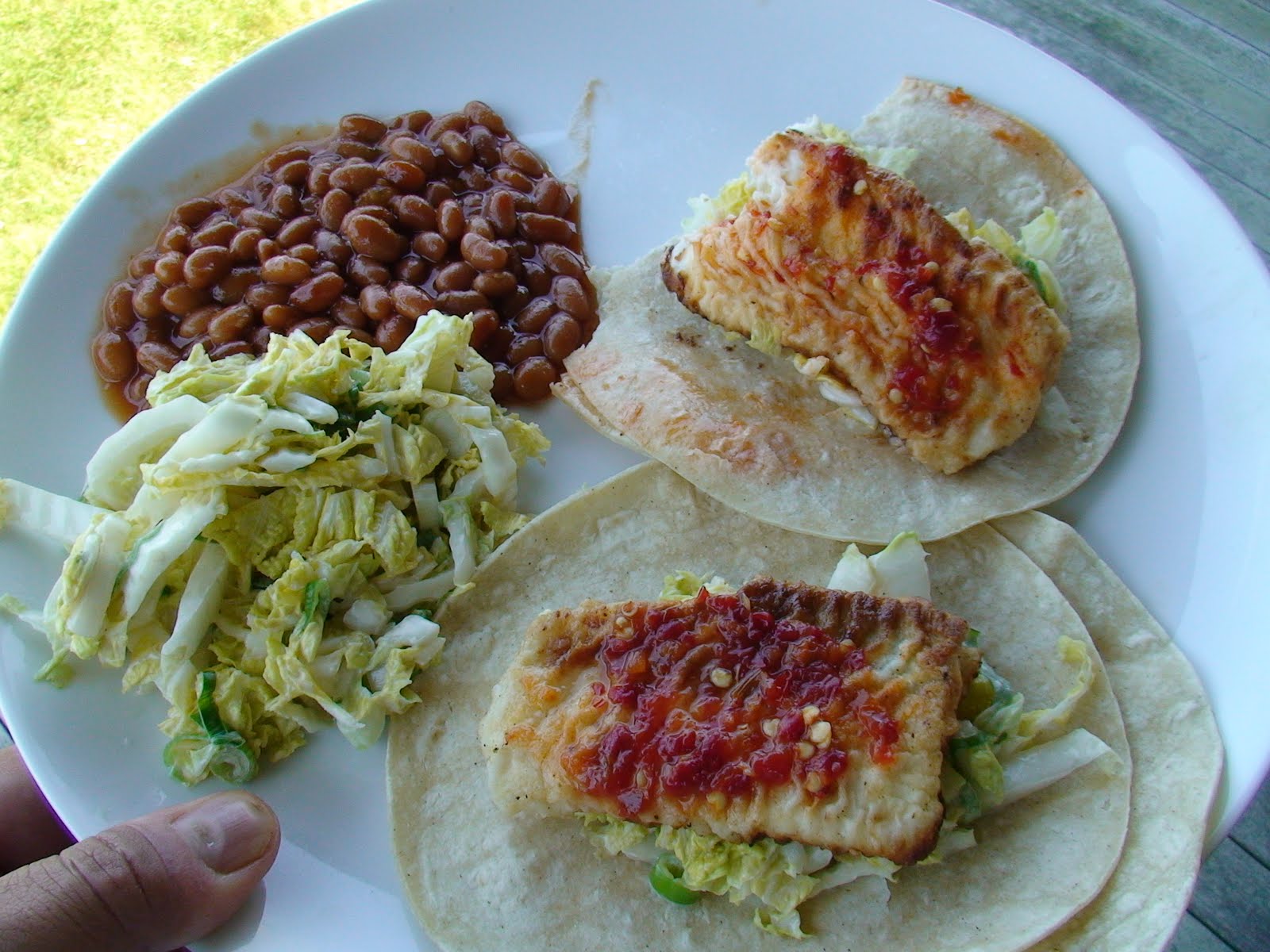
Fief du Breil was too delicate for fish tacos, for example. Luneau Papin's L' D'Or, $18, Louis/Dressner Selections, however, was rich and full enough for this lunch. Guy Bossard's Expression d'Orthogneiss, $22, Kysela Imports, is still a bit of a mystery to me. The wine began poorly, and I thought that it might have been a damaged bottle as it seemed too golden in color and rather advanced in its aromas and flavors. But it did very well with air over the next few days and in the end showed compelling and nuanced aromas and great balance and detail on the palate.

Hard to imagine wine not tasting great here.

Wednesday, May 05, 2010

Don't Forget About Guy Bossard

With his cute bearded and smiling face, his annual oyster and old wine party, and his many cuvées, one even more delicious than the next, it's easy to be exclusive in Muscadet with Marc Ollivier and Domaine de la Pépière.

But there are other skilled producers with vines planted in the great Muscadet terroirs, like Jo Landron of Domaine de la Louvetrie, Pierre Luneau-Papin, Michel Brégeon, and Guy Bossard, to name those whose wines I know a little bit. I've had utterly brilliant wines from each of these producers - I have no one favorite (although the 2000 Brégeon Gorgeois was pretty awesome). All of these producers make reasonably priced and cellar-worthy wines that are pretty easy to find. Well, all except for Guy Bossard (click here for the Wine Doctor's profile). His wines are reasonably priced and most assuredly cellar-worthy, but I don't see them very often. And when I do, it's likely to be only one of his three top cuvées. Recently I drank one of his wines and it reminded me of why well made Muscadet is really the most under-valued white wine in the world.

2007 Guy Bossard Muscadet de Sèvre et Maine Expression d'Orthogneiss, $22, Kysela Imports. Bossard's top wines always need a lot of time to open up. When drinking them young it's not a bad idea to decant them several hours before hand. I didn't do that this time, and I was surprised at the immediately beautiful and expressive nose. Absolutely clean and pure, very fresh, and vibrant with lemon, herbs like anise and mint, and stones. The palate is not as expressive, still pretty tough and rocky, and showing wafts of yeasty cellar that come and go. If there is fruit in there, or flowers or herbs, they're buried under the rock. I don't see why this wine shouldn't evolve into the complete package, but I don't have enough experience with it in other vintages to feel confident in my predictions. There is lots of energy here though, and again, the nose is just beautiful.

If you're curious about the wines, get 'em while you can, as Jim Budd reported that Bossard put his Domaine up for sale.

Tuesday, September 22, 2009

Convoluted Thoughts on Cellaring Wine

You know what I realized the other day? I have never purchased a bottle of wine, cellared it for long enough so that one would consider it "ready" to drink, and then drunk the wine. I simply haven't been collecting wine long enough. The mature wine I drink is purchased way after release, or comes to me via generous friends, over meals we share.

I recently drank a glorious bottle of 1995 Chandon de Briailles Corton-Clos du Roi, a bottle I purchased in December of 2008 while in Beaune. Let's see, by the summer of 1995 I had been out of college for two years. I spent the first year waiting tables at a French restaurant in Manhattan, and the second year as a middle school science teacher at a South Bronx public school. I wasn't buying Grand Cru Burgundy on my pathetic teacher's salary. I never tasted this wine young, and then decided that I would age it about 14 years before drinking the next bottle. I bought it and hoped for the best, and this time, that's exactly what I got.

In the first half of 2009, I drank a bunch of Muscadet and decided to age Marc Ollivier's 2007 Clos des Briords and Jo Landron's 2007 Fief du Breil, and the 2002 Luneau Papin Clos des Noelles Excelsior. I'm hoping to wait 10 years before trying the next bottles. I made the decision to cellar those bottles because I drank them, and other Muscadets, and given my constraints regarding space and money, I felt that these would be the most rewarding to cellar. With wines that cost $16-$22, I can afford to drink them young and figure out for myself what I want to do.

The other day I purchased a bottle of 2006 Chandon de Briailles Corton-Maréchaudes on sale for $66. That's well into splurge territory for me, something that happens infrequently. And I have never tasted this wine, nor have I tasted any wine from Maréchaudes, not that I can remember. But I bought it with complete confidence based on the producer, and on the larger place - Corton. I assumed when buying it that I would cellar it for about 12 years.

Is that weird, to invest 12 years in a wine that I've never before tasted? Maybe not. I've had several mature Corton wines, and they develop beautiful complexity with time. Why would this wine from this fantastic and old-school producer be any different? After all, I just drank the 1995 a few weeks ago and it was utterly gorgeous, with fresh ripe fruit that crackled with minerals, and a pungently animale undercurrent. I want my 2006 to become like that wine, the 1995. If I wait 12 years that will surely be the case, no? I wish I could afford to drink this young, to get a better sense of its potential.

I tend to jump on the "cellar-your-wine" bandwagon, blindly assuming that my splurge wines must improve if I cellar them. And hopefully they will, but who knows what will happen when the cork is eventually pulled - not every wine that is supposed to age well actually does. Some people say that we fetish-ize the aging of wine, and that the point is lost somewhere - we do it just for the sake of doing it, without any real sense of what we're trying to achieve.

At a recent industry tasting I had the chance to taste the 2006 Chandon de Briailles Corton-Bressandes. It was unmistakably and immutably delicious, even at this crowded and loud event where it is not possible to really understand a wine. It is all about fruit at this stage, but it is elegant and deeply pitched, with a dense and concentrated feeling yet not at all heavy. Surprisingly, the harsh young tannic structure that I expected was not present. I would quite happily drink this wine now, and some people would say I'd be committing a crime in doing so. Perhaps they're right - perhaps the full character of this great wine needs a decade plus in a cold cellar in order to express itself.

But isn't a bird in hand worth two in the bush? In this particular case, I know what I'm trying to achieve by cellaring my 2006 Maréchaudes. But since I never drank the 1995 young (or any of the other Corton I've been lucky enough to drink), I don't have a sense of what the beginning should be like. In other words, I know what the end should be like, but I'm not sure about the beginning. And now that I am ready to create my own beginnings, I'm not on entirely steady ground.

Tuesday, June 30, 2009

By the Glass - Top Quality Muscadet Edition

I tend to think of Muscadet as a winter white wine, a wine to drink on a cold January night with a plate of raw oysters. I bet I'm not alone in this - Muscadet and oysters are a classic and wonderful pairing. But the best producers in Muscadet are now making wines that, in my opinion, are versatile enough at the table to transcend the oyster stereotype. Perhaps even the seafood stereotype entirely.

It's not just any Muscadet that I'm talking about, though. I'm talking about fine wines by a handful of great producers, like Marc Ollivier of Domaine de la Pépière, Pierre Luneau-Papin, Jo Landron of Domaine de la Louvetrie, Guy Bossard, and André Brégeon. These producers make wines that offer ocean side aromatics and flavors, but also herbal notes, and even, heaven forbid, beautifully expressive fruit.

I recently had the opportunity to drink several of these wines over dinnerwith a group of friends. The overall quality level was simply astounding, especially given the fact that none of these wines retails for more than $25.

NY Bossard-Thuaud Vin Mousseux, $18, Chartrand Imports. This is Guy Bossard's sparkling wine, made mostly of Melon de Bourgogne (the Muscadet grape), but there is also some Gros-Plant and Cabernet Franc in the blend. There aren't many under $20 sparkling wines that are as good as this one. The nose is leesy at first, and there are fine mineral and lemon zest aromas. The fruit is perky and ripe, there is good acidity, and the finish is clean and brisk.

Our bottle of 2007 Domaine de la Pépière Muscadet Clos des Briords was corked, sadly, as was our 2005 Luneau-Papin L D'Or. I've warned people about drinking wine with me, that I am a magnet for corked wine now, but they just don't listen.

2006 Guy Bossard Muscadet de Sèvre et Maine Expression d'Orthogneiss, $19, Kysela Imports. Yes, Bossard's still wines are imported by a different company. 2006 wasn't the greatest vintage in Muscadet, but this is great wine. Shy at first, but the nose opens up to reveal beautiful floral notes. Great purity and freshness, like spring water. good acidity, and an energetic lemongrass finish that makes me think of pairing this wine with Thai style roast chicken or spring rolls.

2007 Domaine de la Louvetrie Muscadet de Sèvre et Maine Sur Lie Le Fief du Breil, $18, Martin Scott Imports. One of my favorites every year, this seems to be a particularly excellent vintage for this wine. The nose is leesy and rich, and very expressive with anise, herbs, and ripe citrus fruits. The palate is quite closed still, but the raw material is obviously very lovely, with hints of fruit, wet rocks, and ocean water. I'm putting mine away for 10 years minimum, and when I crack the first one it's going to be with a simple roast chicken, and braised fennel.

1997 Luneau-Papin Muscadet de Sèvre et Maine L' D'Or, $23, Louis/Dressner Selections. Recently re-released by Dressner. Next to the above wines the nose here is much more mature, with wild mushrooms in the foreground and the immutable brine and citrus aromas underneath. A truly compelling nose that was at its most expressive a solid hour after opening. The palate was as youthful as the 2005 I had a few months ago. This wine seems as if it could do another 15 years in the cellar without blinking. If I have the good fortune to drink this again, I hope it is served along side a plate of wild mushrooms cooked with nothing other than butter and perhaps some thyme.

We then moved on to drink two very special wines, wines that according to David Lillie of Chambers Street Wines, might represent the future of Muscadet. Within the rather large AOC that is Muscadet de Sèvre et Maine, there are certain parcels that offer particularly high quality, parcels that some growers are vinifying separately in order to showcase the specific terroir. These wines are typically aged on the lees for much longer than is allowed under the current rules, and ironically cannot be labeled Sur Lie. In fact, these wines are sometimes not labeled as Muscadet, That's how different they are from Muscadet de Sèvre et Maine, or more aptly, that's how annoyingly absurd the French appellation systems can be. I think of these wines the way I think of Burgundy wine - they are highly site specific. Domaine de la Pépière's Granite de Clisson is an example of this kind of wine - a superb wine last produced in 2005. We did not drink that wine on this night, but we did drink two others that were perhaps equally wonderful.

2002 Luneau-Papin Muscadet de Sèvre et Maine Clos des Noelles Excelsior, $22, Louis/Dressner Selections. I'm going to come right out and say it - I LOVE THIS WINE. From vines at least 60 years old in the village of La Chapelle-Heulin, aged on its lees for three years. The nose is brisk and mineral, but with a nutty depth, and with lovely ripe fruit. I was once poured this wine blind and the first thing I said to my friend was "Well it's obviously a Muscadet." It is the essence of everything Muscadet, but more intense and delicate and deep. Brilliant purity on the palate, great acidity, very youthful, this wine will clearly reward long term cellaring, and somewhere down the line I think will make a great cheese partner.

2000 Michel Brégeon Muscadet de Sèvre et Maine Gorgeois, $22, Fruit of the Vines Imports. From vines in the village of Gorges where there is apparently a special black granite that gives this wine its unique character. We were advised to give this wine a lot of air, so we decanted it for 2 hours prior to drinking. It was absolutely beautiful wine, my favorite of the night. The nose was focused and energetic with detailed notes of licorice and lemongrass, and ripe fruit that had a tropical edge to it. Someone said pineapple. Very intense and rich on the palate, buzzing with energy, many layers of fruit and minerals, and a long finish that ends where it started, with licorice and lemongrass notes. I want to drink this wine with tea smoked duck. Who are you to stop me?

Wednesday, December 03, 2008

By the Glass - 2005 Muscadet Edition

2005 was the vintage of the century in Bordeaux, the vintage of the millennium in Burgundy, the finest post-World War II vintage in the Rhône, and the greatest vintage in recent memory in the Loire. Isn't it tempting to check in on your 2005's? I have equal amounts of patience and curiosity, so under the right circumstances, I can be convinced to open a bottle that really should be left alone.

But haven't you found that sometimes wines from these "vintages of the century" aren't always better than wines from normal, or "classic" vintages? That they don't age as well? Based on my utterly informal and amateur observations, there are some 2005 Muscadets that will cellar very well, and others that might not improve all that much. These are bone-dry wines of deep mineral character, after all, wines that might not benefit from the super-ripe conditions of 2005. I wonder how they'll stack up against their unheralded brethren from the "classic" 2004 vintage, for example. I know you love Muscadet - what's your take on the 2005 vintage?

Here are my notes on a few 2005 Muscadets that I drank this fall:

2005 Domaine de la Louvetrie Muscadet de Sèvre-et-Maine Sur Lie Le Fief du Breil, $18, martin Scott Imports. Drank in late November. This wine is lovely right now, open and balanced. The nose is a blast of yeast, cream, saline and citrus. Bright and fresh on the palate with racy acidity providing the right cut. There is a nice herbal tint to the finish. Here's the thing, though: this wine is good, but nowhere near as amazing as the 2004, in my opinion. I'm not sure that there is much point in long-term cellaring this one.

2005 Luneau-Papin Muscadet de Sèvre-et-Maine Le L D'Or, $17, Dressner Imports. Drank in late October. The top vineyard in the estate and always a wine worth cellaring. The first day it's got a lot of fat, with a sherbet-like lemon cream thing happening on the nose. The palate is creamy too, and not yet in focus. On day 2 this wine shows what it's all about, with focused acidity, well defined fruit and mineral flavors, and excellent balance. Seems like it will wear it's creamy ripeness well, and probably better to hold for a while.

2005 Guy Bossard Muscadet de Sèvre-et-Maine Expression de Granite, $18, I forgot who imports this. Drank in mid October, and then again in late October with Marcus of the now-defunct blog Doktor Weingolb when he most generously carried a bottle from Montreal specifically for our lunch. Can I tell you that the first bottle I drank was honestly the finest Muscadet that I've ever had?
Never would have guessed it at first. I was so disappointed when I opened this bottle at 5 in the afternoon. Like licking a granite wall, no fruit, only minerals of the most intense nature and a thin texture. Basically undrinkable. We left it alone and came back to it a little after 8pm and it was really singing. Fragrant with a lemon sherbet richness, a bit floral, and briny. The palate was fleshy with ripe yellow fruit and intense minerality, and good acidity and balance. This wine displays the richness of 2005 but incorporates it into the overall Muscadet character in a beautiful way - incredibly precise and focused wine.

2005 Domaine de la Pépière (Marc Ollivier) Muscadet de Sèvre-et-Maine Sur Lie Clos des Briords, $14, Dressner Imports. Drank in late September. Bursting with ripe creamy citrus fruit on the nose, settles in with seashells and pure water. Although this wine is quite dry, it is very rich. The nose shut down a bit after a few hours open, and I can't tell you what happened on day two because this delicious wine didn't make it that far. Ripe and expressive on the palate with good acidity. Worth holding some for the future, which is a good thing, as this is the one I went deep on - I have a half case buried somewhere.

2005 Luneau-Papin Muscadet de Sèvre-et-Maine Vieilles Vignes Domaine de la Grange, $12, Dressner Imports. Drank in mid August. Very rich and full for a Muscadet, but retains its varietal character. Briny minerals and lemon peel on the nose, full and expansive on the palate. You could serve this in place of a young white Burgundy with the appropriate dishes, and be happily surprised, and save a lot of money too. Beautiful now - I'm not sure if aging this will be worth the time and space.

2005 Domaine de la Pépière Granite de Clisson, $19, Dressner Imports. Drank in Late July. This is the wine that Marc Ollivier kept on the lees for longer than is allowed under the rules governing Muscadet sur lie appellation status. Arcane French wine rules, anyone? Regardless of the name, this is Muscadet in all of its glory, and it's fantastic. The nose is all minerals with only hints of flowers and citrus fruit poking through, and there is a full almost yeasty essence too, especially with some air time. The extended lees time is obvious on the palate - the wine has a distinct creaminess. It's focused and cut with acidity, and salty with minerals. Broad and mouth filling, and just delicious. And there is better balance and definition on day two. This is a wine that seems like it will improve over the long haul.