Lessons in a Bottle
There are many things I learn when drinking wine. Here are some things I've been thinking, things I want to remember entering 2013, along with the bottles that helped to inspire the lessons:
Posted by
Brooklynguy
2
comments
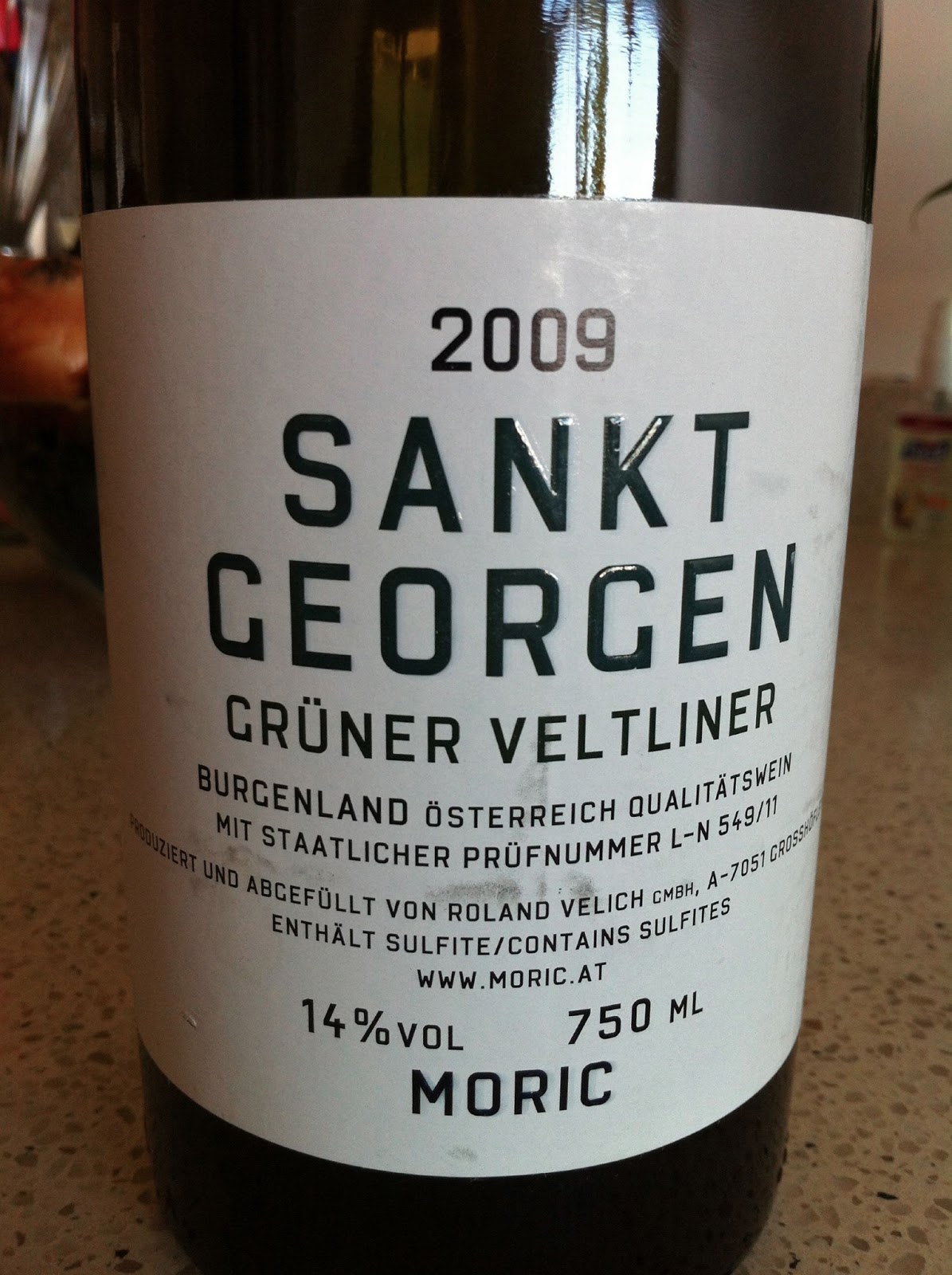
Labels: Barbadillo, Bartolo Mascarello, Fugedaboudit, Lauer, Moric, Noël Verset, Pierre Gonon, Selosse
Okay, now that I have your attention...
From the little that I have tasted so far, I think 2010 is going to be a fantastic vintage for many of the wines that I love to drink. I'm talking about Beaujolais, Muscadet, Chinon and the other Loire Valley sites. Fantastic in the sense that the wines will be both incredibly delicious and also very much true to themselves, highly expressive of place.
Think about these wines in 2009, for a minute. The wines are very ripe, full in body, and I've often thought that they do not express terroir as well as they do in the less ripe vintages. I'm not saying they are bad wines, or that I don't like them, or anything like that. I'm just saying that the average 2009 version of a wine that I typically love turns out not to be a style of wine that I love.
2010, however, seems to be a different story. I remember in the early spring at the Bowler portfolio tasting I spoke with Mathieu Baudry while tasting through his '09s. I told him that I was surprised at how ripe they were. He agreed, and said that while they are good wines, he is extremely excited about his 2010s. He said that they will show a perfect balance of fruit and soil characteristics, great acidity and balance, and a blend of power and grace. That sounds exciting, no?
Dan Melia of Mosel Wine Merchant told me that 2010 was a crazy vintage for Mosel Riesling with the highest acidity levels in years. He said that many producers had to de-acidify, and that some of the wines, even from big name producers, might be difficult. The producers who were able to handle the various challenges made truly great wines, he said, and he is very excited about a lot of the 2010s in his portfolio, including wines by Peter Lauer, Weiser-Küntsler, and others. Yes, he imports the wines and is expected to say that he likes them. But if you know Mosel Wine Merchant or Dan Melia, you wouldn't be thinking about that conflict because for them there is no such conflict, he says what he thinks about the wines.
Peter Liem in ChampagneGuide.net talks of 2010 as a very difficult vintage with prominent rot and other dreary weather problems. He says that he doubts there will be many vintage Champagnes made. But he also expresses a clear optimism for the vintage, saying that conscientious growers were able to harvest ripe fruit, and if they employed "strict, even ruthless triage" they were able to make quality wines.
Those are just stories about wines though. I've tasted just a wee bit and I must say that I have been blown away so far by the 2010 versions of some of my favorite wines. Here are two:
2010 Domaine de la Pépière Muscadet de Sèvre et Maine Sur Lie Clos des Briords, $16, Imported by Louis/Dressner Selections. I always love drinking Clos des Briords, but this is my favorite since 2007 or 2004 and I think I prefer it to them. The wine is simply great - it shows a wonderful blend of minerality, fruit, and acidity, everything in balance, and it is vibrantly expressive and intensely focused. Yes, it's a bit harsh now in its youth, but for me, it promises to be completely delicious and is absolutely and unmistakably Clos des Briords. If you like Muscadet, this is a wine to go long on.
2010 Coudert Fleurie Clos de la Roilette, $20, Imported by Louis/Dressner Selections. I hadn't even tasted the wine and I knew it was great, just the nose is enough. It is dark and meaty and herbal and cooling and completely harmonious. The palate offers great joy in its meaty and mineral-infused fruit, its slender frame, and its nuanced and detailed expression. It is grainy and tannic and still uncoiling, but this is exactly what excites me about Clos de la Roilette, and to me it is as good as young Beaujolais gets. I haven't tasted the Tardive yet and I'm excited...
I have no idea what 2010 will bring in the finished wines of Champagne, in Burgundy, in the Jura, or in the other places I love. But I have high hopes.
Posted by
Brooklynguy
3
comments
Labels: Beaujolais, Coudert, Dan Melia, Domaine de la Pépière, Huet, Lauer, Muscadet, Peter Liem, Weiser-Kuntsler
I'm a German wine neophyte, but over the past year I've started poking around a bit, drinking Riesling here and there. I like the wines very much in general, but I'm still a bit intimidated. There are several regions and many producers, sweet wines and off-dry wines and dry wines, wines that were harvested at spätlese must weight but fermented dry, and all sorts of other complications. Some of the labels indicate the relative sweetness (trocken, halbtrocken, feinherb, etc.), some do not.
How to really begin learning about the wines, approaching them in a sensible way? There are many answers to this question, but I decided that I would use basically the same approach that I use with Burgundy wine. Drink the basic wines by a variety of producers and see whose wines I like, and go from there.
In Burgundy it's this is relatively straight forward - the basic wines are regional wines, Bourgognes and the like. But what are the basic German Rieslings? Knebel makes a wine that is simply called Riesling Trocken. It is not classified using prädikat language (kabinett, spätlese, etc.), it is a blend from several vineyards, and is the most inexpensive wine in their portfolio. Sounds like a basic wine. But wait - Knebel also makes the Von den Terrasen Riesling Trocken, also a blend from a few vineyards, also without prädikat language, and only a few dollars more. Are they both basic wines?
Perhaps these things are a bit silly to focus on, but it became an issue when I decided to convene the Brooklyn Blind Tasting panel to sample a load of "basic" German Riesling from the 2009 vintage. Which wines should be included, which should not? I very much wanted to include the wonderful Immich-Batterieberg Mosel Riesling CAI, but I didn't because the wine is a kabinett. It didn't have to be labeled this way, but it was - see importer's explanation in the comments on this post. Anyway, I bought some wines for the tasting, and when I asked a few Riesling importers for donations, they were all a bit confused. "What exactly do you want," they would ask. "Do you want dry wines or sweet wines, and what about prädikat language? And what if a producer makes more than one of these 'basic' wines, as you call them?" Reasonable questions, indeed.
But I was determined to do this tasting for a couple of reasons. Firstly, I haven't done one of these in a long time and I really enjoy blind tasting. Also, I wanted to learn more about the producers. And lastly, I had this idea that "basic" German Riesling can compete with the best white wines of the world, say Muscadet, at the under $20 price point. So flawed definition and all, I convened the panel and we tasted 2009 "basic" German Riesling. For this tasting I was joined by some serious Riesling people: Rubén Sanz Ramiro, Head Sommelier at Veritas Restaurant, Stephen Bitterolf, Wine Director at Crush Wine & Spirits, and Eric Asimov, wine critic at The New York Times.
We tasted 9 wines in two flights, discussed the wines, and everyone selected two favorites. We then drank the wines with dinner. I must say, I was quite disappointed with how the wines showed, as a group. There were a few bright spots, but a few dark spots as well, and unless it was a root day or something, my theory about the great value of this category of wine was basically blown. The way I see it now is this: there are some producers whose "basic" wines are utterly fantastic, and might qualitatively equal a great Muscadet, for example. But if this tasting is representative of the wines as a group, then perhaps Eric Asimov was right when he said after hearing about my theory, and I'm paraphrasing here, "Hmm, I don't think I agree. After all, great Muscadet is made with the region's best grapes from its most interesting terroirs, and it sells for $16. Basic German Riesling, whatever that is, is made from the region's least interesting grapes and from its least interesting terroir, and it sells for $20. You have to buy up to get the best German wines."
Here are the wines we drank, along with some notes:2009 Willi Schaefer Mosel Riesling Qualitätswein, $18, Terry Theise Selections/Imported by Michael Skurnik Wines. Rubén, Eric, and I selected this as our favorite of the tasting, and Stephen had it as his second favorite. I liked the subtlety and harmony of the nose, and the faint sponti whiff that darted in and out, and that the palate was so well balanced, although very much off-dry. It was clean and pure, and just delicious. Rubén thought it was a classic wine in the off-dry style of the Mosel. He said that it wasn't terribly concentrated, but he liked the vibrancy and focus, and he found that it improved over the course of the evening. Eric felt that it had good presence, texture, focus, balance, and acidity, and that it was simply very pleasing. He said that it was the most complete wine of the tasting. Stephen enjoyed the contrast between the fresh tart nose and the sweetness of the palate, and he thought it was a well-done wine. He did say, however, that there was something that bothered him about the midpalate, that it was a bit glossy, too giving, not enough cut.
2009 Reichsrat Von Buhl Deidesheimer Herrgottsacker Riesling trocken, $16, Rudi Wiest Selections/Imported by Cellars International. This wine was donated by the kind folks at David Bowler. This was Stephen's favorite wine. He said that it was the tartest, the most curt, and the shortest wine, but he liked the bitterness and acidity and suggested that this wine speaks more to the German palate. He said that it felt as though it has more ambition than some of the other wines, and that he wanted to check back in 5 years. I also liked this wine, particularly the mineral character, but I was put off by what I thought was the canned character of the fruit. Neither Eric or Rubén were terribly impressed.
2009 Weingut Keller Riesling trocken, $20, imported by Petit Pois Corp. Rubén and I both picked this as our second favorite wine. Rubén liked the midpalate concentration, although he noted that the alcohol stuck out a little and clipped the length a bit. I liked the nose a lot, with subtle pineapple fruit and minerals, and I found the palate to stand out among the wines for its mineral and acid drive. Clean and pure with some hints of baking spices, I wanted to eat with this wine. Stephen, by the way, identified it as a Rheinhessen wine, but didn't love it, wanting more tension in the wine.
2009 Fritz Haag Riesling, $18, Rudi Wiest Selections/Imported by Cellars International. This was Eric's second favorite wine. He felt that a touch of sulfur made it opaque, but he liked the texture and the presence, and he thought it had good length and lots of character. He said that it was identifiable as a Mosel Riesling in a classic way. Stephen found the wine to be confusing - he couldn't get much from it, finding it ornery and restrained. But he liked the green apple fruit and slightly salty taste, and the minerality. In the end, he thought that it never really came together. Rubén was on the fence, liking the ripeness, but he felt that the wine lacked concentration and length. I wanted to like the wine but I found the sulfur on the nose to be off-putting.
2009 Weiser-Kunstler Mosel Riesling feinherb, $19, Mosel Wine Merchant selections. This wine was kindly donated by the folks at Mosel Wine Merchant. Eric really liked this wine, finding good character and lovely apricot and peach fruit, some ginger, and minerals. He liked the succulent texture and called it one of the more complete wines of the tasting. I really liked this wine and second favorite was a toss up for me between this and the Keller. I thought the nose was subtle and harmonious, and I liked the hints of baking spice and earth. The off-dry palate was nicely balanced with good acidity and there was a lovely bitter pit finish. Stephen liked the fresh nose, the sweet palate and thought it was a well put together wine, but found it to be unidimensional. Rubén liked it initially, but going back to it he found it a bit mute and without complexity. There were leftovers of every wine except for Willi Schaefer's, and this one improved a lot on day 2, by the way.
2009 Schäfer-Fröhlich Nahe Riesling Medium-Dry, $19, Rudi Wiest Selections/Imported by Cellars International. This wine was donated by the kind folks at David Bowler. During the tasting this wine did not show very well, but it improved a lot on day 2. Stephen liked the clean mineral nose but found the wine to be closed down, or maybe reductive. He liked the pear and apple fruit but thought the wine was short and rough without much distinction. Eric didn't like the wine at first, finding it bland, but with air he liked the mineral character. In the end, though, he thought it was fairly simple. Rubén felt the same way. I liked the spices and the ripe orchard fruit but I thought it was reductive and not entirely balanced. Again, much better the next day.
2009 Müller-Catoir Riesling trocken, $18, Terry Theise Selections/Imported by Michael Skurnik Wines. This wine was donated by the kind folks at Michael Skurnik Wines. Although we were divided on this wine, no one thought it showed very well. Stephen found it bizarre but enjoyable, with ginger and mandarin, but he also thought it was lean and difficult. I thought it was basically a balanced wine and I liked the mandarin fruit and the acidity, but I thought it felt a bit candied. Eric and Rubén really did not like the wine. I heard things like "bland, dull, without character, too much malic acid, out of balance, short, over-cropped cheap Riesling."
2009 Peter Lauer Riesling Barrel X, $17, Mosel Wine Merchant. This wine was donated by the kind folks at Mosel Wine Merchant. This was an off bottle, and I say this because I've had a couple of bottles over the past few months, and this one was entirely different. Eric and Stephen literally said the same thing upon smelling - "Prum?" This wine was dominated by sulfur, overwhelmed by it. Sad too because Eric said that underneath the sulfur it seemed as though there was a very interesting wine with intriguing aromas and flavors.
He wanted to check back in a few years. Stephen thought it was serious wine with freshness and a real core, very solid. He said that it wasn't a sulfur screw-up, that there was a lot of tension and the wine was built to age.
2009 Weingut Josef Leitz Riesling Eins Zwei Dry "3," $16, Terry Theise Selections/Imported by Michael Skurnik Wines. This wine was donated by the kind folks at Michael Skurnik Wines. I liked this wine more than the others, finding a rich ripe nose and palate that was almost balanced by the acidity, but I found something honeyed in there that was distracting. The others really disliked the wine. I heard things like "artificial, disjointed, thin, and dilute."
Posted by
Brooklynguy
14
comments
Labels: Fritz Haag, Germany, Josef Leitz, Keller, Lauer, Müller-Catoir, Schäfer-Fröhlich, Tastings, Von Buhl, Weiser-Kuntsler, Willi Schaefer
Here are the wines I drank in November that have not, even in passing, appeared recently on this blog. The "excellent" group consists of wines that are truly memorable, wines that inspire me to seek out and buy these and wines like them. The "excellent" and "very good" groups are wines that I would happily buy at the given price. All other wines, even if I liked them, are not wines that I would buy today given my recent experience with them. Doesn't mean that I think they are bad, just that there are other wines I would prefer to buy with that money. Within each group, I will list the wines in the approximate order of enjoyment.Excellent Wines
2009 Peter Lauer Ayler Kupp Riesling Senior Faß 6, $24, Mosel Wine Merchant. FANTASTIC. Full disclosure, my friend Dan Melia represents this wine. But forget about Dan, the wine is great.
(2004) David Léclapart Champagne Cuvée l'Apôtre, price and importer unknown. Sick Blanc de Blancs.
2009 Guy Bossard Muscadet de Sèvre-et-Maine Expression de Granite, $18, Kysela Imports. You're crazy if you don't try this wine.
2007 Michel Brégeon Muscadet de Sèvre-et-Maine, $12, Kermit Lynch Wine Merchant. Just a few years and this wine goes from aggressive acid and rocks, to beautiful.Very Good Wines
1998 Domaine de L'Arlot Nuit St Georges Clos de L'Arlot, price unknown, Michael Skurnik Wines.
2006 Domaine de la Tournelle Ploussard de Monteiller, $24, Jenny & François Selections.
NV Gutierrez Colosia Fino Sherry, $23, Bon Vivant Imports.
2006 Gatti Piero Brachetto d'Acqui, $12 (375 ml), importer unknown.
2007 Binner Saveurs Printanières, $17, Jenny & François Selections.
2009 Günther Steinmetz Riesling trocken, $15 (1 liter), Mosel Wine Merchant.Good Wines
2000 Auguste Clape Cornas, $50, Kermit Lynch Wine Merchant.
These, I Had Problems With
2005 Huët Vouvray Pétillant Brut, $26, Robert Chadderdon Selections. Inexpressive.
2009 Château Jean-Pierre Gaussen Bandol Rosé, $19, Moonlight Wines Imports. Pleasant, if not terribly complex wine, and lacking in the acidity that I think this kind of wine needs in order to be successful.
2005 Mark Angeli Anjou Blanc "La Lune," $27, Louis/Dressner Selections. Felt tired and out of balance. I should have drunk this years ago.
2009 Luneau-Papin Muscadet de Sèvre-et-Maine Clos des Allees, $14.50, Louis/Dressner Selections. This vintage is not the racy and mineral driven wine that I remember and love from years like 07.
Posted by
Brooklynguy
9
comments
Labels: Binner, David Léclapart, Domaine de L'Arlot, Domaine de la Tournelle, Guy Bossard, Lauer, Michel Brégeon
The other night BrooklynLady and I went to dinner at Vinegar Hill House with Peter Liem and Dan Melia. We had a great time and I thought the place essentially lived up to the hype. Forgotten New York neighborhood, lovely decor, even if painstakingly mussed like a Williamsburg cool-cat's hair. Appetizers were fantastic, the rest of the food very good too, everyone was happy. And someone over there loves wine, because there are many enticing things on that list at fair prices.
While we were waiting for our table, and part of the way into our appetizers, we drank 2007 Romano Clelia Fiano di Avellino,"Colli di Lapio". Fiano is something that Levi Dalton has poured for me several times now, and he feels that it offers perhaps the best raw material of any white grape in Italy. This wine was so well made, and just delicious, vibrant and well balanced. And my last smokey sip was a ridiculously good match with grilled charred octopus. Our 1998 López de Heredia, Gran Riserva Tondonia Rosado showed beautifully too, and worked with everything on the table. Fleshy, oxidative, focused, pure, this wine is its own special thing and if you haven't yet had it, at about $25 retail it's just spiteful of you to continue not trying it. Especially now after a year or so since release - this wine has never shown better. We moved onto the 2007 Agnès et René Mosse Anjou Les Bonnes Blanches, and I'm just not a fan. I know that all the cool-cats love Mosse, and they are darlings of the natural wine scene, but for me the wines are hit or miss. This one showed a lot of volatility and simply wasn't very interesting, but it didn't matter - Opici "Chablis" couldn't have darkened our mood at that point.
Dinner with company like this is always great, but on this particular evening there was a nice little ancillary benefit. Dan arrived right from work, and his work is selling Mosel Wine Merchant Riesling. He schlepped 20 wines with him in a crumby red Toyota Tacoma (it might be in perfect condition for all I know, but in my mind's eye it's crumby) to Prune and TriBeCa Terroir and Blue Angel, and lots of traffic and other hassles later, he arrived at my house. He brought four great Rieslings with him for us to enjoy as apertifs, and then tired of the schlepping, Dan left the bottles with me. How cool is that?
These were all 2008's, all harvested at the Spätlese ripeness level, but they are all dry wines. Well, only two of them are technically trocken wines, but the other two drink as if they are dry wines. These are some of the top wines from each producer and it was quite a treat to enjoy them over the next few days. A few notes to follow, but since I have precious little experience with Riesling, my notes aren't all that interesting. What I can tell you, is that as a group, these wines have a common thread. They are remarkably pure, they are delicate and detailed, they have great intensity and length, and they are very much of the soil. They are great wines, and if they were Burgundies, they would cost upwards of $75. But they are dry German Rieslings, they typically require the hand sell, and none of them will run you more than $35 - honestly, a bargain.2008 Peter Lauer Saar Ayler Kupp Riesling Fass 12 Unterstenbersch, $35, Mosel Wine Merchant. I suppose if I had to pick a favorite, this would be it. A bit of sponti natural yeast fermentation musk on the nose, deeply earthy and mineral too. Pure, vibrant, sweet fruit, a delicate springwater feel to the wine, but also intense and with great length. The thing that killed me about this wine is that is so intense and still is a wine of such finesse. Lauer is not using the typical German wine language, and the label says nothing about must weight at harvest or dryness level. Instead, Lauer describes the terroir, in this case at the bottom of a south-facing slope just west of the Saar river, from 50-year-old vines.
2008 Clemens Busch Vom Roten Schiefer, about $28, Mosel Wine Merchant. Vom Roten Schiefer means "from red slate," and Clemens Busch is also avoiding ripeness and dryness on the label, in favor of a statement about terroir. Again, amazing purity, a creamy sense to the wine, a bit doughy and spicy. I took a sip of this wine and then, rather unglamorously, had to go and change my older daughter's pull-up (a diaper for the mostly potty-trained to wear while sleeping, for you non parents out there). As I leaned over her on the changing table, amidst several other pungent aromas, she asked if I had been eating bread! The finish
is all herbs and rocks and bitter pits and the length honestly is rather startling. This wine is not yet available in the US, but it will be soon. A bit more about it here, from Lars at Mosel Wine Merchant.
2008 Stein St. Aldegunder Palmberg-Terrassen Spätlese-trocken, $26, Mosel Wine Merchant. Perhaps the most delicate of the lot, this wine also showed the most overt fruit - lots of apricots. Very pure and fine, intensely mineral, and the creamy mid-palate merges with the very mineral finish that lasts forever and buzzes with some sort of herbal honey. Such a delicious wine.2008 Knebel Winninger Röttgen Spätlese-trocken, $36, Mosel Wine Merchant. More muscular than the others, more concentration. Also a bit more fruit on the nose, with green melon, but still a wine of rocks and bread. Energy, depth, finesse, purity - I've said the same thing about each of these wines, but it's true of each. One more thing I can tell you - this wine had already been open for 48 hours when I mistakenly left about a glass in the bottle, same for the Stein wine, overnight and out of the fridge with no stopper. And the next day at 1 pm they both were excellent with our fluke lunch.
Posted by
Brooklynguy
4
comments
Labels: Agnès et René Mosse, Clemens Busch, Dan Melia, Germany, Italy, Knebel, Lauer, Levi Dalton, López de Heredia, Peter Liem, Ulli Stein
Lars Carlberg and Dan Melia, the two fine gentlemen of Mosel Wine Merchant, are in town this week with a few of the growers they represent. They hosted a dinner last night at Prune in the East Village, and I was lucky enough to attend.I know so tremendously little about German Riesling that it simply wouldn't be proper for me to try to discuss the wines in a meaningful way - I have no context to share with you, nothing to say about them other than how delicious they are. And they are very delicious.
Instead, I can tell you a few things about Lars and Dan, and the work they're doing. Mosel WIne Merchant is not a large company. It's Lars and Dan - that's it. They're a couple of smart, well-educated, well-traveled, genuinely kind fellows who love wine, particularly Mosel Riesling. They could be doing many things that would probably be far more lucrative, but they run this little company together, bringing naturally made, small production Mosel Riesling to the US and other markets. They really believe in these wines, and it's easy to understand why after drinking them with dinner.
Lars grew up partly in Germany and partly in the US - he lives in Germany now and runs all of Mosel Wine Merchant's European operations. Dan managed Prune for 8 years and left to travel in Germany. He's completely fluent in German - "his German is better than mine now," says Lars. Dan is the guy who schleps the wines all over NYC and the rest of the country, making sure that we have the chance to buy them in retail shops.
Posted by
Brooklynguy
5
comments
Labels: Dan Melia, Germany, Knebel, Lauer, Mosel Wine Merchant
Drinking, eating, enjoying in Brooklyn.