Showing posts with label Selosse. Show all posts

Friday, August 02, 2013

Wine Glasses and Champagne

Warning: I am about to write about an expensive wine glass, and I will suggest to you that it is the best of its type, and worth the money. And furthermore, that if you pay good money for good wine, you should buy this glass if you have not already.

Why the warning? A lot of folks think that wine glasses don't matter, and that appreciating good glasses is snobbery or snake medicine. These people are wrong - there's no other way to say it. It's not entirely their fault, though. There is an unfortunate snobby culture that has been part of the modern history of wine appreciation and people might mistake the idea that some glasses are better than others with the false notion that you must use a certain glass to drink wine correctly. This is obviously not true. We have all had memorable experiences drinking wine out of bad wine glasses. It is not necessary to have the best glasses in order to enjoy a wine.

That said, some glasses really are better than others. A good Burgundy glass, for example, allows a good Burgundy wine to show more of what makes it a good Burgundy wine. If you drink a wine out of different glasses, the wine will show best in one of those glasses - there is a difference. And I'm not suggesting this in a snobby way - there is no "right" way to drink wine, and you should do whatever makes you happy. But there is something to this, this glassware thing. If you are someone who will spend $75 on a bottle of Champagne, for example, you might consider experimenting with different glasses. You might find that the wines you care about actually show better, given certain glasses.

There are few instances in which I feel that I know which glasses are best. Here is one instance: Champagne shows best out of Riedel Sommelier Series Vintage Champagne glasses. In the above photo the Riedel Champagne glass is on the left. It is a flute, basically, and this is not the fashionable way to drink Champagne these days. People like to drink Champagne from wider bottomed glasses like the Zalto (the middle glass in the above photo), or even from a Burgundy bowl. To me, the flute is the riskiest way to drink Champagne. Bad flutes (which to me are most flutes) restrict the aromas and flavors. But this is no ordinary flute. It is wider everywhere, and widens even more above the glass's halfway point. I cannot say that I understand the science here, but I appreciate the results.

This is not my discovery, by the way, Peter Liem first told me about this. The photo above was taken at his house in December as we drank 2002 René Geoffroy Cuveé Volupté out of three different glasses. I went in with an open mind and there was no mistaking it. The aromas were more focused in the Riedel glass and yet still expansive and complex, and it just moved onto the palate better, feeling more balanced. I had tried drinking Champagne out of this glass before, but after this experiment I literally refused to open a bottle until I bought a set of these glasses for myself. This, my friends, is an expensive proposition - they are about $75 a stem. But I own some decent Champagne, and the value this glass adds to the experience of drinking Champagne makes the glass worth more than its dollar value.

The first Champagne I drank from my new glasses was the 2008 Marie-Noëlle Ledru Rosé de Saignée. It's not a wine that emphasizes fruit, instead feeling very mineral and earthy. In the Riedel glass the wine's subtle fruit flavors mingled with the more intense minerality, and the wine showed perfect balance.

Since then I've used these glasses quite a few times and always with great results. It makes sense to me that wines based on Chardonnay would show beautifully from this glass. I've tried several times now and the pinnacle for me was this:


The 2002 Pierre Peters Blanc de Blancs Les Chétillons is a stunning wine, and in this glass the aromas were positively regal and flowing. Incisive chalk, green tea, and floral aromas, just beautiful and complex aromatically, and very finely detailed on the palate, which builds in complexity through the finish. Amazing wine, and although I did no empirical testing, it's hard to imagine a wine glass that would be a better medium through which to experience this Champagne. 

What about Champagne made from red grapes - would a Pinot Noir based Champagne also show as well? From what I've seen, the answer is emphatically yes. It's not about displaying the fruitiness of one kind of grape. What makes this glass special is the way it amplifies detail of aroma and flavor while facilitating balance, and this is not grape-specific.

Not long ago a few friends and I cracked a bottle of 2008 Marie-Noëlle Ledru Blanc de Noirs Cuvée Goulté, you know, just to see where it is. Although young and tightly wound, in this glass the wine's bright and energetic fruit shows through brilliantly, as does the vibrantly chalky floor on which everything rests. The next day I poured a small bit into a Burgundy bowl and a Zalto universal and in both cases, the aromas were more diffuse and the overall experience less pleasing.

The other night, on Peter's birthday, (and because of his generosity - he gave us this gift, on his birthday) I had the opportunity to drink a very special wine.

This is one of Selosse's single vineyard Champages. It comes from the village of Aÿ, from a vineyard called La Côte Faron. Selosse began the mini-solera for this wine in 1994 - there are wines that are19 year old in the blend! Until recently this wine was called Contraste, but Selosse has been releasing a series of single vineyard wines in the past few years and this one is among them, its name now La Côte Faron. The wine is gorgeous and there are many fascinating things about it. One thing I was conscious of as we drank it (over 4 hours) was glassware. We drank it out of the Riedel glass. But this wine is made entirely of Pinot Noir, and is composed of wines from vintages 1994 - 2003 (the current release includes some 2004 I believe - this one was released a few years ago). Would the inherent complexity, the aromatic expansiveness be compromised in the flute-shaped glass?

No, as it turns out. I didn't try the wine from a Burgundy bowl, but drinking it out of the Riedel glass was enough. The wine, especially after a couple hours open, showed incredible breadth, complexity, and detail, but in this glass was also entirely chiseled in its focus.

Here is a wine that I love, but have yet to drink out of the Riedel glass. Éric Rodez Cuvée des Crayères is a wine that comes entirely from Ambonnay, but it is not a Blanc de Noirs. It is a blend of a little more than half Pinot Noir and the rest Chardonnay, and it is a blend of several vintages - in this case the base wine is 2008 and there are reserve wines from 2007 back to 2002 in there. In this way it is reminiscent of the Selosse wine - the wine has an intrinsic complexity due to the high proportion of reserve wines. Okay, it's not Selosse, but it's not trying to be. And it is $55 compared with the $400 you'd spend on La Côte Faron if you could locate a bottle in the US. I look forward to seeing what this wine is like in the Riedel glass - maybe some experimentation with other glasses is in order. 

Monday, January 07, 2013

Lessons in a Bottle

There are many things I learn when drinking wine. Here are some things I've been thinking, things I want to remember entering 2013, along with the bottles that helped to inspire the lessons:

There is no "perfect" moment, so don't waste life by waiting. Share and enjoy today.


But it's also important to be patient.


Accept the kindnesses of strangers. 


Be gracious at all times. 


Consume only what is necessary, not to excess simply because something is available. 


Keep experimenting, never stop learning. 


 Things are not always as they seem.


Wonderful things of great value can come in modest packages. 


There is nothing more valuable than a true friend. 

 -----
Heres to a great 2013!

Monday, December 26, 2011

Memorable Pairings of 2011

Well, of the last few months anyway. There have been a few truly memorable drinks and eats in the past months that I never found a way to write about here. So I'll compile them in a best-of-the-unposted list from the last part of 2011.

I was in Jerez in October, and one night I had dinner at La Carbona with Peter Liem and Eduardo Ojeda, the cellar master at La Guita and Valdespino. Eduardo brought several ridiculous bottles to this dinner, one of which was a bottle of La Guita Manzanilla Pasada...but from the mid 1970's! That's right, a Manzanilla Pasada that had spent the past 40 years in bottle. I'm telling you, the idea that Fino wines cannot age is simply wrong. When they are well made and stored properly they can be wonderful. This wine was stunning in its complexity, and also in its freshness.

We drank it with a perfectly grilled bone-in strip steak (I think that's the cut, anyway - you butchers out there can correct me based on the photo if need be). This steak would fare well against anything served at steak temples in NYC - seriously. And La Carbona is by not even a steakhouse. The pairing was fantastic - the umami depth of the wine complimented the meat and the freshness of the wine enlivened and cleansed the palate. An experience I must repeat at some point.

And more Sherry...Joe Salamone was also in Jerez in October, and he returned with a very fine bottle that as of now is unavailable in the States, a special Palo Cortado from Gutierrez Colosía, the very fine producer in El Puerto de Santa María. The average age of these wines is at least 40 years and the wine is a complexly concentrated elegant thing of finesse and beauty.

We drank this wine with home-cooking style Japanese food. It was great with everything, but drinking it with these fried oysters with miso and seaweed was among the most thrilling and delicious pairings I experienced all year. Savory briny sweet complex harmony.

I ate dinner with a few friends at Prune in the fall, and one of them drove in from Rhode Island with several absurd bottles in tow, one of which was the 1972 Leroy Gevrey-Chambertin 1er Cru Lavaut St Jacques. The wine was closed down hard at first, not so unusual for a wine that's been under cork for the past 40 years. But it opened up and showed beautifully, with savory earthy tones and even a bit of very gently stewed fruit. Such a great treat, to be able to drink a majestic old wine like this. We ate all sorts of good things at Prune, and I am not sure, but I think we drank this wine with lamb sausages and all of us were swooning.

Peter generously brought a bottle of Selosse Champagne from France for my birthday in the fall. It is a new release called La Bout du Clos, a wine made entirely from that same vineyard in Ambonnay, from the 2004 vintage. This wine was a bit more quiet than other bottles of Selosse that I've experienced, the oxidative streak not as strong, the supple fruit and saline minerality of the wine doing the talking. It was a special treat.

Peter made a lovely dish of Champignon mushrooms and daikon radish simmered in dashi to go with it - a perfect harmony of savory flavors and aromas. And a concrete reminder, if we needed one, that Champagne is a great table wine.

Why, on Christmas eve my friend Dan Melia opened an absolutely gorgeous bottle of 2006 Marie-Noëlle Ledru Saignée Rosé, and we drank it with excellent grilled cheese sandwiches and various pickles. An unusual pairing, maybe, but Champagne is great with fried food, and the pickles didn't intrude at all. Ledru's Saignée is so very vinous, it's like drinking red wine that happens to have a few bubbles. The wine unfolded slowly and gracefully and was best right as it vanished, a compelling merging of fruit and mineral concentration with textural finesse and grace. Note to self: buy everything Marie-Noëlle Ledru makes before she stops making Champagne.

I've never had Violane before, the sans-soufre cuvée by Benoît Lahaye. This bottle comes entirely from 2008 and is a blend of equal parts Pinot Noir and Chardonnay. I love Lahaye's wines, I love their clarity and focus, their delicate yet powerful expression of Pinot Noir from Bouzy. I loved this wine too, although it is definitely different from the other Lahaye wines I've had. First of all, there is no sulfur, and the wine shows an oxidative undertone that frankly reminded me of some of the Selosse wines I've had (yes, the wine is that good). There is an intense concentration of fruit aroma and flavor and the finish never really ends. We drank this wine on its own, and it was a wonderful pairing. I am drinking the dregs on day two as I write this, and gnawing on a piece of country wheat bread, and it is good.

I haven't had a wine from Santorini in over a year now, as after an initial love affair, I had a group of wines that showed too much sulfur and not enough deliciousness, and I kind of retreated. Not sure what I will do now, after this wine. Peter and I were trying to decide what to drink the other night with a dinner of breaded and fried veal cutlets, cauliflower with cumin, king oyster mushrooms, and garlicky greens. He saw a bottle of 2007 Sigalas Barrel Fermented Assyrtiko in my wine fridge and asked that we open it. I would never have picked that wine, and wow, was it a great pairing.

We decanted the wine about two hours before drinking it, and it was fantastic. The aromas were clear and fresh, vibrant. The wine has a unique aromatic profile, and now that it is maturing, it is articulate and detailed. For me the primary aroma is pumice - the volcanic rock. There is citrus fruit too, something floral, a Burgundian barrel-influenced sweetness, and all infused with this lovely slightly smoky savory-ness. Great freshness and acidity on the palate, balanced, and expressive. Simply delicious wine, and seems like its only beginning to grow into itself. The wine went so well with the veal cutlets, which I topped with a little deglaze of butter, lemon and chopped salted capers. It worked with the earthy cumin notes of the cauliflower and the savour of the mushrooms too. It was surprising to me how this wine offered enough richness to pair with everything on the plate, but also the brightness and refreshment to balance the meal.

This last one reminds me, as a new year approaches, of the value of being open minded, of welcoming new experiences, of being informed by and considerate of what I've learned to be true, but also of wanting to be wrong about things - of learning continuously. I hope that your 2011 ends in a lovely way, and that our 2012 is filled with happiness and learning and many exciting new pairings.

Wednesday, July 27, 2011

July Wines - a Laundry List

Here are some notes on great wines that I was lucky to drink in July, mostly because of the generosity of friends:

Equipo Navazos La Bota de Fino Nº 24, $60, Eric Solomon Selections/Imported by European Cellars. This is what we drank with the pasta and artichokes in the previous post, and it was a shockingly good pairing with the pungent dish. Deep golden in color and showing both flor character and the rich and slightly oxidative notes of a young Amontillado, the wine is beautifully harmonious and made me think of the best salted caramel. It is actually a Fino/Amontillado, a wine that is old en0ugh so that the flor has started to die and the wine is beginning to become an Amontillado. Fino/Amontillado is not allowed to be labeled as such, and so the wine is called Fino. It comes from an old solera at Bodega Perez Barquero in Montilla-Moriles, further inland than Jerez and a place where Pedro Ximenez is used to make Sherry, not Palomino. Fantastic wine and worth searching out.

Valdespino Palo Cortado Cardenal, price unknown, not imported. Valdespino makes several special Sherries from extremely old wines, and this very fine Palo Cortado is one of them. The wines are at least 80 years old, and began life in the Inocente solera. As they aged and moved toward Amontillado they were selected out of the solera, ironically because of something that indicated to the cellar master that they would not be typical and great Valdespino Amontillado. But they are still great wines and become one of the absolutely iconic Palo Cortados in all of Sherry. Peter Liem tells me that this wine is rare and highly regarded enough that if you were to open a bottle for a Sherry lover in Spain, their eyes would bulge in anticipation. Cardenal is a 375 ml bottle and it takes time to truly open up, perhaps several days. I can tell you that on the fourth day it was majestic, and it would be silly for me to try to describe the aromas and flavors. All I can say is that it was among the most complex and fascinating Sherries that I have ever had.

Bodegas Hidalgo Manzanilla Pasada Pastrana, $24, Imported by Classical Wines. Single vineyard Manzanilla Pasada from the house that produces La Gitana. This can be very lovely wine, and this bottle was excellent, with brisk fresh flavors and prominent minerality. It is complex and pairs very well with a variety of foods, and the saline finish is very refreshing. I have experienced some bottle variation, however, and it's probably a good idea to buy when your retailer has a fresh batch.

2006 Rudi Pichler Riesling Federspiel, price unknown ($59 on a restaurant wine list). Absolutely delicious and memorable to me because of the incredible clarity with which it tasted of fresh juicy yellow plums. Clean and very pure, a bit waxy, very mineral, very graceful and balanced, a true pleasure to drink. And perfect with weisswurst. Why don't I have wine like this in my cellar?

2003 Willi Schaefer Graacher Himmelreich Riesling Spätlese, price unknown, Terry Theise Selections/Imported by Michael Skurnik Wines. This was simply delicious wine, and as my experienced Riesling friends who shared it with me explained, in the context of the very hot 2003 vintage, this wine is remarkable. I loved the tactile sensation I got on the palate, and the very pretty floral aromas, like violets or geraniums. Intense wine, and still gentle. I'd like to taste a version of this from a more "normal" vintage.

2009 Guy Bossard Muscadet Sèvre-et-Maine Expression de Granite, $18, Chartrand Imports. At this point, my favorite Muscadet of the 2009 vintage. This wine is just so good! A bit rich, but that's the vintage, and the wine handles it perfectly, with well defined aromas of anise seed, citrus, and stone. Great balance and already showing some complexity on the palate, the wine is very delicious and shows good acidity and a lovely lingering finish that comes back to anise seed. One of the under-appreciated wines of the world, I would say.

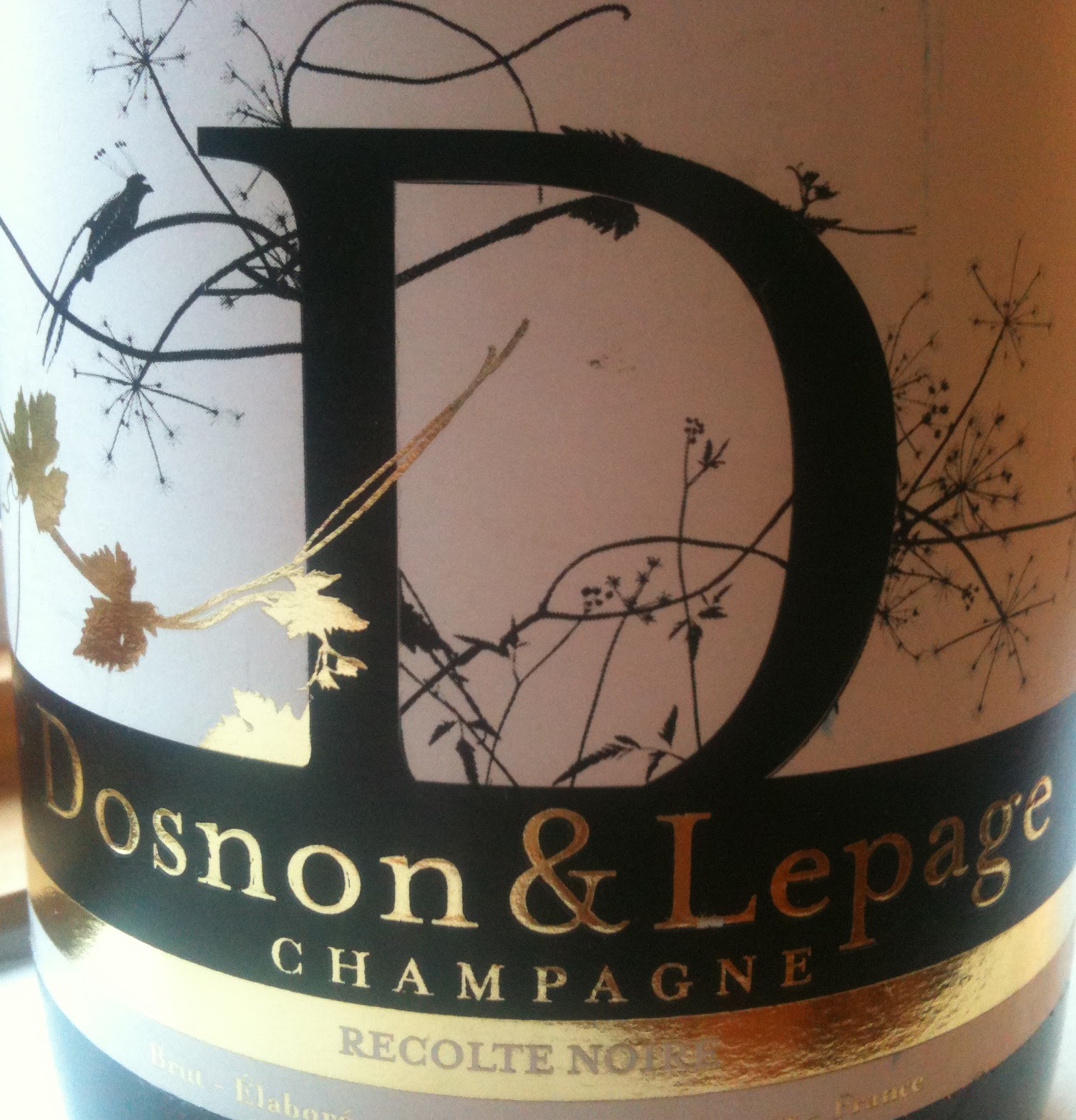
NV Dosnon & Lepage Champagne Brut Recolte Noire, about $55, JD Headrick Selections. I was shocked at how good this wine was. Not because I had low expectations, but because I thought it was pretty fantastic wine. This producer and this particular wine was recently lauded by Eric Asimov in an article about the wines of the Aube. Vibrantly aromatic red fruit with earthy bass notes, great balance, very long and vivid on the finish. Absolutely delicious and I would say a terrific value in the world of Blanc de Noirs Champagne. Honestly, if you like Champagne, try this wine.

NV Jacques Selosse Aÿ La Côte Faron, price unknown, not imported (I think). Very lucky to have the opportunity to drink this wine, a single vineyard wine based on 2003 but containing 60% of wines from vintages back to 1994 from something of a mini-solera. There are producers who make wine in the Selosse style, but the more experience I have with these wines, the more clearly I see that Selosse's wines cannot be imitated. A complete wine - rich and ample, brilliantly detailed, fresh and lively, oxidative and mature, deeply complex and very mineral. It feels both dry and sweetly fruited at the same time, if that makes any sense. Compelling and delicious wine.

Thursday, January 27, 2011

Back From Champagne

I just returned from several days in Champagne! In Peter Liem, I had the finest tour guide imaginable. I'll share stories and photos in the coming days, but first a few tidbits from our one day in Paris.

The French love Sharon Stone. This movie poster appeared in every metro station I passed through. She is something like 65 years old, but in France she's still a leading lady.

I hope that I never stop feeling thrilled by the streets of Paris. It was a Sunday and instead of dealing with crowds at museums, we pounded the pavement and devoted ourselves to the gastronomic arts. We ate lunch at Le Comptoir de Relais in the 6th Arrondissement. At lunch this place specializes in French "grandma" cuisine, country food that although rustic, is beautifully served and completely delicious. At night this is a "gastronomique" restaurant with far more lofty aspirations, and the few tables are booked two months in advance.

We ate several great things at Le Comptoir, my favorite among them a thick slice of pork foot and green lentil pâté served with an equally thick slice of bread, pickled red onion, and horseradish cream.

The wine list is very good at Le Comptoir, offering interesting things at all price points. The 2009 Houillon/Overnoy Arbois Pupillon Poulsard was truly fantastic, one of the best versions of this wine that I've drunk. And it was perfect with the food. This is a wine that might show best before it travels over the ocean. No sulfur added, after all.

We burned off lunch by walking all the way back to our friend's apartment in the 20th. That way we would have room for dinner at Le Verre Volé. I first read about this place on Bert Celce's Wine Terroirs several years ago and I've always wanted to go. We decided that we would drink Champagne. Vouette et Sorbée Extra Brut Blanc D'Argile was delicious, although oddly not as great as the bottles I've had here in the States. Peter guessed that it might have been in the very cold refrigerator for too long.

I ate a great plate of sardines en escabeche followed by an Andouillette. This earthy* sausage is made of tripe, and as a specialty of the city of Troyes, is not as odd of a pairing with Champagne as you might think. I enjoyed it, but it I was jet lagged and the sausage was incredibly pungent, and I had to throw in the towel at about two-thirds of the way through.

No towels were thrown in on the Champagne, however. Selosse is part of (a leader of?) what I'm learning to think of as a new school in Champagne. The wines are barrel fermented and the style is quite oxidative, which to my palate underscores their incredibly vinous depth. This bottle of Initial was one of the best Selosse wines that I've ever had - amazingly fresh and vibrant with very clean and long salty and chalky flavors. When the wine shows this kind of freshness, it balances and elevates the rich and oxidative character, and it was a truly special bottle.

Early the next morning Peter and I drove to Champagne to begin three days of non-stop visiting, tasting, and drinking. I learned more about Champagne in these three days than in the entirety of the past several years. More on that coming soon...


* "earthy" in this case is a euphemism. The Andouillette offered many pungent smells, one of which was poop.

Tuesday, September 07, 2010

Wild Champagnes That I Have Loved

I hung out with Peter Liem for a lot of the past two weeks. It's weird - when I spend time with Peter I find that I drink a lot of Champagne.

-- Warning -- Laundry List to Follow --

Here are the amazing Champagnes I drank in the past few weeks, along with a few notes, and I will tell you now that with the exception of the Larmandier-Bernier and the 2000 Tarlant, I drank these wines solely because of the generosity of others.

NV Franck Pascal Cuvée Tolérance Brut Rosé, price unknown, no longer imported (JD Headrick was the importer until recently, as I understand it). As reported in ChampagneGuide.net, Franck Pascal is a rising star in the northern part of the Marne, in the village of Baslieux-sur-Châtillon where the soil is especially friendly to Pinot Meunier. This rosé is mainly Meunier, based on the regular NV cuvée with still red wine (both Pinot Noir and Meunier) blended in. I loved this rosé. Fresh and bright with fruit, and it really showed what to my taste is typical of Meunier - a round and fleshy, very broad character with something sweet and nutty like marzipan or cashew under the fruit. And despite all of that, the wine retained a classy sense of control and finesse. Very impressive, very delicious, I hope not too expensive when it makes it back to the States so I can buy some.

(2002) Larmandier-Bernier Vieille Vignes de Cramant Extra Brut Blanc de Blancs, $70, Louis/Dressner Selections. Some say that this wine does not benefit from long aging. I'm glad that I saved this for at least a few years (2005 is the current vintage), as it seems to be in a particularly sweet spot right now. Laser-like focus, delicate aromas and flavors but with great intensity. Much more about salt and rock than about fruit, and the chalky finish is graceful as it stains the palate and goes on forever. To me, a truly great Champagne.

NV Jacques Selosse Champagne VO, about $165, Imported by the Rare Wine Company. This particular bottle actually was purchased in France and traveled here by suitcase. I've had this wine once before and the two bottles were quite different. This one was probably a blend of wines from 2003, 2002, and 2001, and was aged on the lees for five years. It showed less of the oxidative character that has (quite beautifully) run through the few Selosse wines I've drunk. This one was lithe and stony, with bright and ultra-clean lemon fruit. Three of us drank this bottle and I don't know about you, but it's hard to go slow with Selosse. We may have sucked it down right as it was ready to fully show itself.

(1999, 2000) Tarlant Champagne La Vigne d'Antan Extra Brut Non-Grefée Chardonnay, $65, $60, 1999 imported by JD Headrick Selections, 2000 Imported by Jandell Selections. Here is Peter on this wine, in ChampagneGuide.net:

...a blanc de blancs from a 40-are parcel of ungrafted chardonnay vines in a vineyard called Les Sables, planted between 1951 and 1960. The soil here is very sandy and siliceous, preventing phylloxera from penetrating it, and these vines have thrived on their own rootstocks, although attempts at planting vines in other areas of the same vineyard have failed. The idea of this ungrafted cuvée is to reflect the personality of the terroir as expressed by these special vines, and it’s not necessarily intended to be a vintage wine: “The character of the site is stronger than that of the year,” says Tarlant. “This parcel isn’t always necessarily representative of the vintage.” The first release was based on the 1999 vintage, blended with roughly 25 percent of 1998, while the follow-up version was made entirely from the 2000 vintage.

My good pal Adam recently opened a bottle of the '99 and it was utterly gorgeous. The essence of the wine is this sandy brown mineral tone that permeates everything else. There is some fruit, but it is part of the supporting cast. Such intensity and focus, such wonderful balance. What I remember best about this wine is the way it unfolded in the nose and mouth - layers of aromas and texture, always crystalline and pure. Peter and I drank the 2000 two weeks later and I was struck by how similar the wines are. The 2000 is a bigger and richer wine, but that warm sandy brown mineral tone still suffuses everything. The flesh of the wine tastes like marzipan here, and it shows remarkable grace and class for a big wine. La Vigne d'Antan has become one of my favorite Blanc de Blancs.

2004 Louis Roederer Brut Blanc de Blancs, $60, imported by Maisons Marques & Domaines USA. Okay, stop right there if you're thinking "Wait, Roederer? Isn't that the huge négoce wine that Jay-Z likes?" Well, yes and no. Roederer does buy a lot of grapes, but only for their basic non-vintage Brut. All of the grapes used to make the other wines are estate grown. This is a wine of delicate subtlety and great finesse. There are no fireworks, there is no flash. There is chalk infused lemon fruit and a remarkably fine texture - that's what stayed with me, the pillow-y texture.

2002 Louis Roederer Champagne Cristal Brut Rosé, about $575, imported by Maisons Marques & Domaines USA. The first thing that struck me is the continuity in style between this and the above wine - we drank them on the same night. Both wines are honestly marvels of texture, well structured but cloud-like. It is hard for me to describe a wine like this, but I will say that it was as close to perfect as any wine I've had. How can so much intensity, detail, and raw material be packed into such a refined and elegant package?

2000 Dom Pérignon Brut Rosé, about $320, Imported by Moët Hennessy USA. Richness and density, but still elegant and vividly detailed, kind of an amazing thing to have rolling around in the mouth. Hard to describe this one too - just an amazing wine. Funny how this and Cristal seem to both have sacrificed their credibility among wine aficionados by allowing their brand to be portrayed as the ultimate in over-the-top luxury wines. They are stratospherically priced and out of reach of most of us. But if these bottles are representative, and I was assured that they are, they are finely crafted and exquisite wines, among the very best Champagnes.

Sunday, December 20, 2009

Just Open It

Many of the wine people I know share seem to share this generous spirit regarding even the finest and rarest of wines. A party of 15 people? Sure, crack open the magnum of 1995 Giacosa Barbaresco Santo Stefano. Stopping by for a quick bite on a random Monday night? Pop open the Selosse.

Some folks, myself included, are not able to afford wines like these very often, and when we do buy the odd great bottle here and there, the idea of opening it can bring just as much dread as excitement. "When is the absolute perfect time to open this bottle? And who is the perfect person to drink this with?" I say this from past experience - it is all too easy to simply never open the bottle.

It's so liberating to be free of this hoarding mentality. Not that there's anything wrong with it - do as you please with your wine and be happy. But I realized that I am much happier opening that bottle and sharing it than I am saving it for a hypothetically more-special-than-now occasion. Especially if I'm with people who love wine. Who else should I drink it with, if not you?

I got lucky a few times this past week, and hung out with people who love to open great bottles. And so I got to drink some incredible wines, several Champagnes among them. In light of my last post on a blind Grand Marque tasting, I thought it would be especially fitting to share a bit about these Champagnes.

(2007) Jérôme Prévost La Closerie Les Béguines Champagne Rosé Extra Brut, $105, Polaner Selections. This is the first vintage (although it technically is not a vintage wine) for Prévost's rosé, and it is a thing of beauty. So vibrant and expressive, such incredibly well defined aromas and flavors, really energetic and vivid. This is all Meunier, and it smells like fresh roasted hazelnuts, marzipan, blood orange, baking spices...the nose is amazing. The texture shows such finesse and grace, and yet there is a wild streak. I'm guessing here, but based on the meager allocation granted to Chambers Street and Crush, I bet that no more than 4 cases of this wine made it to NYC. Perhaps fewer. And yet a super nice and generous guy named Michael Wheeler (formerly a partner at Polaner) brought a bottle to a gathering of about 15 people. It is an astounding wine that I hope to drink again one day. By the way, somebody brought a bottle of the (2006) Jérôme Prévost La Closerie Les Beguines Extra Brut to the same gathering, and somehow I neglected to taste it. Too much insane wine on the table.

NV Selosse Champagne Rosé, about $175, Imported by Rare Wine Company. Joe Salamone, one of the buyers at Crush and an all-around lovely guy, decided to bring this bottle to the very same gathering. That's right - Prévost and Selosse rosé, sitting there on the same table for all to sample. This wine was also quite special, but it took several hours for it to open up and show its true harmony and depth. Oxidative and gingery, this is a delicious and broad wine. On that night I preferred the Prévost wine, but believe me - I would be most happy to experiment with these two wines again.

2004 Marie-Noëlle Ledru Cuvée du Goulté Blanc de Noirs Grand Cru, $60, Bonhomie Wine Imports. You may not have heard of Marie-Noëlle Ledru. I hadn't until Peter Liem told me about her. I could paraphrase, but instead I will offer this quote from Peter's profile of the Ledru estate:

Ledru owns five hectares in Ambonnay and one in Bouzy, with a total of 30 different parcels. All of the vineyards are planted with cover crops and tilled, and she uses no herbicides or insecticides, seeking to work her vines as naturally as possible. The same sensibility extends to the cellar, where she makes the wines without filtration, without cold-stabilization and without any sulfur at disgorgement. Fermentation is all in stainless steel and enameled steel tanks, for their neutrality, and the malolactic is allowed for all wines. “I do the malo because for me it’s natural,” she says. The wines are aged for a respectably long time on their lees, averaging about three years for the brut sans année and five years for the vintage wines, and all disgorgement is done by hand, in a fashion not dissimilar to how it might have been done two or three generations ago. Ledru only bottles about half of her production, meaning that there’s very little wine to go around, and the other half is sold to the négoce, most notably to the houses of Pol Roger and Deutz.
Not a whole lot of this wine made it to NYC, and some ding-dong brought a bottle to the very same gathering that featured Prévost and Selosse rosés. Oh wait, that ding-dong is me. I would love to give you detailed tasting notes, but we attacked the Prévost and Selosse before drinking this, and that's definitely the wrong order for these wines. Reductive and taught Ledru after oxidative and expansive Prévost and Selosse...not easy to get a real read on the Ledru. It was a delicious wine though, very clean and pure. Someone suggested that it might be a bit high in dosage, but I could neither confirm nor deny. My instincts say deny. Perhaps Peter will read this and chime in...

(2005) Cédric BouchardLes Ursules Brut Blanc de Noirs, $80, Polaner Selections. Some one brought a bottle of this wine to that absurdly Champagne-laden gathering, but I don't know what vintage. I must say, a wine like this shows best when it is the sole focus of attention, its delicacy and understated grace not overshadowed by louder voices. So I opened a bottle later in the week when a new friend came over for dinner, and we loved it. The character of the ripe 2005 vintage expressed itself in a creamy vanilla tinged aroma, but Bouchard's deeply vinous and expressive dark fruits hummed a resonant baseline. This was really singing an hour and a half into our meal, 2 plus hours after we opened it.

I'm telling you, it's the holidays. Just open that bottle. It feels good.

Tuesday, September 08, 2009

Two Weeks of Incredible Champagne

I used to write about sparkling wine every Friday in a sets of posts that I called Friday Night Bubbles. Every week for over a year, typically alternating between Champagne and other sparkling wines. It got expensive, but what made me stop this series was the fact that I wasn't satisfied with the quality of most sparkling wines at the $20-$25 price point. I decided that I'd rather spend my $25 on whatever wine I think is best, not necessarily a sparkling wine.

And so my sparkling wine consumption has gone way down, Champagne obviously included. In the past two weeks, though, I've had more top notch Champagne than in all of the past year, I would say. These things come in waves, I guess. I know it's boring to read lists of "The Great Wines I Just Drank," but please - allow me to share about some of these. These are rare and expensive wines that I may never have another chance to drink, and they are worth talking about.

I was in Seattle last week for work (thanks for having me back here, by the way). I know no one in Seattle, and I had business all day but nothing at night. I did take myself out to dinner one night at this place, and it was quite nice. But a million times more fun was dinner at my new friend Brian's house, a guy I met through another friend I met because of this blog. And they say that sitting in front of your computer is anti-social! Brian works for Triage Wines, one of the better importer/distributors on the west coast. He invited a few other Seattle wine-types, made a beautiful dinner of schnitzel and other goodies, and we opened what might in some circles be called an excessive amount of wine. I could tell you about the three 1998 Rieslings we had with dinner, including the FX Pichler Unendlich, but this is supposed to be about Champagne. So instead I'll tell you about Sugot-Feneuil, a producer I had never heard of. Brian served the 1998 Brut Blanc de Blancs as an aperitif, and it was just lovely, so full flavored, and also so elegant. But this was a fleeting experience, as apparently the grower is deceased and the vines have been sold to a big house.

That was only the beginning. One of Brian's friends brought a bottle of 1997 Larmandier-Bernier Special Club, I think the last Special Club vintage that Larmandier-Bernier did. This wine took a while to open up, but when it did it was a well balanced wine with rich nutty fruit and a mouth-coating texture. I think that it was starting to truly shine after we had moved on to other wines. And how about this - Brian went downstairs to his cellar (normal people can afford to live in houses in Seattle, apparently) and returned with not one, but two bottles by Vouette et Sorbée. We drank the Saignée de Sorbée (photo courtesy of Peter Liem) and the Blanc d'Argile, both 2006's, although they are not labeled as vintage wines. Both of these wines were entirely remarkable, impossible to overstate the level of quality here. The fruit in the rosé was utterly beautiful, almost impossibly fresh and alive, sweet and perfumed with subtle spices. Like all Vouette et Sorbée wines, this has no dosage - imagine how perfectly ripe these grapes must be! The other thing that I found striking about the rosé was its texture - full and rich, but exquisitely detailed and fine. Such a joy to drink. Peter and I drank the 2005 Saignée de Sorbée merely days before this Seattle dinner, and it was also a great, but an entirely different wine. The 2005 was not as much about fruit, it was completely saline and pungently rocky and earthy, and it was great with our roast bonito. The 2006 was a far more hedonistic wine that offered immediate and intense pleasure, but I wonder which wine will be better in 10 years...The Blanc d'Argile was also great, with that same brilliant fruit and texture, but I was so smitten with the rosé that I could barely pay attention to anything else. Thank you again Brian, and your welcoming and generous friends too.

The funny part is, you probably think that's all the great Champagne I've had recently. Not at all true, friends. I went to Alice Feiring's house the other night for her Champagne tasting, a semi-blind (we saw the list of wines, but drank them blind) look at a handful of wines with the idea of discussing whether or not they represent good value. I'll leave the results of the value discussion for Alice to print in her upcoming Wall Street Journal article, but I'll tell you that the wines in general showed tremendously well. I learned that Drappier makes very good wines - the nose on the 2002 Grande Sendrée was fantastic, rich and nutty with a focused depth of clean fruit, intriguingly orange-y in character. And I confirmed for myself that I am a huge fan of both Billiot's and Lallement's basic NV cuvées. That Larmandier-Bernier's Terre de Vertus smells and tastes of seashells, and that the 2004 Raymond Boulard Les Rachais Extra Brut will be excellent in about 8 years. Boulard's wines, in my humble opinion, might be the best value in the NYC Champagne market.

The three "S"s - a part of any balanced diet.

Alice somehow stocked her Blanc de Blancs lineup with 1997 Salon, and two different Selosse wines, Substance and VO. Yes, I drank Substance twice in two weeks - very extravagant. When I drank the VO I thought it was Substance, as the nose was immediately reminiscent of the wine I drank with Peter the week before. Wine maker's stamp, I guess. The '97 Salon took a while to unwind, but when it did it was just gorgeous, so expansive and richly satisfying in the mouth, and so perfectly balanced.

Alright, that's enough, I'm running out of gas - just excited to be back, I guess.

Friday, August 28, 2009

Wine of the Week - Selosse Champagne

I'm sorry to do this, to ask you to read about a wine that it so awfully difficult to find, and if you can find it, so terribly expensive. But this is a special wine, one that I may well never have the chance to drink again, one that has inspired much debate, a rare wine from an iconic producer. The other night Peter Liem came over for dinner, and so I had my first Selosse experience. It was pretty amazing, and I want to share a bit about it.


NV Jacques Selosse Champagne Substance, about $250, Imported by the Rare Wine Company. This is a Blanc de Blancs from the Grand Cru village of Avize. Substance is a solera wine, meaning that it is composed of wines from all vintages since the creation of the solera, which in this case was 1986. Wine is removed and new wine is added each year. Because they contain so much old wine, solera wines tend to offer a mature richness of aroma and flavor. And as Peter explained, Selosse's idea when he created the solera (and Selosse was the one to begin this practice in Champagne) was to eliminate the effect of vintage and to amplify the effect of the terroir. When the barrel contains wines dating back to 1986, the impact of the individual year is lost. Peter discusses Selosse and terroir a bit more in this post.

The bottle we drank was disgorged in October of 2008, and I think the most recent vintage in this bottle should therefore be 2004. The wine is a strikingly deep amber color. The nose is expressive and intense, full of ginger and exotic fruit. Broad and rich but finely focused, and with incredible detail on the palate, this is a complete wine. And after about 90 minutes it was truly amazing - the things that stuck out previously, the intensity, the ginger, the richness - those things had blended so seamlessly with each other by this time that none of them on its own was evident. The wine had become a real thing of beauty, the kind of wine that can ruin you. Evocative of old libraries filled with leather-bound books and half-drunk glasses of sherry, and of attractive young couples riding motorcycles, rushing past you in a fleeting glimpse of what you wish you could be.