Showing posts with label Peter Liem. Show all posts

Thursday, December 12, 2013

An Evening with the Champagnes of Benoît Lahaye

Benoît Lahaye is probably the best grower/producer in Bouzy right now. I use "probably" because I haven't sat down recently with a bottle of Champagne by Camille Savés or Paul Bara. But I feel pretty confident on this one. Lahaye is making excellent wines, mostly of Pinot Noir from Bouzy.

Lahaye is a smart winemaker, strategically varying in his use of wood for fermentation, using naturally occurring versus selected yeasts, cork or crown capsules for secondary fermentation, presence or absence of malolactic fermentation, and deftly blending wines. There are 8 cuvées, I think, which sounds like a lot for a guy who owns fewer than 5 hectares of land. There's just not a large supply of any of the wines. He is also ultra-conscientious as a grape farmer. The first paragraph of Peter Liem's profile of Lahaye on ChampagneGuide.net describes this:

A passionate advocate of natural winegrowing, Benoît Lahaye took over his family’s estate in 1993 and has been bottling wine under his own label since 1996. He became interested in natural viticulture early on, and inspired by Patrick Meyer in Alsace, Lahaye completely stopped using systemic herbicides in 1994. By 1996 he had begun to work organically, in addition to using cover crops in the vineyards and experimenting with biodynamic treatments; the estate was fully converted to organic viticulture in 2003, and certified organic in 2007. Lahaye has noticed a pronounced difference in his wines since the transition to organic farming. “It’s not really a question of being better,” he says, “but my wines attain higher levels of ripeness now, while retaining the same level of acidity.”
I first tasted a Lahaye wine on the same day that I first met my good friend Peter - he brought a bottle of the 2002 vintage wine back from France and shared it over dinner in Portland. Since that day I drink the wines at every opportunity. Bottles are not easy to find, but there were always a few places. I used to drink the rosé off the list at Vinegar Hill House when it was something like $55. I could find a bottle here and there at places like Chambers Street and Crush. Peter always told me that a decade from now there are a few Champagne producers who will be widely recognized as superstars, and Lahaye is one of them. buy the wines now, while you can, he said.

I am not an expert with Lahaye wines. But here is my take: like many Champagnes, they show better when they are opened well ahead of drinking them. I've never had a mature bottle, so I have no idea how they age. But the young bottles - open them a few hours before you want to drink them, if you can. And if you cannot, consider decanting, although that can change the texture of the wine. Lahaye's wines generally show great intensity of character, as opposed to opulence or overt richness. The best bottles show vivid and detailed aromas and flavors, and provide hours of interest and deliciousness. I find these to be particularly food-friendly Champagnes, too, working well with a good variety of dishes.

All of that said, I've never tasted the lineup of wines in one sitting. I've never opened more than one Lahaye bottle at a time - I've never done anything with Lahaye wines other than to enjoy them bottle by bottle. Not that there's anything wrong with that. But I was excited, then, when a few friends agreed that it would be good fun to find as many bottles as we could and to drink them all together, over dinner.

We did this on a recent night and it happened that the weather turned entirely weird, reaching over 60 degrees on a December day, and poured rain in buckets. There are some evenings when the wines show beautifully. This was not one of them, my friends. The wines were fine, but did not show much of the intrigue and beauty that made us fans in the first place. There were things to appreciate and I very much enjoyed them. But some of the folks at the table who had not previously had a lot of Lahaye wine - those folks perhaps think that the rest of us are weird for loving this producer.

Here are the wines we drank, along with some notes (we found everything except for the Brut Nature and the Blanc de Noirs):

Benoît Lahaye Champagne Brut Essential (I'm not sure of the base year here, but I believe it was 2009) - as one might expect, this turned out to the the most accessible of the wines on the table, but hours later as we revisited the wines, it was the one that held up the best on this evening of strange fluctuations in humidity and air pressure. This is a blend of mostly Pinot Noir (85%) and Chardonnay and it is overtly delicious, although less complicated than the other wines on the table. But it is a good example of what Lahaye wines tend to be - ripe but entirely focused, vinous and intense and with a certain purity of expression.

Benoît Lahaye Champagne Naturessense Brut - this is made of equal parts old vines Pinot Noir and Chardonnay, from a blend of vintages. It is unusual in that it is vinified entirely in wood, and on this night the immediate impression of the wine reflected this. It was distinctly woody in the first half an hour, and although there were nice aromas of creamy lemon and stone in there somewhere, I found the wood to be distracting. But then 90 minutes later when I came back to the wine, the wood was much better integrated and the wine showed much better. I enjoyed the merging of the influences of red berry and lemony fruit, creamy richness, and focused minerality here, and I would like to drink this again on another night soon. I'm not convinced that our experience was representative of the wine.

Benoît Lahaye Champagne 2007 Brut - One of the great values in Champagne right now, Lahaye's vintage wine showed well even on this poor night. This wine is also vinified in barrel, although I find no real wood influence in the wine. It took a while to unfold on this night, and I doubt we experienced it at its best, but I love this wine in general for its deep darkly intense Bouzy fruit, its elegant balance, and its almost vicious minerality. There is a lot of material here and this seems like something to forget about for a while in the cellar.
Benoît Lahaye Champagne (2009) Violane Brut Nature - This is the newest of the Lahaye wines,  and this one based on 2009 is the second release. This is a Champagne made without the addition of sulfur. Okay, I'm not a fan of "natural wines" just because they are "natural." This one, however, is compellingly delicious. It was immediately and entirely apart from the other wines on the table in its fruitiness. Grapey, almost. In a good way. Clean and pure dark fruit really vibrates here, and underneath that, chalk. But on this evening, it didn't hold up well, and the thread that held the wine together began to come undone. But I know this to be a great wine and I think it just showed very poorly on this night.

Benoît Lahaye Champagne Brut Rosé de Macération (2009, I think) - Lahaye's rosé has been available here in NYC for longer than many of his other wines. It seems to be a polarizing wine. I've drunk bottles with wine lovers who simply do not enjoy it, and on this recent evening I heard one person say that it has an unpleasant yeasty sense to it. I love the wine, unabashedly. It is made using whole clusters in fermentation. Yup, like some Burgundy producers do, including Dujac and Chandon de Briailles. It is dosed at a very low level - 3 grams here, if this was in fact based on 2009. The wine just doesn't play like a typical rosé of Champagne. It takes hours to open up after pulling the cork (what would it be like if I left a bottle in the cellar for 10 years?). It is vinous and intense, and I think sometimes it drinks more like a light red wine than a rosé. After an hour or two, I thought our bottle was drinking beautifully. Other folks did not love it the way I did.

Benoît Lahaye 2007 Coteaux Champenois Bouzy Rouge - One of the great names in wine, Bouzy Rouge. Lahaye's is considered to be one of the great red wines of Champagne. On this night, this bottle also was somewhat controversial. I am a fan of red wine from Champagne. When well made, it is a special and delicious thing that is uniquely expressive. This bottle was fascinating to me, with aromas that were darkly mineral and savory, and with a sort of primal forest-y sense. The palate, however, felt constricted and a bit simple, and the wine probably needs more time in the cellar in order to show its best, as might be expected with Pinot Noir from good terroir. Five or six is probably not a good age for a wine like this. Go younger or older, I would think. Still, I liked the wine and would be curious to drink it again in another 5 years. Others felt that they would have liked it more if it cost $25. Fair enough, although I think that part of the point of the wine is lost when thinking about it in those terms.

So, that's it - our evening with Benoît Lahaye's Champagnes. Although this was not a great night for the wines, I heartily recommend them if you like soil-expressive red grape heavy Champagne.

Monday, October 28, 2013

En Rama Sherry

A few years ago Equipo Navazos Sherries began to get a lot of attention, and this opened the floodgates here in the US - a new generation of wine lovers became interested in tasting and drinking Sherry. There are many special things about the wines bottled under the Equipo Navazos label. One of them is that the wines are bottled with minimal filtration.

Young whippersnapper wine connoisseurs such as myself may take this unfiltered thing for granted. Most, if not all of the wine I buy from Burgundy, the Loire Valley, and elsewhere is either unfiltered or minimally filtered. But with Sherry, this is typically not the case. A little over two years ago I wrote something about this that was fun (for me, anyway) to go back and re-read. At that point there were almost no unfiltered Sherries to buy here in NYS. Equipo Navazos, and Pastrana - a Manzanilla Pasada by Bodegas Hidalgo (La Gitana). Now, however, it seems as though everyone makes an unfiltered wine. I thought it would be good to revisit this subject, to take a look at the current NYC market for these wines.

First, a couple of basics:

Fino style Sherry (including Fino, Manzanilla, and wines from El Puerto de Santa Maria) is aged in barrel under a layer of living yeast, called flor. To bottle the wine without filtration would mean bottling bits of flor, perhaps still living, and various other solid matter. Most producers opt instead to bottle their wines after a heavy filtration. This allows the wines to be more stable during their overseas journey and the subsequent movement to warehouse and eventually to retail shelves or restaurant refrigerators. Stabilizing though it may be, this heavy filtration strips the wine of solid particles that contribute significant color, aroma, and flavor - the resulting wines are typically pale and without the complex aroma and depth of flavor that makes Sherry great. Consider the following quote from page 72 of Peter Liem's book Sherry, Manzanilla, & Montilla: a Guide to the Traditional Wines of Andalucia:

What is insidious about this, in our opinion, is that we as consumers are now trained to believe that the pale color of these wines in bottle is natural. In fact, fino and manzanilla are not naturally pale in color, nor are they particularly light in body, except perhaps in relation to other types of sherry. By definition, they are aged wines, having spent many years in cask - even the simplest of these is aged in barrel for at least two years, and the best versions for much longer. When sampling a fino or manzanilla from cask, its color is pronounced, is aromas are pungent, and its presence on the palate is much richer than one might anticipate. All of this is lost, or at least significantly modified, by excessive filtration.
When we fell for dry Sherry all over again, we fell for wines that had not been filtered in this way. Okay, Equipo Navazos filters wines before bottling, but lightly, "just to remove the flies," they like to say. But it is this lightly filtered style of wine that was our gateway drug. And as the market for fine Sherry continues to grow, more producers are releasing an en Rama, or unfiltered version of their brand. Here are those that I can think of off the top of my head:
  • Tio Pepe now releases Tio Pepe en Rama (and also the Palmas, which are lightly filtered).
  • Gutierrez Colosía bottled an en Rama version called Amerigo of their lovely Fino el Cano.
  • Lustau released an en Rama Fino, a Manzanilla, and a wine from El Puerto. 
  • Bodegas Hidalgo now releases an en Rama version of La Gitana.
  • Valdespino releases an en Rama version of their Deliciosa Manzanilla.
  • Barbadillo releases four en Rama versions of their Solear Manzanilla, one for each of the seasons (!!).
  • And soon Fernando de Castilla will release an en Rama Fino.

I'm sure there are others and I'm just not remembering them right now. This is such a great thing for Sherry lovers. We can taste different versions of the wines we love, experience them in a state that is closer to what they were in barrel. But please notice that I did not say "better," I said different. Deliciosa is a lovely Manzanilla, brisk, saline, and focused. Deliciosa en Rama is excellent too, with more expression and detail of aroma and flavor. But it's also more spread out on the palate - less focused, and feels a bit rustic in comparison. That's not a bad thing. The en Rama bottling showcases one style of wine and the regular bottling showcases another.

All of these en Rama wines are worthy of your attention. But I have a favorite - let me tell you about Barbadillo's Solear en Rama. First of all, Solear is an excellent Manzanilla, averaging 7 years of age and fully expressive.

The unfiltered versions are also excellent, even better in my opinion, with an amplified lemon-enriched flor character and a more expressive saline minerality. What sets these wines apart, for me, though is the almost shocking complexity of aroma and the intensely savory nature of the palate. These things are true of the wine in all four seasonal releases, although the recent 2012 winter bottling was as darkly savory a wine as I've encountered. And the 2013 spring bottling is ridiculous, the best version of this wine that I've tasted, combining great focus and lightness of body with great intensity and richness of flavor. Joe Salamone at Crush has worked hard to bring these wines to the NYC market, and although they are gone for now, the summer 2013 bottles should be out soon.

If you like Sherry, and I think that you do, you should make a point to seek out and taste these en Rama wines. But as you do, I hope you will not feel that en Rama automatically means that the wine is great, or that it is better than its filtered counterpart. En Rama represents a style of wine, and you might prefer the more filtered counterpart. That's not wrong - Solear is delicious and so is Deliciosa. Drink both styles next to each other and see if you prefer one over the other. The amazing thing is that you can do that, with 375 ml bottles, for under $40. That, my friends, is something that will not last.

Wednesday, October 09, 2013

Sherry Fest 2013

The second annual Sherryfest just wrapped up in New York City. Peter Liem and Rosemary Gray did an excellent job once again, raising funds, organizing many people and events, and creating the largest Sherry tasting in the United States.

This year Peter and Rosemary hosted the Grand Tasting at the Astor Center. The space was perfect - brightly lit and cheerful, roomy, not too noisy, but humming.

This is such a special event, and here's why: most large tastings are put on by a particular importer/distributor. If you attend that tasting you do so to taste that particular book of wines. Sherryfest celebrates Sherry, not any particular importer, and brings together over 25 Sherry producers (and there really aren't many more than that) and 160 wines. This is a unique opportunity to learn about one of the world's greatest wines.

Jan Petterson of Fernando de Castilla was there, showing and discussing his wines. He is a wealth of knowledge and any time listening to him is time well spent. He brought along a new wine this year, the first ever bottling of Fernando de Castilla Fino en Rama - delicious. En rama translates literally as "on the lees," and it means bottled without filtration. This is a popular trend now and many producers are offering an en rama version of their Fino or Manzanilla.

Lorenzo García-Iglesias was there representing his superb lineup of Bodegas Tradición wines. Such a treat to be able to taste these great wines next to one another.

Antonio Flores, the master blender behind Gonzáles Byass, was there. He is such a lovely man, and so good at explaining the wines. Tío Pepe is the world's highest selling Fino, if I am not mistaken, and the soleras that create the wine are massive, the job of tending them is enormous.

Flores offers an en Rama version of Tío Pepe every year, and this one was delightful. Most of it goes to the British market, sadly. It was also an incredible treat to taste the four Palmas, the series of wines meant to illustrate to progress of Fino towards Amontillado. This year Flores showed the second batch of these wines, and they completely and entirely lived up to the hype. The wines are incredibly fine and wonderfully expressive.

I tasted the entire lineup of Barbadillo wines (minus the Reliquias, those elusive treasures) with importer Julio Baguer and his daughter. These are such excellent wines, and they are so accessibly priced. I remembered at this tasting that Solear is a lovely wine, very complex and expressive, entirely delicious. A wine like this, produced on a large scale, not the top wine of the house - a wine like this can get lost in the Sherry shuffle. But Solear is really a good wine. And that's just the beginning for Barbadillo. 

I enjoyed speaking with these and other producers I am familiar with, revisiting their wines. Sherryfest also offers the chance to discover new wines.
I had never before heard of or tasted the wines of Delgado Zuleta, for example. Apparently this is the oldest Sherry firm, founded in 1744! I enjoyed the whole lineup of wines, particularly the lovely Manzanilla called Barbiana. The wines are an average of 6 years old and show a deep complexity of flor character, and lovely balance and freshness. One taste at one large tasting is not sufficient to judge a wine, but based on my experience at Sherryfest, I will eagerly try a bottle of this wine when it appears on retail shelves.

Importer Robert Jordan said that it should retail for about $22 for a 750ml, a friendly price point for a wine of this caliber.

This year Peter and Rosemary thought it would be fun to bring Sherry cocktails to Sherryfest. They were correct. Four talented bartenders offered a Sherry cocktail of their choosing. I was expecting to enjoy these drinks, and still I was surprised at how good they were.

Joaquín Simó of Pouring Ribbons made a Coronation. Fino, dry vermouth, maraschino liquor, and orange bitters Delicious!

And Dan Greenbaum of The Beagle made one of my favorite cocktails (and something he introduced me to), the Adonis. This is a wonderful cocktail and it's not really that boozy, so you can have a few and not be drunk. He uses La Ina Fino, sweet vermouth, and orange bitters. So good.

Sherryfest is not only the Grand Tasting. There are seminars and dinners too. This year I attended a dinner at Maysville at which Bodegas Tradición and Bodegas Aecovi wines were paired with this restaurant's excellent cooking.

Oysters and bracing Fino or Manzanilla Sherry is an excellent pairing.

Bodegas Tradición introduced their new Fino at this dinner, and I loved it. Sadly, very little was bottled and we will have to wait to be able to buy this wine.
Delicata squash stuffed pasta topped with crab and almonds was a beautiful dish, and it elevated and was elevated by Bodegas Tradición Amontillado. Is it possible that the Tradición wines are underrated? I believe so. People new to Sherry are so focused on La Bota wines, and with good reason - they are great. But there is so much more out there, these great wines among them. 

Thank you Peter and Rosemary for creating this wonderful event! I'm already looking forward to next year...

Friday, August 02, 2013

Wine Glasses and Champagne

Warning: I am about to write about an expensive wine glass, and I will suggest to you that it is the best of its type, and worth the money. And furthermore, that if you pay good money for good wine, you should buy this glass if you have not already.

Why the warning? A lot of folks think that wine glasses don't matter, and that appreciating good glasses is snobbery or snake medicine. These people are wrong - there's no other way to say it. It's not entirely their fault, though. There is an unfortunate snobby culture that has been part of the modern history of wine appreciation and people might mistake the idea that some glasses are better than others with the false notion that you must use a certain glass to drink wine correctly. This is obviously not true. We have all had memorable experiences drinking wine out of bad wine glasses. It is not necessary to have the best glasses in order to enjoy a wine.

That said, some glasses really are better than others. A good Burgundy glass, for example, allows a good Burgundy wine to show more of what makes it a good Burgundy wine. If you drink a wine out of different glasses, the wine will show best in one of those glasses - there is a difference. And I'm not suggesting this in a snobby way - there is no "right" way to drink wine, and you should do whatever makes you happy. But there is something to this, this glassware thing. If you are someone who will spend $75 on a bottle of Champagne, for example, you might consider experimenting with different glasses. You might find that the wines you care about actually show better, given certain glasses.

There are few instances in which I feel that I know which glasses are best. Here is one instance: Champagne shows best out of Riedel Sommelier Series Vintage Champagne glasses. In the above photo the Riedel Champagne glass is on the left. It is a flute, basically, and this is not the fashionable way to drink Champagne these days. People like to drink Champagne from wider bottomed glasses like the Zalto (the middle glass in the above photo), or even from a Burgundy bowl. To me, the flute is the riskiest way to drink Champagne. Bad flutes (which to me are most flutes) restrict the aromas and flavors. But this is no ordinary flute. It is wider everywhere, and widens even more above the glass's halfway point. I cannot say that I understand the science here, but I appreciate the results.

This is not my discovery, by the way, Peter Liem first told me about this. The photo above was taken at his house in December as we drank 2002 René Geoffroy Cuveé Volupté out of three different glasses. I went in with an open mind and there was no mistaking it. The aromas were more focused in the Riedel glass and yet still expansive and complex, and it just moved onto the palate better, feeling more balanced. I had tried drinking Champagne out of this glass before, but after this experiment I literally refused to open a bottle until I bought a set of these glasses for myself. This, my friends, is an expensive proposition - they are about $75 a stem. But I own some decent Champagne, and the value this glass adds to the experience of drinking Champagne makes the glass worth more than its dollar value.

The first Champagne I drank from my new glasses was the 2008 Marie-Noëlle Ledru Rosé de Saignée. It's not a wine that emphasizes fruit, instead feeling very mineral and earthy. In the Riedel glass the wine's subtle fruit flavors mingled with the more intense minerality, and the wine showed perfect balance.

Since then I've used these glasses quite a few times and always with great results. It makes sense to me that wines based on Chardonnay would show beautifully from this glass. I've tried several times now and the pinnacle for me was this:


The 2002 Pierre Peters Blanc de Blancs Les Chétillons is a stunning wine, and in this glass the aromas were positively regal and flowing. Incisive chalk, green tea, and floral aromas, just beautiful and complex aromatically, and very finely detailed on the palate, which builds in complexity through the finish. Amazing wine, and although I did no empirical testing, it's hard to imagine a wine glass that would be a better medium through which to experience this Champagne. 

What about Champagne made from red grapes - would a Pinot Noir based Champagne also show as well? From what I've seen, the answer is emphatically yes. It's not about displaying the fruitiness of one kind of grape. What makes this glass special is the way it amplifies detail of aroma and flavor while facilitating balance, and this is not grape-specific.

Not long ago a few friends and I cracked a bottle of 2008 Marie-Noëlle Ledru Blanc de Noirs Cuvée Goulté, you know, just to see where it is. Although young and tightly wound, in this glass the wine's bright and energetic fruit shows through brilliantly, as does the vibrantly chalky floor on which everything rests. The next day I poured a small bit into a Burgundy bowl and a Zalto universal and in both cases, the aromas were more diffuse and the overall experience less pleasing.

The other night, on Peter's birthday, (and because of his generosity - he gave us this gift, on his birthday) I had the opportunity to drink a very special wine.

This is one of Selosse's single vineyard Champages. It comes from the village of Aÿ, from a vineyard called La Côte Faron. Selosse began the mini-solera for this wine in 1994 - there are wines that are19 year old in the blend! Until recently this wine was called Contraste, but Selosse has been releasing a series of single vineyard wines in the past few years and this one is among them, its name now La Côte Faron. The wine is gorgeous and there are many fascinating things about it. One thing I was conscious of as we drank it (over 4 hours) was glassware. We drank it out of the Riedel glass. But this wine is made entirely of Pinot Noir, and is composed of wines from vintages 1994 - 2003 (the current release includes some 2004 I believe - this one was released a few years ago). Would the inherent complexity, the aromatic expansiveness be compromised in the flute-shaped glass?

No, as it turns out. I didn't try the wine from a Burgundy bowl, but drinking it out of the Riedel glass was enough. The wine, especially after a couple hours open, showed incredible breadth, complexity, and detail, but in this glass was also entirely chiseled in its focus.

Here is a wine that I love, but have yet to drink out of the Riedel glass. Éric Rodez Cuvée des Crayères is a wine that comes entirely from Ambonnay, but it is not a Blanc de Noirs. It is a blend of a little more than half Pinot Noir and the rest Chardonnay, and it is a blend of several vintages - in this case the base wine is 2008 and there are reserve wines from 2007 back to 2002 in there. In this way it is reminiscent of the Selosse wine - the wine has an intrinsic complexity due to the high proportion of reserve wines. Okay, it's not Selosse, but it's not trying to be. And it is $55 compared with the $400 you'd spend on La Côte Faron if you could locate a bottle in the US. I look forward to seeing what this wine is like in the Riedel glass - maybe some experimentation with other glasses is in order. 

Wednesday, May 29, 2013

Carbonara and the Search for the Perfect Wine

"I judge a chef based on their roast chicken."

"The best way to judge a sushi chef is to order one piece of tamago, or omelet sushi."

I don't know who said those things, but I understand the idea. Skilled preparation of the seemingly simplest dishes is one of the marks of a great chef. Carbonara might be the roast chicken of Italian cuisine. It is a dish comprised of no more than 5 or 6 ingredients and even the unskilled cook can make a decent version of the dish. But good ingredients and good cooking, as with roast chicken, can elevate carbonara to something spectacular.

Carbonara is simple, on paper, and apparently there is an argument about virtually every aspect of the preparation. Spaghetti? Bucatini? Egg yolks only or whole eggs? Onions or no onions? Guanciale or pancetta? Parmegiano or Pecorino? Good lord...

I've had spaghetti alla carbonara three times in the past week, and that's equal to the number of times I've had it in the past decade. So why now, with the carbonara? A good pal invited me to his out-of-town house for Memorial day weekend and he knows that I have a line on the good meats so he asked me to bring some guanciale, or cured pig's jowl. He had been working on his carbonara and wanted to make it for me during the weekend. Nice. I brought a bunch of wine for the weekend and tried to include things that would pair with carbonara.

In general, my pal makes his carbonara like this:

-Salted water, bring to a boil.
-Slice guanciale, fry in a pan to render the fat.
-Pour off some of the fat, add a good glug of white wine and cook down.
-Crack two very fresh eggs, beat.
-Add a generous amount of grated Parmegiano and chopped fresh parsley, beat some more.
-Take the cooked spaghetti out of the boiling water, allowing some of the pasta water to come along, and add it to the egg mixture, tossing all the while.
-Toss, toss, toss some more so the egg doesn't cook, but instead forms a sort of glaze on the pasta.
-Add the cooked guanciale and some salt and cracked black pepper to taste.

Our eggs were super fresh - local hens popped them out that very morning.

The guanciale was heavily seasoned and had a thick layer of fat. He sliced and chopped it into small thin pieces without removing much of the seasoning.

He beat the eggs and mixed in a handful of parsley from the garden. Some high quality grated Parmegiano too.

We curdled the eggs just a little bit when we mixed the pasta into the bowl. You can see this - the small solids in the picture above. This first version tasted quite good but it was not perfectly balanced. Too much black pepper and salt - we should have rinsed or maybe even soaked the Guanciale first. Still, it was delicious. I imagined a bright and acidic white wine would work well and opened something I'd been greatly looking forward to - 2001 Prager Riesling Smaragd Achleiten. This is a beautiful wine, fresh flowers on the nose and lovely delicate flavors, all carried through the palate on a wave of mineral and acidity. But it was simply no good with this carbonara. The pungency of the dish dominated the wine, there was no fruit at all and this dish needs a little fruit, and the acidity was too strong. We had to kind of set it aside, eat our pasta, and then come back to the wine.

Later in the weekend my friend made another carbonara and this one was perfect, to my taste. He rinsed off some of the curing seasonings before cooking the guanciale and added no black pepper or salt.

He managed to toss the pasta in the egg mixture with no curdling at all this time.
It looked beautiful and smelled great. He poured off most of the rendered fat this time too, freeing the aromatic porky pungency of the cured jowl meat to shine through unobstructed.This time I opened a bottle of 2007 Stony Hill Chardonnay. It was a much better pairing. The wine has good fruit that balances the acidity, and is fuller in texture than the Riesling. It's not a better wine, but it was a way better pairing with the carbonara. And yet, I was not convinced that I had found the best pairing. More research was needed.

So, when Peter and a few others came over for dinner earlier this week I knew that carbonara would be one of the things I would make. And I wanted to try another kind of wine. But what? I decided to ask friends for advice, friends who know something about Italian food and wine. Jeremy Parzen said that a slightly chilled Cesanese del Piglio, a peppery red wine, would be ideal. "It has just enough meatiness to complement the egg and lardons and its natural spice is great with the heat of the dish," he said. Jeremy also said that if I wanted to drink white wine he would recommend a Frascati, a Lazio Bianco, or an Orvieto. "Acidity obviously is a must but the wine needs some spiciness to go with the freshly cracked pepper of the carbonara," he said.

I asked Alfonso Cevola what he thinks is the perfect pairing for carbonara. "Something white and simple," he said. "Maybe a good Frascati or a Verdicchio like Bucci or La Monacesca. Coenobium is a bit out there but I'd try that for an exotic choice. From Abruzzo La Valentina makes a nice Trebbiano (not to be confused with the more expensive Valentini). Something interesting from Apulia is the Masseria Li Veli Askos Verdeca." Some similarities with Jeremy's recommendations, and although most of the wines these guys are recommending are unknown to this Italian wine ignoramus, I began to understand what they were getting at. "Essentially one needs something light with good acidity to cut through the fat of the dish, not too sweet but not lacking in fruit either, and not too dry," Alfonso said. Okay, makes sense.

The problem is, I own literally two bottles of Italian white wine and they are both from Friuli and made mostly of Friulano, and they are richer, more herbal wines. Not what those guys described. So I thought about my cellar. What do I have that is simple, fruity, and with good acidity, but not too much of either? Something dry, but not too dry. Something that would stand up to pungent guanciale and also be easy drinking.

Friends, I'm here to tell you that I served a Provence rosé with my first ever attempt at Carbonara. The incredibly reasonably priced and very delicious 2012 Domaine les Fouques Côtes de Provence Cuvée de l'Aubigue. And it was a very good pairing. WAY better than the Prager Riesling, which is a far better wine, objectively speaking. A better pairing also than the Stony Hill.

My carbonara wasn't bad either, although my friend's was better. I rinsed my guanciale well, removing almost all of the seasoning.

I sliced it too thickly though and it crisped up in the pan before all of the fat could render. Still, it was tasty and I managed not to curdle the eggs when tossing the pasta.

We ate our pasta and my friends were happy. While we ate I asked Peter, who knows a lot about all wine and food, what he thinks is the best wine to pair with carbonara. Now this is a guy who at home drinks almost exclusively white wine - Champagne and Sherry. "Carbonara is a good red wine pasta dish," he said. He has a friend out west who loves carbonara and who loves to open old Nebbiolo to pair with it. "Now that's good," Peter smiled.

Clearly, more research is needed. And by the way, does anyone know a good Brooklyn cardiologist?

Wednesday, April 03, 2013

Champagne, Revisited.

Once again, I am reminded that it takes several experiences, at least, in order to understand a wine. Subtlety can get lost even when drinking a wine calmly with friends over a meal, especially if other wines are present. I had dinner with a few friends on a recent night and one of them very generously brought along a bottle of Cedric Bouchard's Blanc de Blancs called La Bolorée. Here is what I wrote about this wine in August of 2011:

La Bolorée is an unusual wine. It is an old vines Pinot Blanc grown on chalky soils in the Aube, there's nothing else like it. It was very smokey and mineral, and quite rich with honeyed flavors on the finish. I appreciated the quality of this wine but it was my first time drinking it and I must say that I didn't really understand the wine, it was simply too far away from what I know of the aromas and flavors of Champagne. I'd love to drink it again, but this is not an easy thing to do as quantities are small and the wine retails for about $175.
I've since had the wine twice, and it is a curiosity, for sure. The only pure Pinot Blanc Champagne that I know of, it is quintessentially Bouchard in its clear expression of terroir and its purity of fruit. That time I drank it in August, 2011 at the Bouchard dinner, for me it got lost among the other wines. It is a wine that I imagine would show terribly at a tasting - people would be left shaking their heads at how a wine like that could cost so much money, at how capricious the Champagne hipsters are.

But the thing is, La Bolorée is a great wine. It's also an unusual wine, a Champagne that shows aromas and flavors that have no bearing on what we think of as "normal." It is herbal and green. Not green as in under ripe, green as in tarragon and chervil, green as in the forest in springtime. The wine thrives on its almost impossible fineness of texture and flavor, not on fruit or anything else that's expected or easy for us to latch onto. Honestly, the wine just doesn't taste like any other Champagne. And so, it is easy to miss why this is a great wine.

Peter Liem, a huge proponent of Bouchard and of this wine before it was introduced to the US,  generously opened a bottle this past xmas. Drinking it over a few hours without other wines next to it that would speak louder, I think I understood it. And then on this recent evening even though a few other wines were present, I appreciated it even more, the way its vibrant herbal flavors were layered on a gossamer old vines frame. It seems to me that if one were to draw a large rectangle that contains the world of Champagne, one of the corners of the rectangle would be occupied by this wine - it represents one extreme possibility.

On another recent evening I was in New Orleans at the wonderful Bacchanal, a wine store and bar/restaurant where one can buy a bottle and take it out to the garden in back, order some good food, listen to some shockingly good jazz, and feel happy to be alive. I wandered through the shelves and came upon a bottle of wine I hadn't had in quite some time, René Geoffroy's Champagne Brut Expression. I really like Geoffroy's wines from top to bottom - they are so expressive and joyous and generally offer a great value dollar for dollar. This one was disgorged in 2010, so I figure the base wine is 2008. I was charmed immediately by the harmony of fruit, earth, and vivid chalkiness on the nose and the complexity, particularly on the finish. So much so that I snapped a picture and sent it to Peter, bragging about my outdoor wine affair. 

I thought about this wine over the next few days and resolved to buy some. I mean really - a wine with such such a pure chalky expression of such lovely Pinot fruit, for under $50? I asked Peter if the 2010 disgorgement indicates 2008 as the base wine, and he said that it might be but that there is always a lot of reserve wine here too. Wait a minute! Reserve wine? I thought that Expression is made from a single vintage, but not aged long enough to be labeled as a vintage wine. That's when I realized that the wine I thought I was drinking was an entirely different wine! I mixed up Empriente, the almost purely Pinot Noir single vintage wine, with Expression, the wine that is typically comprised of about 50% Meunier, and perhaps 40% Pinot Noir, the rest Chardonnay.

One explanation here is that I have no idea what I'm drinking, and cannot tell Pinot Noir from Meunier, or my a$$ from my elbow. This is entirely possible, perhaps likely. But I prefer to think that the undeniably chalky essence of both wines renders moot the particular cépage. And that the richness and complexity conferred by the high proportion of reserve wines in Expression allows it to feel just as grand of a wine as Empriente. Seriously, this wine is all about chalk, richness of fruit notwithstanding. This is something that I didn't understand about either wine until now.

If there is a lesson here, aside from the fact that I can be an absent minded schmendrik sometimes, it's that no matter who we are, no matter how often or how grand the wines we drink, it's all too easy to miss the point, to be off-base about things sometimes. Best to allow for that possibility and not to shout too loudly about opinions, and to try to find value, even, in being wrong.

Monday, February 04, 2013

Drinking Four Wines by Château Pichon-Lalande

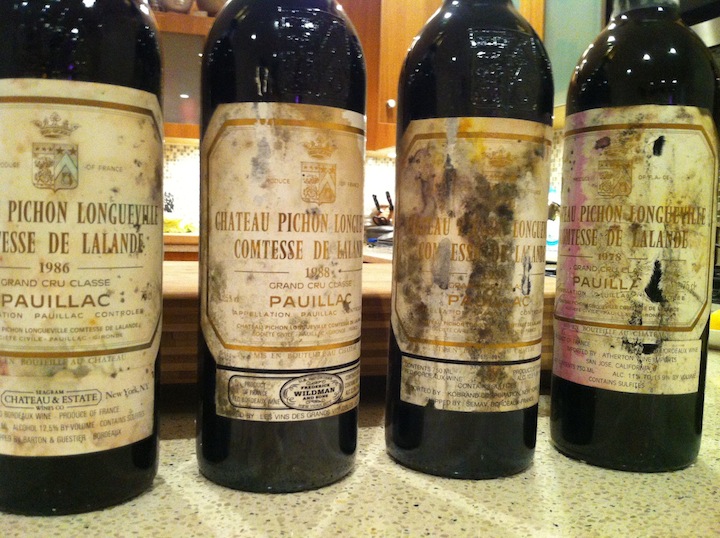
Not long ago I had the opportunity to drink four bottles of very fine Bordeaux, wines by Château Pichon-Lalande. A good friend was in NYC for the weekend and he brought these from his cellar - lucky me! I've had mature Bordeaux before but one bottle at a time, and quite infrequently. This may not surprise you, but I don't have any old Bordeaux in my cellar. Here's another thing that might surprise you - I truly wish that I did.

There are few wines that could be considered less hip and cutting edge than Bordeaux right now. And rightfully so, in a way. The modern wines tend to be over extracted fruit bombs with little to offer in the way of terroir articulation, never mind detail or elegance. They are big, artificially made wines, in most cases. And they are hugely successful, making tons of money for everyone involved.

But like most things that are classic, old Bordeaux is classic for a good reason. They are made from noble grapes and come from interesting terroir, and when well made they combine brawn with detail, complexity, and grace. Many wine lovers of my generation and younger may not have had a great old Bordeaux - it's not something that gets much attention anymore. I think that those of us who haven't had a great old Bordeaux are missing out, not only on beautiful experience, but also on a vital piece of wine appreciation and history. How can we even approach having an understanding of why wine is great without knowing what a grand old claret tastes like?

Pichon-Lalande is one of the top second growths, and comes from Pauillac, a terroir that apparently gives some of the brawnier wines of the region. You can almost see this in the color - look at that inky purple!

My friend generously brought wines from 1978, 1985, 1988, and 1989. Although the youngest was 23 years old, none can really be considered old by Bordeaux standards. My pal Peter says that you shouldn't bother opening good Bordeaux before it hits 20 years old, and that's probably just the beginning of its maturity.

I roasted a leg of lamb over potatoes, and we went to town. The wines were amazing, all four of them. They continued to evolve over many hours, and were delicious and deeply satisfying throughout. In general, I appreciated the raw power of the wines, and this was easy to do because they also showed such detail and complexity. There was power, but that was only part of the package. There was also balance - these were wines that showed lovely and refreshing acidity, and great complexity of aroma and flavor. Inspiring, really. Not in the way that I felt like going out and buying the current vintage, because as I understand it, the new wines will not become like these wines, even with 25 years in the cellar. They are made differently now. But inspiring nonetheless. If you have any old Bordeaux and you want some one to appreciate it with, I will make dinner.

The 1989 was a wonderful wine, Peter said that it was the grandest wine of the four, and that it had years, maybe decades of life in it. It was the most complete wine on the table, but I found it hard to compare the wine from 1989 to the wine from 1978 - I just don't know enough to be able to understand where the 1989 is in the context of the evolution of Bordeaux. Will it shed some weight and feel like the 1978 in 10 years? Will it always feel this full bodied, but become more gentle and mellow, and offer even more complexity with further maturity? I would guess, yes.

I found the 1978 to be the most rewarding on this evening, with its mellow and gentle nose of tobacco and leather, its complex and long cedary finish. It felt like being inside a log cabin in the woods. Still plenty of energy, an elegant structure, very long and plain and simple - absolutely delicious.

The 1985 was the most approachable right after we opened and decanted the bottles, and was perhaps the most fruit forward of the wines. I enjoyed it tremendously, but in the end we found the other vintages to be more compelling. The 1988 felt more mature than I might have expected, but in a good way, and showed ripe fruit that was thoroughly infused with earth. I loved this one in particular with the lamb, and it seemed to have a lot to offer even as we finished it. This one might, sneakily, be a wonderful wine.

There are plenty of reasons to ignore modern Bordeaux, I get it. The wines can be bombastic and overbearing, and the story of the Bordeaux region seems to be one of opulence and privilege, there is no struggle, no individuality. People in meticulously hip Brooklyn restaurants want to drink wines made without sulfur by scruffy guys or gals living in ramshackle trailers on lonely hillsides. Those wines have their place, I guess. But that's not Bordeaux.

But there is something to this, to old Bordeaux wine. Don't believe me? Get your hands on an old bottle by a good producer - you and three of your friends can do this and spend less than $50 per person. And really, this is history, and it's worth knowing for yourself.

Would you ignore The Police because Sting was kind of lame later in his career? Would you dismiss Woody Allen because Scoop kind of sucked? Are you not going to drink the one bottle of 1976 Lynch-Bages that Chambers Street is selling for $115 because 2010 Lynch-Bages costs $150 and will never be as good? Seriously, what kind of person are you, anyway?

Tuesday, January 22, 2013

Drinking an Aged Fino Sherry.

The other night I was lucky enough to drink a fino Sherry sourced from Bodegas Valdespino, one of the finest Sherry producers. There are two things that make this wine very special. Firstly, it was selected from special barrels within the Inocente solera by Jesús Barquín and Eduardo Ojeda, two-thirds of the team behind Equipo Navazos. And Ojeda is the capataz, or cellar master, at Valdespino (and La Guita), and so you have to figure that the two of them chose interesting and very fine barrels. Secondly, it was bottled in April of 2007.

This wine had an average age of something like 10-12 years when it was bottled, but now it has aged in Peter Liem's cellar since release - it's almost 5 years in bottle. The common wisdom about fino Sherry is that you drink it when it's young, before it looses its freshness. There are some fino Sherries that probably should be consumed pretty quickly after release - those that are bottled unfiltered, and that still have small bits of flor floating about. The presence of flor makes it possible for the wine to continue to develop, to change in some way, and producers typically urge us to drink these wines within 6 months. I've heard Antonio Flores of Barbadillo Gonzales Byass say this about his palmas, for example. I do not have any personal experience cellaring a wine like this, so I cannot agree or disagree.

Regarding high quality fino Sherry, however, wines that have been lightly filtered - the common wisdom is wrong. You've read this here before, I know. The more personal experience I gain drinking fino with bottle age, the more I am convinced that this is a wine I am just starting to get to know. Like any other fine wine, it has an essential character, but it evolves in the cellar and shows differently as it ages.

Equipo Navazos la Bota de Fino Nº 7 was a wonderful old bottle. It was Peter's very last one, and it was generous of him to share it over dinner at Aburiya Kinnosuke in midtown. And if you haven't yet had Sherry with Japanese izakaya-style food, you really should try it. The fino needed a little air but it opened up beautifully, and at this stage in its life showed rich and mouth-watering notes of butter and toffee, although I was able to sense the delicate sea-sat mineral undertone. Peter smiled when I told him this, and explained that La Bota Nº 2 (also a fino sourced from the Inocente Solera) and 7 are very different from the current release, Nº35. They were brawnier and bigger upon release - Jesus was interested in making a bigger wine back then, I guess. With time in the bottle, though, I experienced Nº 7 as a delicate wine. Rich, but delicate.

We drank this next to my last bottle of La Bota de Fino-Amontillado Nº 24, bottled in October of 2010. This is a fantastic wine, Peter calls it "probably the best PX ever made." I've been fortunate enough to drink a lot of this wine, and it has changed since it was first released. On this night it was bright, energetic, and focused, and entirely delicious. What shocked me was how young it seemed, next to Nº 7.

There is a lot of life in these wines, plenty of potential for development in the cellar. It is my goal to be better about actually saving a few bottles. It's hard though because the wines are so delicious from the very start. Note to self: get some fino self control.

Monday, December 31, 2012

Simple Things and Complex Things

It was a holiday evening and I was at my good friend Peter's house for dinner. You already know that he is one of very finest wine writers and critics, and that he is the author of ChampagneGuide.net, and that he recently published a long-awaited Sherry book. But did you know that he is a wonderful cook?

Peter can cook anything but prefers to cook in the Japanese style. And on this Christmas eve, I hung around his kitchen while he prepared dinner. We talked about how his book is selling, how my work is going, about our plans for travel in the coming year, about how I miss my kids on the Christmas holidays, and all sorts of other things that good friends talk about. We drank Champagne. Good music wafted from the sound dock speakers.
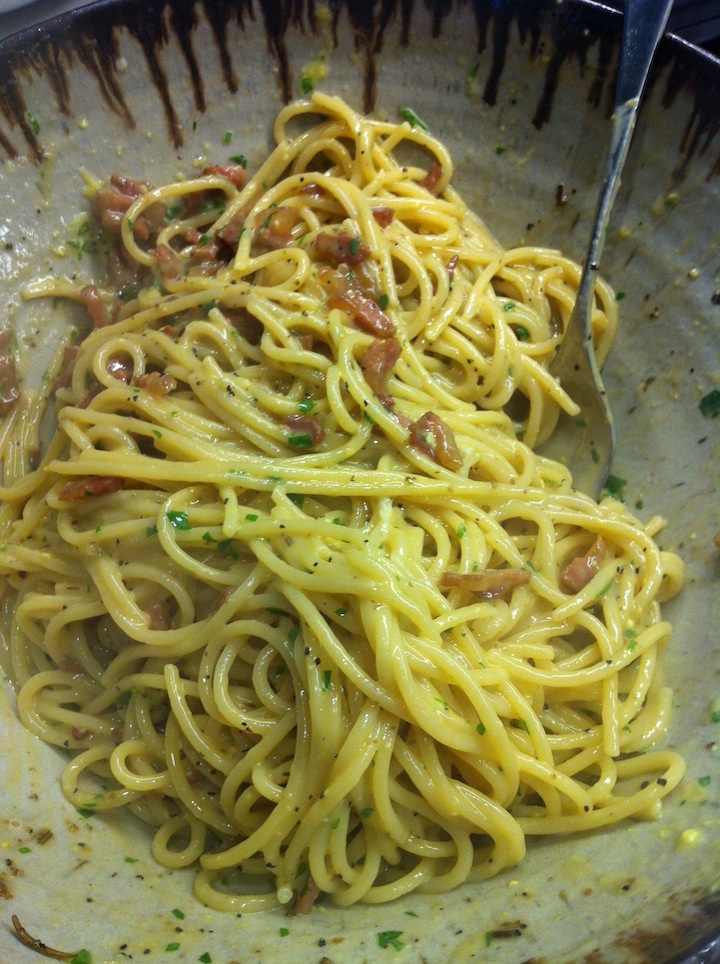
Peter made several dishes but the centerpiece of our meal was rice. He uses a Donabe, a Japanese clay pot, to cook rice. The particular Donabe Peter uses is made of a special porous clay from the bottom of Biwa Lake in Iga, in Mie Prefecture. It is prized for the way it retains heat.

He used Koshihikari rice from the Niigata Prefecture in Japan. This is thought by many to be the finest rice of Japan. Peter rinsed the rice many times, massaging it with his hands, until the water ran almost clear. Then he spread it evenly in the bowl and let it dry. Then he combined water with a dash of fish sauce, sesame oil, and sake, and soaked the rice for about a half hour. He placed quartered Shitake mushrooms and large whole scallops on top of the rice and cooked it over high heat for 15 minutes and then let the rice rest for another 20 minutes. The whole process took about two hours from start to finish. As the rice rested, the kitchen and the living room filled with this intensely savory and gloriously appetizing aroma.

Peter opened the Donabe, coarsely chopped the scallops with a wooden spoon, fluffed the rice a little, and served it in bowls topped with scallions and mitsuba, a Japanese herb. This was the very best rice I have ever eaten, without any question. One of the best foods I have ever eaten. I will not try to describe the flavors because I'm not good enough with language to do so.

Since watching this preparation and eating this rice, I've thought some about how simple things can be so complex. I can enjoy the rice at a Chinese restaurant, or the rice I cook at home, and it tastes good. It is nice to eat with whatever other food I'm eating. I do not need rice to be the finest rice Japan has to offer, prepared in the finest of Donabes by an expert hand in order to appreciate it. But I'm glad that I now know a little tiny bit about this - about what is possible to achieve with rice. It's not that I will now look down upon all other rice, it's about the fact that there exists a complex set of tools and techniques for growing and cooking rice, and being aware of this makes me a more educated person. We mostly think of rice as a simple thing, and that doesn't reduce the pleasure we take in it. There is an elevated form of rice too, and that is also pleasurable, I would say immensely so. These two things are not mutually exclusive.

The same is true with so many things that we eat and drink - think of roasting a chicken! There are a million variations, including the chicken itself, temperature, type of pan, and other issues. People who care about roasting chicken have opinions on all of these things. Roast chicken is a simple thing that is also quite complex, should you choose to approach it that way. And although a decently prepared roast chicken is always enjoyable, some are finer than others. I think that experiencing and trying to understand things in their most elevated forms allows us to better understand the pleasures (and flaws) of their more common versions.

I hope that in the coming year I learn more about the complexities that seemingly simple things have to offer. And I hope to spend more time in the company of great friends, enjoying these things together. I hope the same for you, and happy new year!

Friday, November 02, 2012

Scenes from Sherryfest

Two weeks ago, before the hurricane, there was Sherryfest. The main event, if you will, was a Grand Tasting held at Liberty Hall in the Ace Hotel. I think it's fair to say that the only human being in the room that day who was not in the least bit surprised was Peter Liem. He knew it would be a grand event, he knew that there would be way more people who wanted to be at the tasting than the space could accommodate, he knew that all of the producers would be there and pull out the great bottles, he knew that everyone would be blown away by the opportunity to speak with all of the producers and to taste all of the amazing wines.

Everyone else was at least a little bit blown away. You could see it on all of the faces - the childlike glee. It was dark in Liberty Hall and I had trouble getting good photos with my mobile phone. I want to share a few images anyway.

Felipe González -Gordon was there, of González Byass. He poured maybe 10 or 15 wines, including the rare and wonderful Palmas. He is holding a bottle of Cuatro Palmas in this photo. The Palmas had not previously been available in the US, and it is exciting to think about being able to drink those wines here.
Carmen Gutierrez of Gutierrez Colosía was there, along with her two very bright and lovely daughters. The Colosía Sherries are great in general, and I think that their Fino called El Cano (or not, depending on the importer) is a fantastic example of the style, showing a pronounced salinity that speaks of El Puerto de Santa Maria.

All of the Colosía wines showed very well on this day, and a highlight for me was tasting the three wines from the Solera Familiar. These wines are not yet available in the US, and I sincerely hope that there is an importer out there who will change this. These are stunning old wines that will thrill any Sherry lover.
Jan Petterson of Bodegas Rey Fernando de Castilla was there, pouring his four Antique Sherries and also his basic Fino to rapt audiences. I love these wines. They are deep and complex, and they speak so clearly. They happen to be well priced, too. David Bowler recently added these wines to his portfolio, and this I imagine will be great for everyone involved.

Lorenzo Garcia-Iglesias Soto was there representing Bodegas Tradición, the boutique Bodega that releases only four wines, all of them very old. There is a Palo Cortado, and Amontillado, an Oloroso, and a PX - there is no Fino. These are glorious wines and if you are interested in Sherry and haven't yet tried them, you really should. Lorenzo pours his Palo Cortado first, and I loved his explanation for why he does this. "This one has the most delicate aromas," he said. "It is floral and elegant. If I pour this after the more powerful Amontillado, the things that make this Palo Cortado so special will be lost."

Fernando Hidalgo of Bodegas Emilio Hidalgo was there. This is as classy a gentleman from Jerez as I have met. And the wines are superb. From the basic Hidalgo Fino to the older and more special wines, everything shows great character and finesse. The old Villapanés Oloroso is now available in the US, which is exciting. It is an elegant and deep Oloroso, and it adds to the lineup of Hidalgo Especial Sherries with the Fino La Panesa and the Palo Cortado Marques de Rodil. Now, if only we here in the US could buy El Tresillo, the great old Amontillado...

Marcelino Piquero (right) and Borja Leal represented Bodegas Sanchez Romate. I had never before tasted many of these excellent wines, as they simply do not appear on retail shelves. Romate is distributed by Southern, and Southern focuses on selling Romate's Cardenal Mendoza Brandy. I hope some one begins to focus on selling the Romate Sherries because they are quite good.
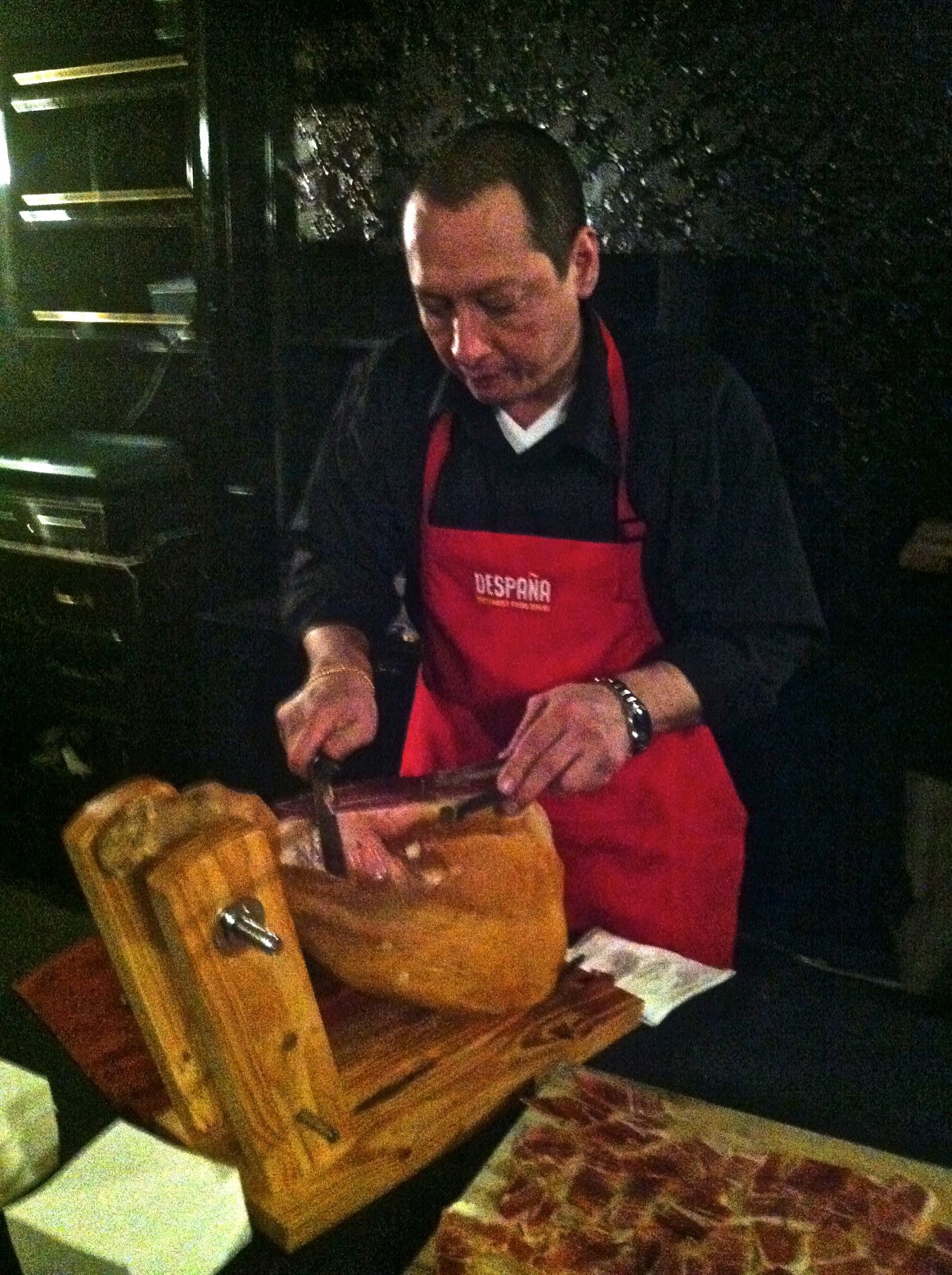
By the way, the food at the Grand Tasting was well planned and delicious. Croquetas, cheeses, and all sorts of tasty morsels. And the jamon station was much appreciated. I parked myself there for a solid 15 minutes, and no one seemed to mind too much.

Many other producers participated too, from Valdespino to El Maestro Sierra to Lustau to César Floridio. This was truly the greatest Sherry event ever on US soil, and I hope it was the first of many.