Showing posts with label Joe Salamone. Show all posts

Monday, October 28, 2013

En Rama Sherry

A few years ago Equipo Navazos Sherries began to get a lot of attention, and this opened the floodgates here in the US - a new generation of wine lovers became interested in tasting and drinking Sherry. There are many special things about the wines bottled under the Equipo Navazos label. One of them is that the wines are bottled with minimal filtration.

Young whippersnapper wine connoisseurs such as myself may take this unfiltered thing for granted. Most, if not all of the wine I buy from Burgundy, the Loire Valley, and elsewhere is either unfiltered or minimally filtered. But with Sherry, this is typically not the case. A little over two years ago I wrote something about this that was fun (for me, anyway) to go back and re-read. At that point there were almost no unfiltered Sherries to buy here in NYS. Equipo Navazos, and Pastrana - a Manzanilla Pasada by Bodegas Hidalgo (La Gitana). Now, however, it seems as though everyone makes an unfiltered wine. I thought it would be good to revisit this subject, to take a look at the current NYC market for these wines.

First, a couple of basics:

Fino style Sherry (including Fino, Manzanilla, and wines from El Puerto de Santa Maria) is aged in barrel under a layer of living yeast, called flor. To bottle the wine without filtration would mean bottling bits of flor, perhaps still living, and various other solid matter. Most producers opt instead to bottle their wines after a heavy filtration. This allows the wines to be more stable during their overseas journey and the subsequent movement to warehouse and eventually to retail shelves or restaurant refrigerators. Stabilizing though it may be, this heavy filtration strips the wine of solid particles that contribute significant color, aroma, and flavor - the resulting wines are typically pale and without the complex aroma and depth of flavor that makes Sherry great. Consider the following quote from page 72 of Peter Liem's book Sherry, Manzanilla, & Montilla: a Guide to the Traditional Wines of Andalucia:

What is insidious about this, in our opinion, is that we as consumers are now trained to believe that the pale color of these wines in bottle is natural. In fact, fino and manzanilla are not naturally pale in color, nor are they particularly light in body, except perhaps in relation to other types of sherry. By definition, they are aged wines, having spent many years in cask - even the simplest of these is aged in barrel for at least two years, and the best versions for much longer. When sampling a fino or manzanilla from cask, its color is pronounced, is aromas are pungent, and its presence on the palate is much richer than one might anticipate. All of this is lost, or at least significantly modified, by excessive filtration.
When we fell for dry Sherry all over again, we fell for wines that had not been filtered in this way. Okay, Equipo Navazos filters wines before bottling, but lightly, "just to remove the flies," they like to say. But it is this lightly filtered style of wine that was our gateway drug. And as the market for fine Sherry continues to grow, more producers are releasing an en Rama, or unfiltered version of their brand. Here are those that I can think of off the top of my head:
  • Tio Pepe now releases Tio Pepe en Rama (and also the Palmas, which are lightly filtered).
  • Gutierrez Colosía bottled an en Rama version called Amerigo of their lovely Fino el Cano.
  • Lustau released an en Rama Fino, a Manzanilla, and a wine from El Puerto. 
  • Bodegas Hidalgo now releases an en Rama version of La Gitana.
  • Valdespino releases an en Rama version of their Deliciosa Manzanilla.
  • Barbadillo releases four en Rama versions of their Solear Manzanilla, one for each of the seasons (!!).
  • And soon Fernando de Castilla will release an en Rama Fino.

I'm sure there are others and I'm just not remembering them right now. This is such a great thing for Sherry lovers. We can taste different versions of the wines we love, experience them in a state that is closer to what they were in barrel. But please notice that I did not say "better," I said different. Deliciosa is a lovely Manzanilla, brisk, saline, and focused. Deliciosa en Rama is excellent too, with more expression and detail of aroma and flavor. But it's also more spread out on the palate - less focused, and feels a bit rustic in comparison. That's not a bad thing. The en Rama bottling showcases one style of wine and the regular bottling showcases another.

All of these en Rama wines are worthy of your attention. But I have a favorite - let me tell you about Barbadillo's Solear en Rama. First of all, Solear is an excellent Manzanilla, averaging 7 years of age and fully expressive.

The unfiltered versions are also excellent, even better in my opinion, with an amplified lemon-enriched flor character and a more expressive saline minerality. What sets these wines apart, for me, though is the almost shocking complexity of aroma and the intensely savory nature of the palate. These things are true of the wine in all four seasonal releases, although the recent 2012 winter bottling was as darkly savory a wine as I've encountered. And the 2013 spring bottling is ridiculous, the best version of this wine that I've tasted, combining great focus and lightness of body with great intensity and richness of flavor. Joe Salamone at Crush has worked hard to bring these wines to the NYC market, and although they are gone for now, the summer 2013 bottles should be out soon.

If you like Sherry, and I think that you do, you should make a point to seek out and taste these en Rama wines. But as you do, I hope you will not feel that en Rama automatically means that the wine is great, or that it is better than its filtered counterpart. En Rama represents a style of wine, and you might prefer the more filtered counterpart. That's not wrong - Solear is delicious and so is Deliciosa. Drink both styles next to each other and see if you prefer one over the other. The amazing thing is that you can do that, with 375 ml bottles, for under $40. That, my friends, is something that will not last.

Sunday, September 30, 2012

Sherryfest

In NYC a lot has changed with Sherry in the past year. Sherry is lovable now, and this is a great thing.

 Emilio Hidalgo Fino Especial La Panesa and Jamon Iberico at Palo Cortado in Brooklyn. 

Any restaurant with modern or hipster ambitions has Sherry on the wine list. Wines that previously were difficult or impossible to buy here are now readily available. For example, almost the whole line of Valdespino Sherries wines are now imported by Polaner.

In Jerez you can walk into any small grocery store and buy a 750 ml bottle of Inocente for maybe 8 Euros. Inocente has only been available (when it is available, which was rare) in 375 ml bottles. Tio Diego, the delicious young Amontillado and the excellent Palo Cortado called Viejo CP were unavailable here, except when the intrepid Joe Salamone at Crush would find a way to sell a few bottles. Now these and other Valdespino Sherries can easily be purchased at many stores. And let me tell you that there is nothing like a 750 of Inocente - you should try one.

Fernando de Castilla's Sherries are now imported too, by David Bowler. The line of Antique Sherries is excellent - my favorite is the Palo Cortado, but they are all worth trying.

And my friend Peter Liem's new Sherry book will be released in less than a month! He wrote the book with Jesus Barquin of Equipo Navazos, and it promises to become one of the absolutely definitive pieces of writing about the region and the wines.

To top it all off, Peter and Rosemary Gray have created what will be the largest and most important Sherry tasting the Unites States has ever seen. It is called Sherryfest. There will be a grand tasting on Monday October 21st (you have to register and reserve a spot if you want to go, demand is large enough so that they have to be serious about this). There will also be seminars where you can taste with cellar masters, and dinners at great restaurants that feature the Sherries of selected producers.
This is a very big deal for the Sherry industry, for Peter and Rosemary, and for us as consumers. Congratulations to Peter for his groundbreaking new book, and to Peter and Rosemary for creating Sherryfest! I'll see you there...

Sunday, September 16, 2012

Guesswork in the Cellar

Recently I had the rather disturbing realization that almost half of the bottles in my cellar are wrong. They are not wines that today I would bet on to give me the pleasure that I look for in mature wine. There's nothing terrible in there, but there are plenty of wines in which today I would not make the investment of money, cellar space, or time. It got me thinking again about this whole question of aging wine. How should I decide on the wines I want to age?

Let me be clear - I am not asking about which mature wines I want to drink. That's easy, I would say. I want to taste any and all mature wines so I can learn more about what to expect from various young wines as they age. I'm asking about about selecting young wines for the cellar.

Keith Levenberg wrote something interesting about this a little while ago, telling a story about buying 6 bottles of 2001 Bernard Levet Côte-Rôtie La Chavaroche, drinking one and not being moved, and then "disposing" of the rest by bringing them to dinners with people who don't care which wine they are drinking. And then he drank a bottle of the same wine but from the 1983 vintage, and was moved. Enough to bring newer vintages of La Chavaroche back into his cellar.

I have never tasted a young version of a classically made and age-worthy wine, and then aged that wine to maturity. I simply have not been collecting wine long enough to do that. I have never tested my own ideas about which wines in time will become what I'm hoping for, and which will not. I don't know if I'm right when I drink a young wine and then think "yes, this wine should age well."

Think about it - you have to have been collecting wine for 25 years if you've tasted a great old bottle of Burgundy, Bordeaux, Barolo, or northern Rhône wine that you bought upon release. It's rare to be in the company of such a person. I only rediscovered wine about 7 years ago. Who knows if I will still care about wine in 25 years? Will I drink my 2007 Bernard Baudry Les Grezeaux with the same delight that I felt in putting it into storage, planning for that day? I'm just guessing every time I put something in my cellar. I'm more educated now with my guesses, but I am still guessing.

I actually feel pretty good about what I put into the cellar these days. Some of this is simply understanding what it is that I like in wine. For example, I cellared almost nothing from the 2009 vintage in Burgundy. 2009 was a ripe vintage that gave big wines and that is not the thing that excites me about Burgundy. I saved a few nice bottles from 2007 and 2008, though. Wines from those vintages tend to have less ripeness and body, but while very young they showed a balance, clarity, and detail that I found compelling. Will that translate to mature wines that are exquisitely balanced, thrillingly detailed, and terroir-expressive? Honestly, I have no idea. I do like the idea, though, of cellaring wines that today show some of the characteristics that I want to be amplified in maturity.

Another thing that I'm enjoying lately is thinking of all of the recent vintages I've had of wines that I actually have built some familiarity with, and trying to decide which recent vintage is the one I would cellar if I had to choose only one vintage. This is not always easy to do.

For example, I've drunk several bottles of Foillard Morgon Côte de Py each vintage since 2006. I was in love with the 2007 and felt that it would age well so I saved a few bottles in the cellar. But then one night a couple years ago I was hanging out with Joe Salamone, one of the wine buyers at Crush, a lovely guy whose thoughts on wine are always smart and well-considered. I asked him what he thought about the 2007 vintage of Foillard Côte de Py, hoping he would confirm my belief. He said that he liked the wine a lot, especially for short term drinking, but that he didn't think the 2007 was a good candidate for long term aging. Hmmm. So maybe my read is wrong on age-worthy Foillard Côte de Py. I've since drunk all of my remaining bottles except for one, and it's true - it is already showing mature notes and it feels completely harmonious. Still, I think I need to see what will happen with another 5 years or so. You know, to confirm or refute my own hypothesis. The 2010 Foillard Morgon Côte de Py, by the way, is the recent vintage that I would now bet on for best future satisfaction.

Another example is Pierre Gonon's great St. Joseph. I've had several bottles of each vintage since 2006. Hard to pick the one for the cellar. Definitely not 2008 or 2009 - too dilute and too ripe respectively. 2007? It certainly had great energy and really strong acidity. 2006? So well balanced. I would pick 2010 if I had to choose only one. I drank a bottle last week and it's just a fantastic wine that shows great clarity and detail, good acidity and structure, and although it's a bit rough and raw right now, it shows lovely balance.


It will be fun to see what happens with these wines down the road, as I have a bottle or two of each vintage in most cases. I hope I still care about this by the time they mature, and who knows, maybe the 2008 Gonon will turn out to be best in 15 years. 

Saturday, May 19, 2012

La Paulée de...Austria !

About 50 or 60 wine lovers came together to celebrate Austrian wine the other night at Seasonal Restaurant in midtown Manhattan. Stephen Bitterolf, the Wine Director at Crush, conceived of this event with an eye towards the famous La Paulée Burgundy dinners where everyone competes to bring the finest bottles and people walk from table to table tasting each others' wines. That's right - Austrian wine, La Paulée style.

It takes big bottles to put together the La Paulée of Austrian wine, and Stephen Bitterolf has them.

This was an incredible opportunity to drink so many of Austria's greatest wines. Okay, you don't spend an evening with a wine watching it unfold, and for me that's the road to understanding. But I've had barely more than a handful of mature bottles, and still haven't tasted some of the best sites and producers, and this was a great way to delve in a bit further.

Importer Carlo Huber and Seasonal Executive Chef Wolfgang Ban.

I could be wrong in saying this, but I think that Austrian wine is not something that most people understand, even in the wine-loving community. Stephen Bitterolf is a passionate believer in Austrian wine and has for a long time carried a wide selection at Crush, where Joe Salamone and others who work there also believe in the wines. And yes, there are serious collectors in the NYC area who have old bottles stored in their cellars.

Robert Dentice, a huge collector of Austrian wine, and his partner Renee Patronik. 

But I see German wines far more often at restaurants and when friends get together. Maybe this is because most Austrian wine is sold in Austria - the wines sell easily, right there at home. Maybe it's because the modern wines are dry, and a lot of Riesling lovers talk about how they prefer their wines to have a bit of residual sugar. It can't be the prices, because it's possible to buy some of the greatest Austrian wines for the price of a villages Burgundy. Whatever the reason, the wines are not as mainstream as they should be based on quality, price, and deliciousness.

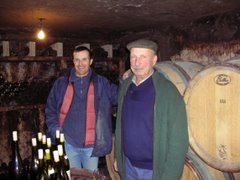
Ray Isle of Food and Wine, and Joe Salamone of Crush, both enjoying Austrian wine.

So it was a great evening for Austrian wine lovers, and also an opportunity for some of the great Austrian wines to get some much-deserved attention in NYC. This is why several producers donated rare large-format bottles for the event, and why the Austrian Wine Marketing Board was so helpful in getting those wines quickly to NYC for the dinner. This is why Executive Chef Wolfgang Ban closed Seasonal and used the whole space for the event, and charged only $90 all-in for a fine 4-course meal (full disclosure - I was comped a ticket by Crush because they apparently have mistaken me for a wine writer).
Allan Roth and Gene Vilensky, a couple of guys who love Austrian Riesling. Don't let the wood-framed glasses fool you - they are not Williamsburg hipsters. Allan is in education and Gene is a mathematician. Regular folks like them love Austrian wine too.

It was an embarrassment of riches - the wines were great. Not every wine, but I was seriously impressed with so much of what I drank. Of the big name Wachau producers, Prager and Knoll seemed to be the most prevalent at this dinner. Most of the other big shots were there too - I saw bottles by Alzinger, FX Pichler, Hirtzberger, and Moric. I saw no Nikolaihof and no Rudi Pichler, which kind of surprised me. From the Kremstal I saw Brundlmayer and Schloss Gobelsburg, but no Hirsch or Nigl. And I don't think I saw anything from the Wagram, which makes sense on a night when people are bringing the fancy bottles. But there is plenty to love in the Wagram (I'm a little bit obsessed with Bernhard Ott right now, but that's another story).

Stephen hosted and spent the whole night pouring. I don't think he stopped to eat.

I didn't really take notes, but here are some of the wines that were memorable for me, in the order in which I tasted them:

1986 Alzinger Gruner Veltliner Mühlpoint Kabinett Trocken. A designation no longer used. A wonderful old nose.

2002 Bründlmayer Riesling Zobinger Heiligenstein Alte Reben. I've heard Heiligenstein described as the finest site in the Kremstal. This wine was in magnum format, and was beautiful in its lush fruit and its focused minerality.

1988 Alzinger Riesling Ried Loibenberg Kabinett Trocken. The wine was in excellent shape, despite the dodgy label. Complex, fresh, vibrant, a real treat and a great advertisement for storing these wines.

2000 Prager Riesling Smaragd Achleiten. I brought this wine and that's why I thought it was so interesting. But it was impressive in its balance and elegance, considering that it was a very hot vintage that in some cases produced some overly fleshy wines.

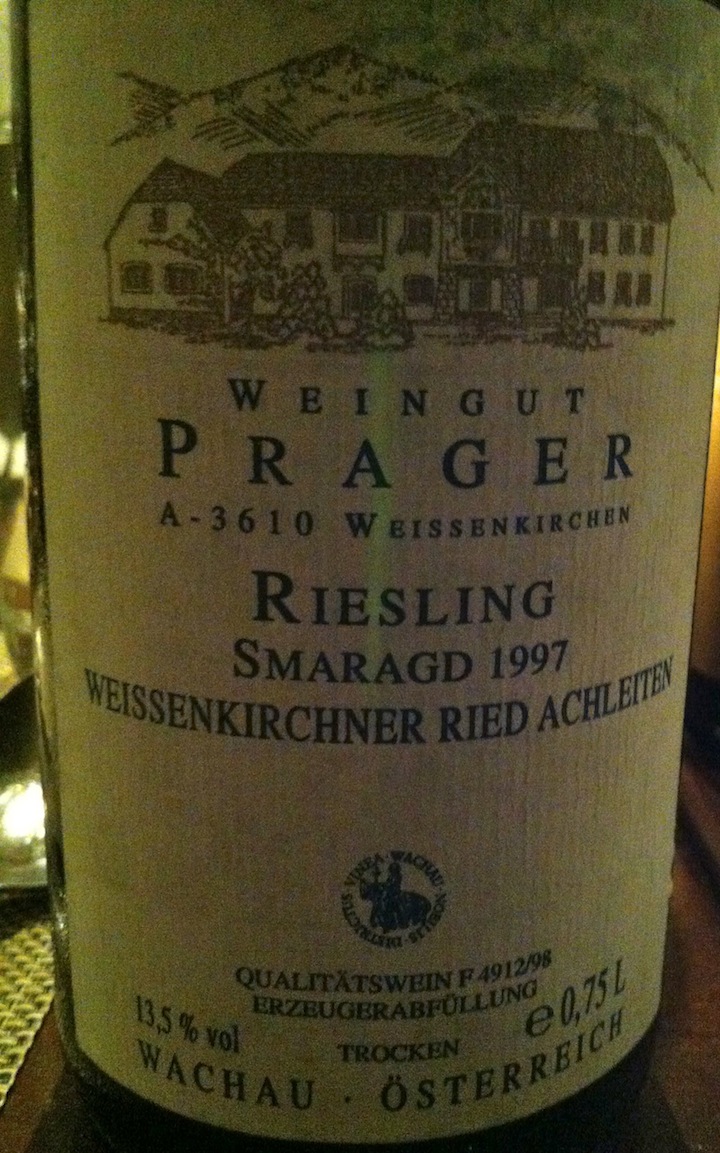
1997 Prager Riesling Smaragd Weissenkirchner Ried Achleiten. I don't know how (or if) Weissenkirchner Ried is different from the regular Prager Achleiten bottling. But this was as fine a wine as any that I tasted on this evening. Rocks, lemongrass, so subtle and wonderful.

2001 Prager Riesling Smaragd Klaus. Intense and very long, and shows how Klaus is so absolutely different in character from Achleiten. More lush in its fruit, more forward and generous.  

1997 FX Pichler Riesling Smaragd Kellerberg. Whoa, this wine floored me. Just beautiful wine, as fine as any on this evening, for me.

2002 Moric Blaufrankisch Lutzmannsburg Alte Reben. There were several Moric reds and for whatever reason, they didn't show as well as they might have. But this wine was great, so beautifully perfumed.

2001 Hirtzberger Riesling Smaragd Singerriedel. Intense and big, but harmonious. I loved this wine. I think I prefer the more gossamer style of Alzinger and Prager, but I love Hirtzberger's Singerriedel.

This was such a wonderful evening and I feel lucky to have been a part of it.

Thursday, February 16, 2012

A Dinner Featuring Previously Unavailable and Utterly Brilliant Sherry Wines

Not long ago Joe Salamone and Levi Dalton put together a Sherry dinner at the wonderful Prune on the lower east side, and I was lucky enough to attend. Peter Liem was there too, and he indirectly helped to make this happen, as last summer Peter pointed Joe in the right direction when Joe visited Jerez. Joe drank some wines that he loved, some of which were not available in New York. He decided to import them to NYC so the rest of us can buy them. On this night Joe wanted to share some of these finds with a few friends, lucky us. This was a merry situation, we were feeling the love. Good friends, good food, and absolutely world class wines, wines that until recently were unavailable here. Joe and Levi opened the brown wines at least a day in advance and they showed incredibly well, the wines were stunning as a group.

Sherry is far more versatile with food than is commonly thought. I think that we in this country are still familiarizing ourselves with dry Sherry, and we tend to think that Fino style wines are for garlicky shrimp and other tapas. Fino wines go well with all sorts of food, actually. And brown Sherries - Palo Cortado, Amontillado, and Oloroso - I don't think there is a stereotypical pairing idea here because these wines are still so new to most of us. The brown Sherries we drank on this night, these are Sherries that can complement even the richest of meat dishes, as we proved to ourselves at this dinner.

Here were some of the highlights for me:

We drank Valdespino Amontillado Tio Diego, a great wine that is quite unusual as an Amontillado in that it shows a very pronounced Flor character - buttery like a Fino. Tio Diego is what happens when Valdespino Fino Inocente becomes an Amontillado and then ages for a bit longer. This is a young and fresh Amontillado, it is refreshing and delicious, not expensive at all, and in Jerez it's everywhere - on grocery store shelves. Frustrating not to be able to buy it here. But now in NYC, finally, you might be able to buy this wine at Crush, as Joe is bringing it in.

We then drank the Fernando de Castilla Antique Palo Cortado. This is just a beautiful wine. Focus and intensity, grace, detailed aromas and flavors, and a satisfying and complex finish. Pure pleasure, and improves over several days open. This wine goes so well with basically anything on the table. At this dinner, I loved it with shrimp in anchovy butter, and also with thinly sliced roast pork and kale.

We drank Valdespino Palo Cortado VORS Cardenal, a fine old Sherry that represents the end of the line for Inocente - it contains wines that long ago were part of the Inocente solera before the cellar master selected them out to become Palo Cortado.

We also drank Valdespino Amontillado VORS Coliseo, an equally rare and fantastic old Sherry that begins its life as a Manzanilla, actually. Imagine going to a dinner where you drink DRC Richebourg and La Tâche. That's what we drank, but in Sherry they're called Cardenal and Coliseo. These are such grand old wines and trying to describe them by naming aromas or flavors is silly. For me, they are show-stoppers, wines that make the table go quiet for a while as people take in what it is that's in the glass. Wines that achieve the pinnacle of complexity and character and deliciousness, things that you should find a way to taste, the way you should read Shakespeare's sonnets at some point in your life.

They were brilliant with an amazing dish of braised short ribs and Yorkshire pudding, something that used to be on the menu at Prune a while back. Braised short ribs and Yorkshire pudding...that's a rich plate of food, and I found these two grand old Sherries complemented it perfectly. Honestly, even though these are expensive in an absolute sense, maybe $140 for a 375 ml bottle, Cardenal and Coliseo are worth every penny. They are wines that expand and improve for a week after opening and you only need a small bit at a time, so your pleasure is spread over many evenings.

We also drank a vintage Sherry. That's right, a vintage Sherry. The 1975 Bodegas Tradición Oloroso. Imagine that - the solera system is part of what makes these wines so great, and here is a Sherry wine that never sees a solera. It is vinified and put in barrels, and that's it, as a wine would be in most of the world. I had a few sips of this rare wine at the Bodega in October, but it was at here at this dinner with this food when I understood its charms. This wine had such impeccable balance and harmony, and such clarity and focus. And although its been aged in barrels and exposed to oxygen without Flor to protect it for almost 40 years, it had no rough edges, not at all. Pure class, all silk, just amazing.

Valdespino Moscatel Toneles is, with Cardenal and Coliseo, the third wonder of the Valdespino Bodegas. There is one barrel of this wine in the solera row, another in the first criadera, and so on. There is very little of the wine and it is very old. Many serious Sherry devotees can tell you about why it is so special, and although I enjoyed drinking it, I will admit that I do not yet understand the wine and cannot easily differentiate between the old black sweet Sherries. i know there is something to it, I just haven't figured it out yet...

Keep your eyes open for these wines as they should be available here and there, whereas previously you had to go abroad to buy them. This was a truly amazing dinner and reminded me again that at this point in my drinking experience, I think that great Sherry is as great as wine can be.

Tuesday, January 03, 2012

How to Open and Enjoy an Old Bottle of Wine

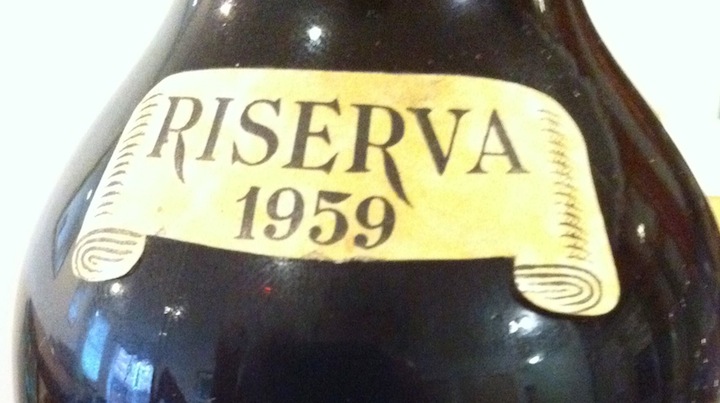
I was given an amazing birthday gift in November, an old bottle of wine by Produttori del Barbaresco, the 1959 Riserva. This is very exciting - how often does one get to drink a bottle that old? In my case, not very often. I've had a few old wines, but with the exception of a few cases, I haven't opened them myself. A more experienced friend or a sommelier typically has handled that part.

How do you open an old bottle of wine?

I knew that I wanted to drink the '59 Barbaresco over the holidays with friends. I asked Jamie Wolff, partner at Chambers Street Wines, what to do with the bottle (which was purchased at his shoppe). He told me to stand it up a week in advance, not to move it at all during that time if I could help it, as it would probably have a lot of sediment.

"But my wine fridge won't accommodate a standing bottle," I said. "How do I keep it at the proper temperature?" Jamie suggested finding the coolest spot in the house and standing it there. "And when you serve it," he said, "open it up four or five hours in advance and decant it carefully off the sediment."

As the Barbaresco evening approached, I began to wonder if an old wine like this would die with four or five hours in the decanter, so I asked another friend about how to deal with it, and his answer was entirely different.

That's when I realized that there are a lot of way to do this: to handle, open, and drink an old bottle of wine. And I don't know what I'm doing in this area at all. So I thought I would ask a few friends who are wine professionals what they do with old bottles. I wanted opinions from a variety of viewpoints, so I asked a great sommelier, a great wine buyer, and a great wine thinker and writer with a load of personal experience opening old wine. I'm talking about Levi Dalton the great sommelier, Joe Salamone the great wine buyer at Crush, and Peter Liem of broad and varied greatness. I wrote to them with the following questions:

1. How do you prepare an old bottle for drinking?
2. How far in advance of serving do you open the bottle?
3. Do you decant or not, and why?
4. How do you open an old bottle when the cork might be likely to crumble or break?
5. What should we look for when the bottle is first open - how can we tell if the wine is good or not?
6. Any general thoughts on evaluating an old wine - for those of us who don't often drink old wine, it can be confusing.
7. Do your ideas about pairing wine with food change if the wine is old?
8. Any other advice most appreciated.

And now, patient reader, I will share their thoughts with you (and I hope you're sitting comfortably, because this is a long post):

1. How do you prepare an old bottle for drinking?

Levi - Bottles should be left alone for as long as possible before opening. If you know in advance that you will be opening a bottle of wine a few days from now, I suggest standing it up vertically in the cellar to let the sediment fall to the bottom of the bottle. If you are storing the wine horizontally, I recommend not moving the bottle much while it is in storage. This usually becomes more of a problem with double deep bottle racking, where you have to move one bottle to get to another. Bottles can get moved a lot. I recommend putting the older wines in the back, so that they bottles that are getting jostled in the front are the younger wines.

If you are removing a bottle from horizontal racking, I recommend either using a bottle cradle or I recommend holding the bottle near horizontal, keeping the bottle in the same way as it was in the rack. In other words, don't spin the bottle around as you move it. The aim is to keep the sediment in the same place without moving it around into the liquid. I also recommend taking an elevator, if available, rather then walking with a bottle up stairs.

Joe - Stand it up in the morning if you’re drinking it at night. Let the sediment sink to the bottom.

Peter - It depends on what it is. If it's an old red wine with sediment, you ideally want to stand it up for several days, sometimes even a week, before opening it, to allow the sediment to settle. It's not just an aesthetic issue—the sediment can be bitter, and its presence definitely changes the flavors of the wine. You can decant a wine that's stored on its side if you need to (in a restaurant setting, for example), but you have to be careful. (I'll always remember drinking a 1964 Bartolo Mascarello at Valentino in Santa Monica that was virtually opaque with sediment due to utterly incompetent wine service.) If it's an old white wine or champagne, you need to chill it, of course. I have no scientific basis for it, but for whatever reason, I don't like shocking an old wine in an ice bath or the freezer or whatnot. I prefer to bring it down to temperature slowly in the fridge, which takes time. Maybe it's just a question of respect.

2. How far in advance of serving do you open the bottle?

Levi - Some cowboys, especially in the Nebbiolo set, open bottles way far ahead. I generally don't. I like to see how the wine changes in the glass.

Joe - It really depends on the bottle. A few years ago I had a 71 DRC Grands Echezeaux with questionable storage. It was popped and poured and it was glorious for fifteen minutes. After that, it faded hard. Someone at the table was smart enough to say that we should pop and pour. Otherwise, we would have missed out on it totally.

Peter - This is a tricky question, and one with no right answers. I've seen old wines continue to develop for three days, and others that have crashed within 15 minutes. It's true that old wines need time to emerge (you'd be out of sorts too if you'd been trapped in a bottle for 50 years), but personally, I tend to err on the side of caution, not because I'm afraid that the wine will die, but because I like to experience the evolution of the wine from start to finish. For a grand old bottle, I prefer to open it, take a small glass, and decide from there what to do with it. Having said that, I tend to do this in the afternoon, if I'm serving old red wines at dinner. But then afterwards, I'm always the guy who has like 12 glasses in front of him at the end of a dinner party, because I've been saving all these wines to watch how they grow over the course of several hours.

3. Do you decant or not, and why?

Levi - Old wines are candidates for decanting when they have thrown a good deal of sediment. But if you are dealing with a low tannin grape, I usually don't decant, even if they are throwing sediment. That is to say, I generally don't decant old Red Burgundy, I pour carefully from the bottle instead. Pouring into a decanter should be low, slow, and steady. This is not the "splash decant" that you might use for a younger wine. Do the decanting all in one go, with no fits, starts, or interruptions. Hopefully you won't sneeze during the operation. If you do stop and start the liquid will become muddy with sediment before it leaves the bottle. That being said, it is a great idea to "season" the decanter you intend to use with some of the wine in advance of pouring the rest in. Do this by pouring in a bit of the wine, swirling it around in the decanter, and then discarding. You can taste the discarded wine and test for TCA before pouring out the bottle as well. When you do decant the bottle, keep your light source behind the bottle neck, not behind the decanter lip. You want to stop pouring before the sediment leaves the bottle. Keep in mind that with sediment, there are many variations of the beast. Some are sludge like, some are flaky, some are like fine pebbles at the seashore. Each will move differently as you pour the bottle out.

In practice, I usually do not double decant old bottles of wine. Some people do this however, especially if they are attending a BYOB dinner. They double decant the bottle in their home beforehand and then bring the decanted wine in the original bottle to the dinner. If you do want to double decant a bottle, I recommend using hot water to clean out the sediment in the bottle. This is because hot water, unlike cold water, evaporates. Thus you will have less water to drain out of the bottle later, before you add the original wine back into the bottle. It is worth keeping in mind that hot water will make the bottle's glass warm, and that you should wait until it cools down before adding the wine back in. Also, very old bottles of wine may have thinner glass than is common today. In which case you might be careful about extremely hot water and the possibility of cracking glass as well as fragile bottle lips.

Say you don't decant the bottle of wine, but it has sediment on the bottle, what then? Well I recommend either pouring from a cradle, or holding the bottle by the bottom, with your fingers underneath. When you go around to the different glasses to pour, don't move the bottle up and down a lot. Try to keep the bottle neck at the same level. This is counter to what usually happens when pouring at a table, where the bottle gets raised back vertically a lot, and generally requires going slow and being careful. Sometimes it is easiest to pour all of the glasses away from the seated table, and then to hand the glasses out once poured. This eliminates moving the bottle between people at the table. If you are pouring from a cradle, which can be helpful, just remember that it is easy to bump someone with the cradle when you are pouring. Which defeats the purpose, really. Keep in mind that "The Hand That Rocks the Cradle" was a scary movie.

Joe - There are no hard and fast rules, but typically I would only decant to avoid sentiment. Otherwise, I have a sense that decanting is too aggressive for many old wines and would prefer to just pull the cork and let them aerate slowly. If I tasted an old wine that felt particularly tight, I would decant.

Peter - I decant less and less now. I almost think I decant more young wine than old wine nowadays, which is sort of ironic. But it depends. You decant for two reasons, right? It's to give the wine air and to take it off of its sediment. In the first case, as I said before, I prefer to watch the wine evolve slowly, so I don't really care. I'm patient. With regards to the second, it depends on the situation. If we're serving an old bottle in a restaurant to eight people, then yeah, it needs to be decanted. If it's just two of us drinking it at home, maybe, or maybe not. A friend and I have been thinking over the last few years that we like opening old bottles, say a 50-year-old Barolo, hours ahead of time but not decanting, just pouring a small glass at first to taste it, then letting it hang out all day until it's time to drink it. I feel that it preserves a silkier texture and better clarity of flavor than if you subject it to the oxidative shock of decanting. But that could just be my imagination.

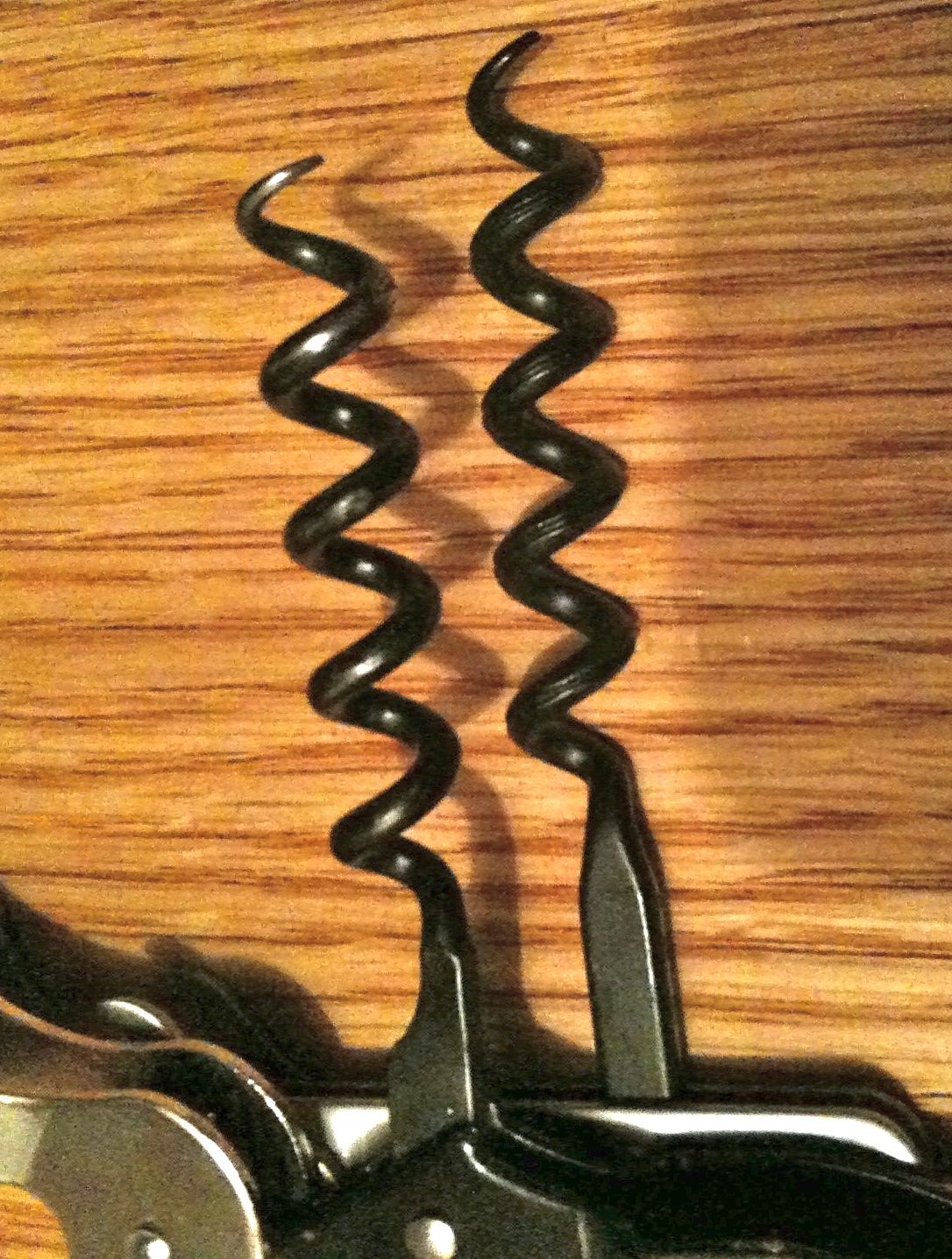
Corkscrew worms vary in length (photo courtesy of Levi).

4. How do you open an old bottle when the cork might be likely to crumble or break?

Levi - When you decide that you want to open up the bottle, you should do it on a flat, sturdy surface. Don't be a clown and try to open an old bottle of wine in the air. Not a good idea. You want to move the bottle as little as possible while opening it. One problem with this is that people in the room might want to see the label of the fantastically old wine and pick up the bottle from where you have it. That is a bad move. The less bottle movement the better, until the bottle is empty.

Sunken corks, that is, corks that are not flush with the bottle lip, present a problem. It is hard to get the right leverage with your corkscrew on sunken corks. This is especially a problem for single pull corkscrews. It is very easy to chip the glass around the lip in this instance, and that can lead to safety concerns. It is best to use a double pull corkscrew, and start with lifting when the worm is halfway in, and then drive the worm in further when you have lifted the cork a bit.

Another possibility is that a sunken cork might also slide right down the bottle neck when you start to press it with the corkscrew worm, which is usually a phenomenon that can accompany heat damage or oxidation. If the cork slides into the liquid, you can find yourself with a problem, because your first instinct may be to decant the wine, but the cork inside the liquid still covers the bottle neck at the bottom, and doesn't allow the liquid out steadily or at all. If this happens I recommend taking something long like a plastic straw and pushing the cork down with the straw while you decant. This will allow the wine out of the bottle.

Try not to pierce the bottom of the cork as you are getting it out of the bottle. If you go through a cork all the way with your worm, your will have better leverage for removal, but piercing an old cork will throw a lot of cork dust into the liquid.

Extracting cork fragments that are stuck flat on the bottleneck works better if you put tension on the corkscrew worm by holding it with two fingers against the bottle top as you turn the worm in. This also keeps the worm straight. If instead you are dealing with a cork that has hollowed out in the middle, but stuck to the walls of the bottle neck as you tried to remove it, then you are going to have to angle your corkscrew and pin the cork that is against with glass with the corkscrew worm, then pull up. You might have to do this a couple of times to get all the cork fragments out. You might think that something else besides a corkscrew will help you get those last bits of cork out of the bottle neck. I don't recommend experimenting with anything, like an oyster fork, unless it has an extremely long handle.

The Durand opener (photo courtesy of Levi).

Bottle openers vary a lot. For very old bottles, the best thing you can do is purchase a combination Ah-So and corkscrew worm, such as The Durand, which is available for sale at www.thedurand.com. These things really are genius, and will save you all kinds of problems.

Pieces of the Durand (photo courtesy of Levi).

It is also possible to make your own such combination, using a standard Ah-so and a separate T-Bar corkscrew worm. As far as stand alone corkscrews, I personally find that opening an older bottle is easier with a double pull corkscrew than a single pull. I usually use the Pulltaps corkscrew brand for double pulls. The problem with that is that the Pulltaps worm is not particularly long, and some old corks are. Also, the knife on a Pulltaps is pretty basic. You will often find a longer worm and a better knife, on a Laguiole or Chateau Laguiole. For this reason I try to keep a few different types of opener around, to help in different situations. Whatever you purchase it is very important to get a corkscrew without any kind of coating (besides paint) on the worm. You want a metal worm. The other types destroy old corks in a fashion that is fantastically disheartening.

Joe - Personally, I’ve had so many disasters with using a cork screw that I go straight for the Ah-So.

An Ah-So opener.

Peter
- High dexterity score is key. And an Ah-So. Last year, one of my friends bought this thing, which is awesome.

5. What should we look for when the bottle is first open - how can we tell if the wine is good or not?

Levi - How you handle the bottle can have a lot to do this. Murky, dull, and light colored red wine is a bad sign. But ultimately the test is the taste.

Joe - Check out the color and smell, especially to see if it’s maderized. Also, a lot of turbidity is usually a bad sign. Often wines will seem older when first poured and then will liven up. Wines, especially red Burgundy, can change color in the glass. Sometimes they can look more faded, but an old wine can actually becoming more youthful in appearance in the glass. They brighten up and darken.

Peter - Old wines are funny things—they don't necessarily reveal themselves right away. Sometimes with a very old wine it's even difficult to tell whether or not the wine is corked, as it can be musty and weird at first but then develop into something amazing later. You're looking first for flaws (i.e. TCA) and then for oxidation, but on the subject of the latter, it often pays to be patient. Many old wines actually feel fresher and more primary in flavor after 15 or 30 minutes than they do when they're first opened.

6. Any general thoughts on evaluating an old wine - for those of us who don't often drink old wine, it can be confusing.

Levi - The condition of a cork can tell you a lot about storage. First of all, once you get a cork out, it is worth checking to make sure what it says matches what the label of the bottle says. If not, that can mean that you a forgery on your hands. More generally, if the cork has a muffin top and flares out above the bottle lip, that can indicate that this wine has seen poor storage. Similarly if there is a visible line of dried wine stain down the cork length. Often enough, an very old cork will be completely soaked with wine stains, so this isn't a terrible, terrible thing, but neither is it desirable. On the other hand, a too perfect, pristine cork in a very old bottle often raises about possible recorking that might have taken place with this bottle. It is worth considering if the bottle is a recent release (however old the wine's vintage may be) from the winery, as the corks should then look pretty great.

Joe - Basics like looking at the fill and looking for seepage and things like the cork pushing up or receding are usually very helpful. Clumps of caked on sentiment in one area of the bottle can be a bad sign (but this isn’t always the case.) Also, look at the color in the light to see if whites look oxidized or reds look turbid and brownish. It really depends on the wine: Auslesen and old sweet Chenin Blanc can appear really dark and be perfectly fine, for instance.

Peter - There should have been a reason for aging it. Is it better in some way than a young version of that wine would be? Ideally, an old wine would have developed an inimitable complexity and character while fusing its components together into a more seamless harmony—the disparate parts of a young wine are now integrated into a complete whole. But just because it's old doesn't necessarily mean that it's better. Old wines can be mediocre too. And everybody has a different sort of threshold as far as maturity goes. I like mature flavors, and I tend to prefer my wines a little older than most people do. A wine should definitely retain vibrancy and energy—it shouldn't be dead or overly oxidized. But I don't always care about things like primary fruit. You drink old wine because you can't get the same experiences that you do in young wine, and drinking a grand wine in maturity is one of life's greatest pleasures.

7. Do your ideas about pairing wine with food change if the wine is old?

Levi - The adage is true: simple food is better with old wines. Steak. Squab. Mushrooms. Risotto. They are all on my old wine team.

Joe - The hope is that aging wines results in them stretching out, having integrated flavors and becoming more nuanced and complex. I want the wine to shine and take center stage without much interference. I like to keep things simple with straight forward, uncomplicated dishes. There’s nothing wrong with a perfectly roasted chicken (or guinea hen), leg of lamb, or fish. I try to avoid overly pungent and bright flavors that have the potential to cripple to the mature fruit on an old wine.

Peter - I generally think that the older the wine is, the simpler your food ought to be. I don't necessarily believe that the best setting for a great mature wine is a Michelin three-star restaurant. My favorite way to experience an old bottle is to drink it at home, making some food that complements it but that doesn't compete with its complexity.

8. Any other advice most appreciated.

Levi - Keep in mind that the kind of capsules you find on older bottles, say of Bordeaux before 1990, had lead in them. They are firm, often stick closely to the bottle neck, and tend to come off in long strips if you unwind them from a cut in the side of one. These kinds of capsules tend to leave a nasty cut on the finger if you aren't careful with their removal. You can always tell a sommelier who deals with a lot of older Bordeaux: they will have a bunch of small cuts on their index finger. It can be helpful to angle your corkscrew knife about 45 degrees into the groove underneath the top part of the capsule, cutting upwards. This will result in a clean line cut into the capsule, and also encourage the top part of the capsule to flair out at the cut edge, allowing for easier removal. When lead capsules are involved, I think that it becomes especially important to wipe with a wet, clean cloth the bottle top after the capsule has been removed (and before the cork is extracted). This prevents small particles of lead from getting into the liquid later as you pour. Older bottles may often have a bit of fungal growth under the capsule anyway, which should be removed in the same way, with a wet cloth.

If instead of a lead capsule you encounter a wax capsule, I recommend placing a napkin underneath the bottle before you open it. That way, the small bits of wax will fall onto the napkin instead of your table surface, and you can collect them all easily at the end of the process by gathering the napkin up. Some people scrap or bang away wax from the top of a bottle before opening. I think that in the case of older bottles, this only encourages the kind of vibration that moves the sediment around, so I don't encourage it. Rather, I drive my corkscrew worm directly into the bottle's cork, through the wax, and the wax comes away from the top as the cork is extracted. The only time you don't want to do this is when you might be dealing with a half-cork stopper, like in the case of certain Cognacs, for instance. In those instances there is no driven cork, for the corkscrew worm to meet when it goes in the bottle top.

(Photo courtesy of Levi).

There are broadly speaking, two kinds of wax that you will encounter, the hard flaky kind and the soft, pliable kind. If you want to remove the soft kind from the bottle neck side (to prevent pouring liquid over it), you can run your corkscrew lever up and down the side of the bottle, creating two long groves in the wax. You will find it easier to remove the soft kind of wax from the bottle if you then start pulling from where the grooves are.

Joe - Aged wine often seems like a fetish for people. People associate quality with ageability. They immediately want to know how long a wine can age, and the longer the better. Not all wines benefit from aging; and not all people enjoy mature flavors in wine. There’s something to be said for drinking wine in its sprightly youth. Don’t get me wrong, I really enjoy old wine, but I often worry that people are lead astray by thinking that older is better. Like people, there’s more that can go wrong with wine as it ages.

Peter - Always have a good alterations tailor. Don't use Microsoft products. Never trust a guy who doesn't look you in the eye when he's shaking your hand.

-----

By the way, I should have asked these guys before drinking my 1959 Barbaresco. I did not decant, but opened the wine at noon on the day I would serve it at about 9 in the evening. I used a double pull corkscrew, but the cork broke in half. When I tried to get in there again with the corkscrew, I just pushed what remained of the cork into the bottle, and there it sat, broken and dusty, in my lovely old wine. I tasted it about every two hours until we drank it. It was great to drink such an old wine, and it was very delicious, but not mind-blowing. In fact, one experienced taster suggested that it might have been better about 10 years ago.